Jakobstrasse 2
Monument #2


Introduction
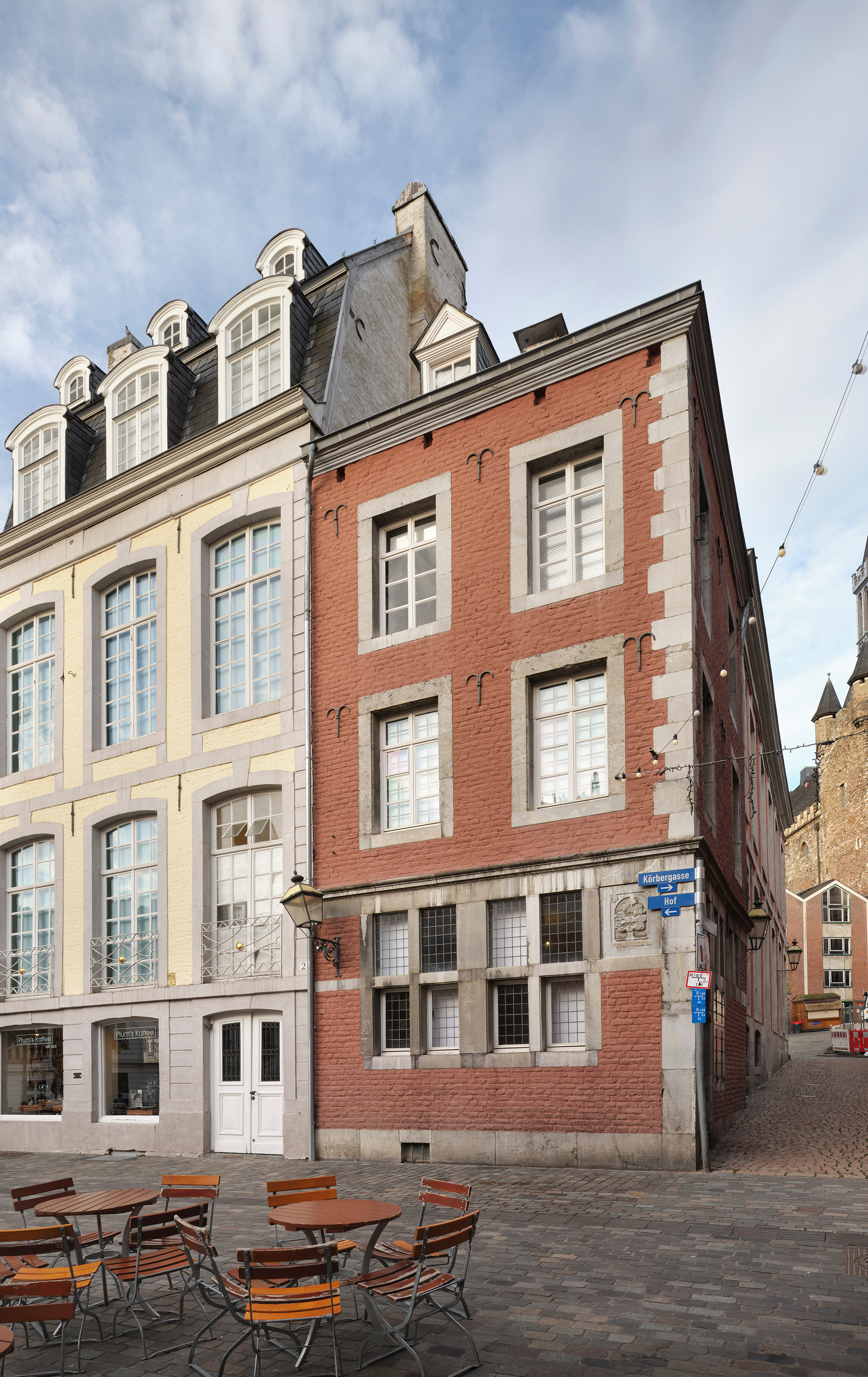
The corner building at Jakobstraße 2 is also known as "Eijene Keiser Karl" (dialect for "To Emperor Charlemagne"). The name refers to a former restaurant whose landlord planned a complete decoration with scenes from the life of Charlemagne in the 1920s/1930s. The historic building was heavily altered in the 1970s.


Moving history
The striking corner building was built between 1829 and 1837 by Aachen architect Adam Franz Friedrich Leydel. Alongside the neighboring house at Kockerellstraße 3, it is the only historical building whose façade was preserved during the extensive renovation work between Jakobstraße and Kockerellstraße in the 1970s. Between 1974 and 1975, the building was renovated and altered according to the plans of the city conservator Leo Hugot.
Search for clues
Hugot diligently reworked and added to the building, in particular the previously plain façade facing Kockerellstrasse was now freely decorated with stucco. The balcony facing Jakobstraße was completely renewed. The first floor is particularly striking: the original arched windows have been opened up into real arcades. The reason for this measure was the desired widening of the street space for modern city traffic. By opening up the first floor for pedestrians, the cramped street space could be used entirely for vehicular traffic. The neighboring new buildings on Jakobstrasse were built further back to give traffic and pedestrians more space.

Opening up the first floor created a new path for pedestrians
Special features
As with many other buildings, the corner is adorned with a house figure. Due to serious stability problems in the interior, the house was completely gutted. The building also includes a single-storey extension facing Kockerellstraße, which was raised by one storey in the same style in 1975.
Picture gallery
Discover more

All monuments at a glance
Translocation
The method of translocation was already known and popular in 19th century urban planning. It allowed old building stock to be saved and reused. In Aachen, this method was applied in a special and extensive way.