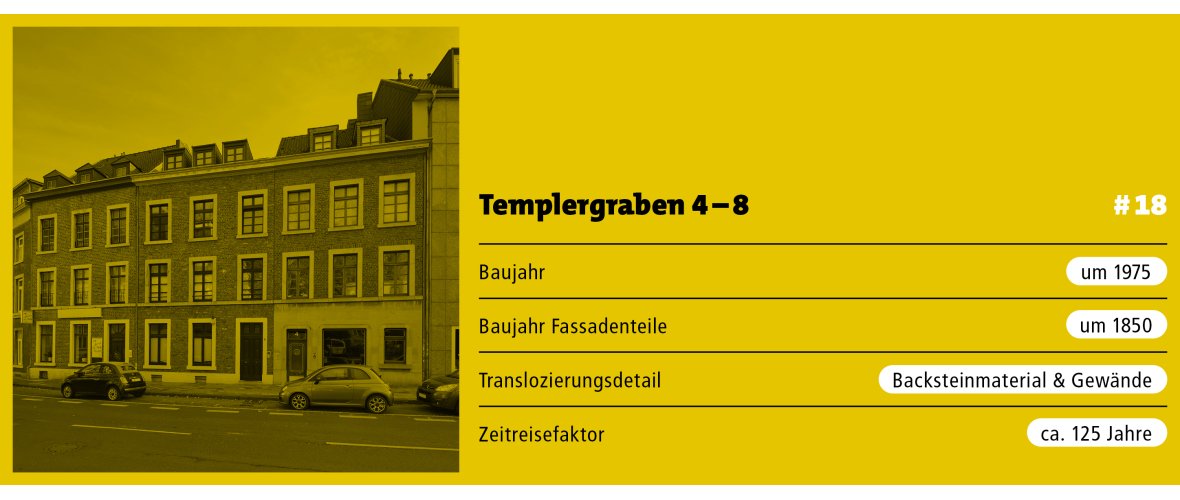
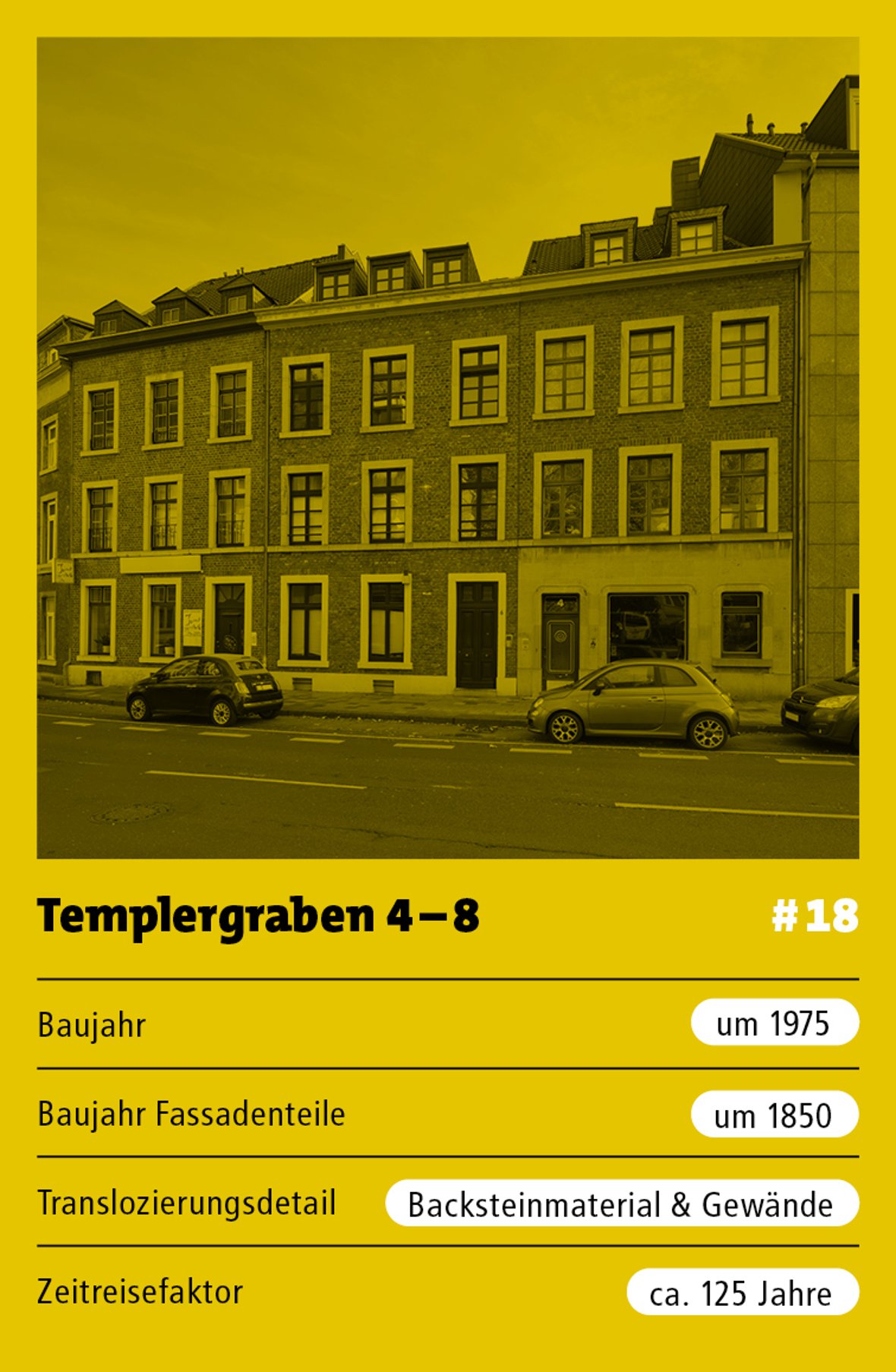
Templergraben 4-8
Monument #18
Introduction
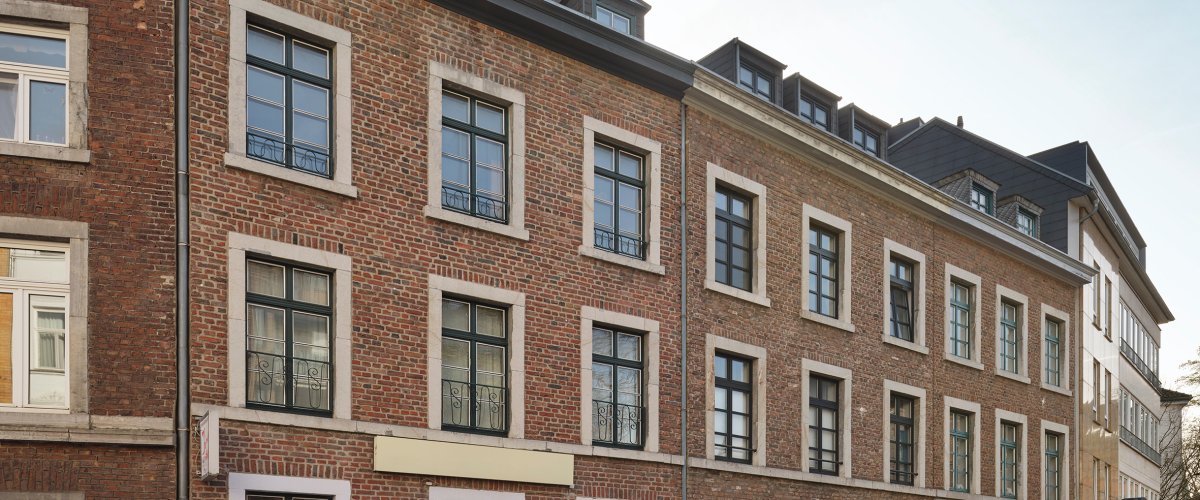
The word "Graben" in the street name describes the origin of this street, as we are in the area of the former inner city wall from the 12th century. After the wall was demolished and the street was built on the backfilled moat, a residential development typical of the time developed here from the middle of the 19th century.
Moving history
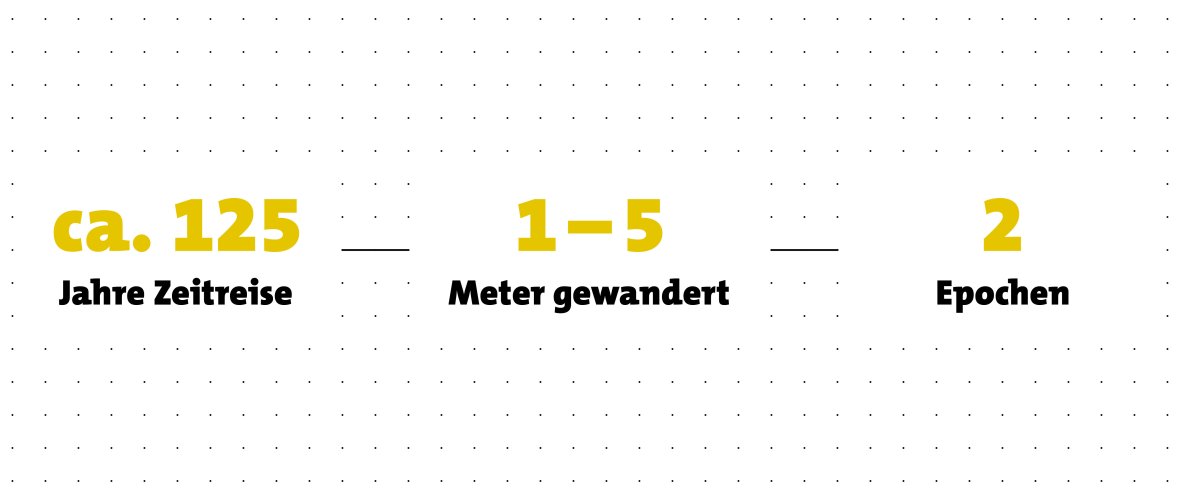
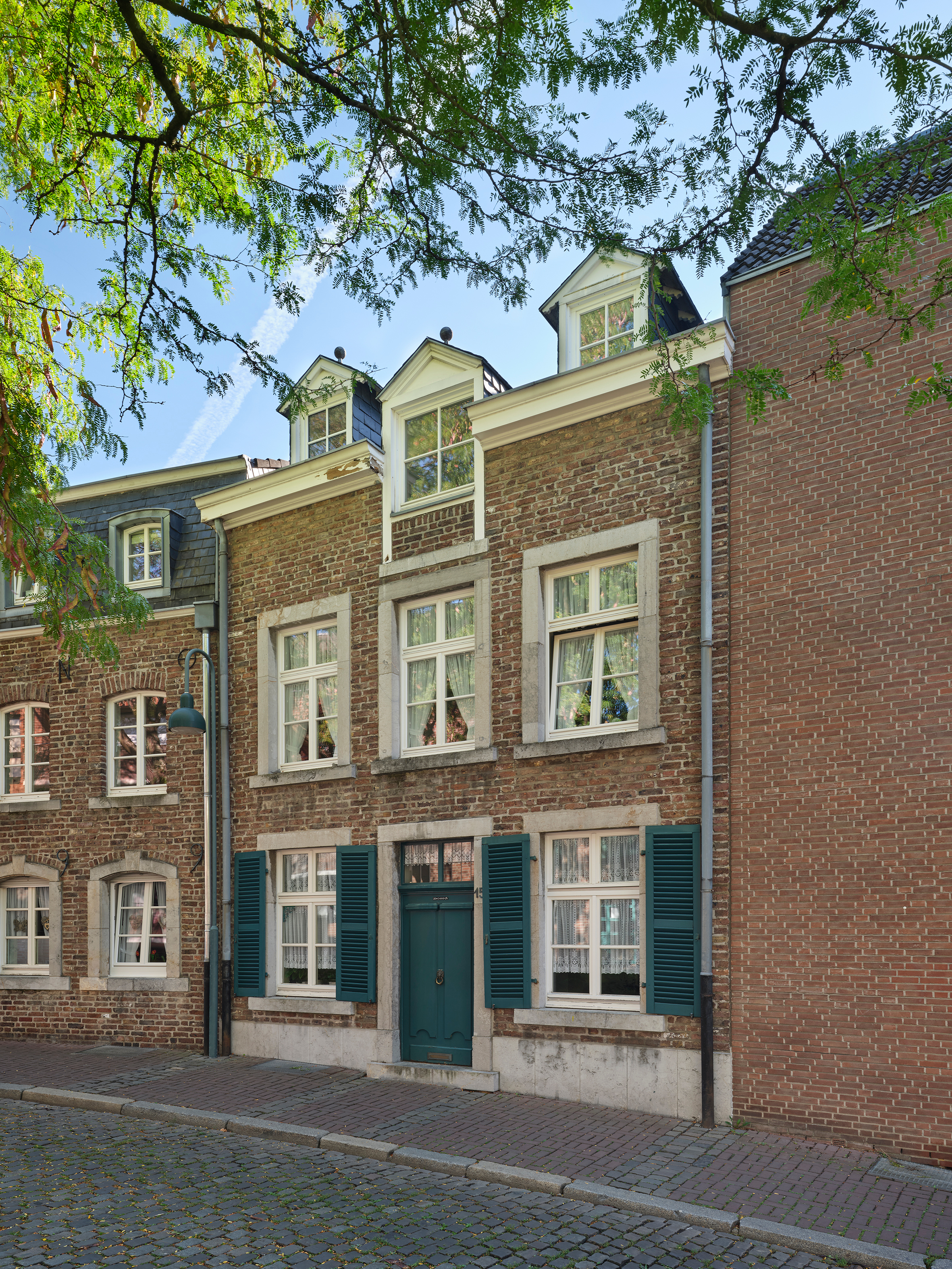
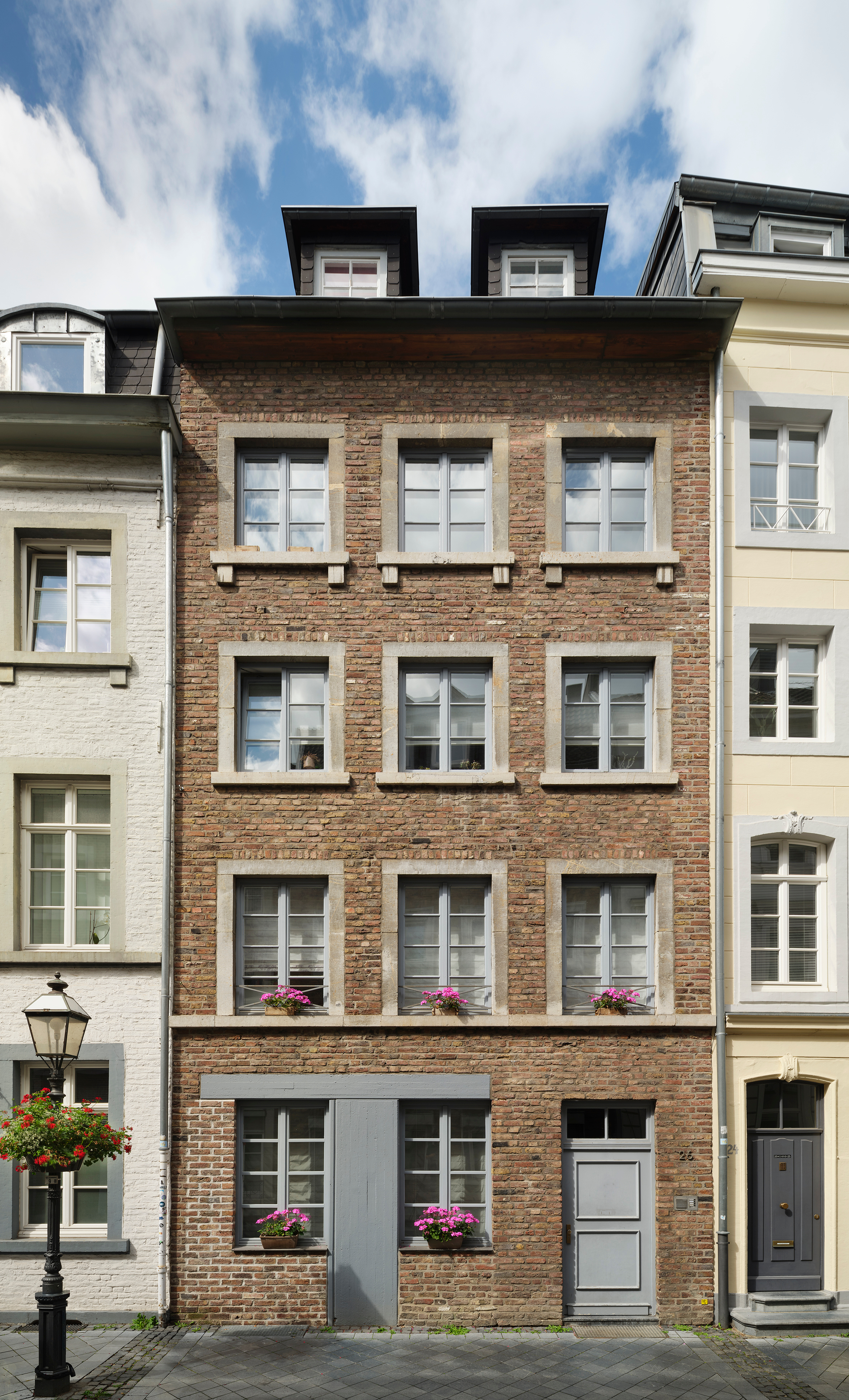
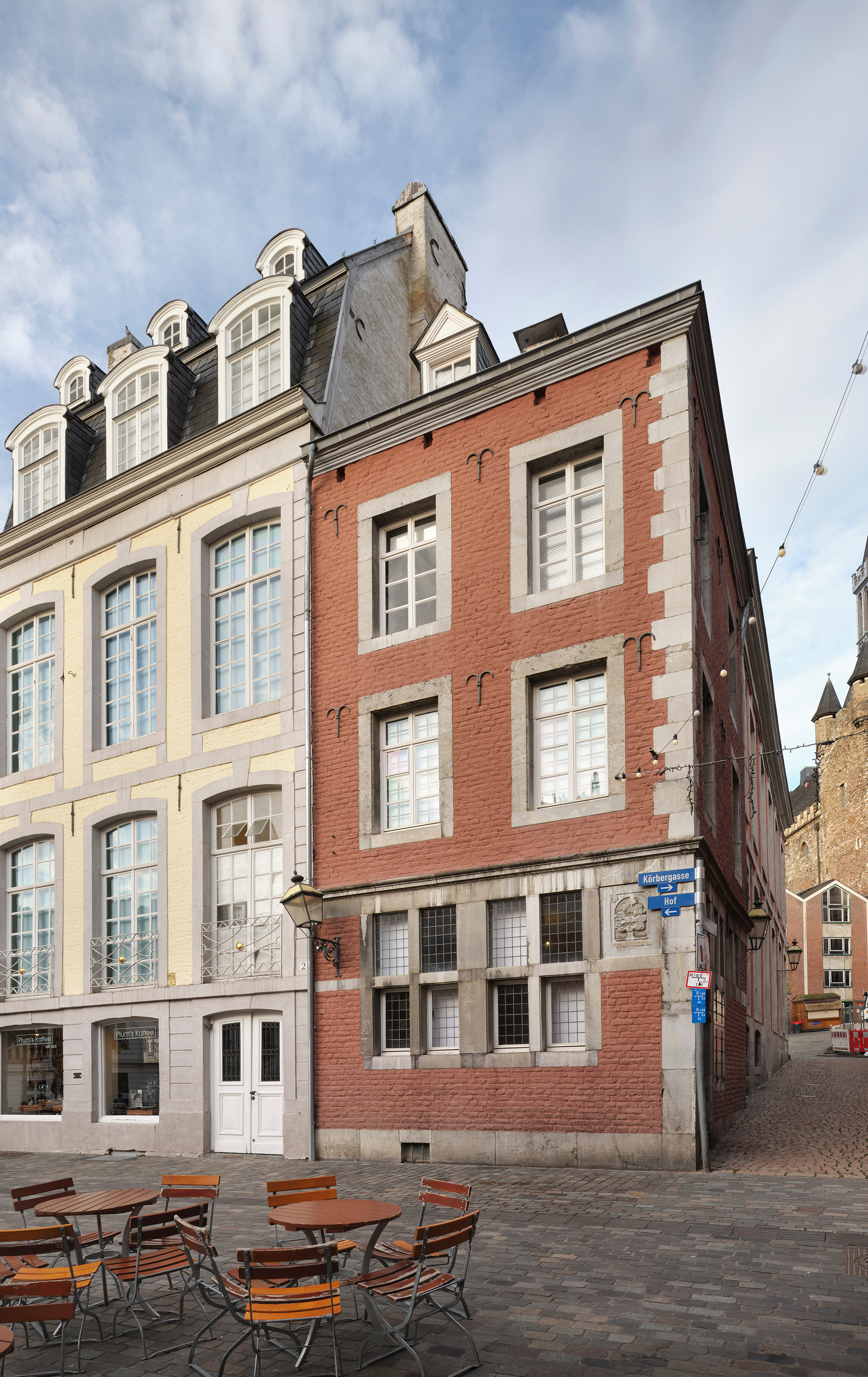
Templergraben, as part of the ring-shaped traffic route around the old town, had a bottleneck here that needed to be improved for the growing traffic in the post-war period, especially in connection with the neighboring university. To this end, the three buildings at Templergraben 4, 6 and 8 were to be demolished in the mid-1970s. However, the State Conservator insisted that the facades be preserved. Aachen had plenty of experience in rebuilding historic façades, so the buildings were demolished and the façade parts reused in the reconstruction.
Search for clues
The façades were rebuilt true to the original without changing the proportions. The building lines of the houses were moved back a few meters and the façades were aligned slightly differently. While some of the façades were still painted before demolition, all of the façades have now been left stone-faced.
When these three buildings were demolished to widen the road, their façades were carefully removed and concealed from the new buildings, which were set back a few meters.
Special features
In the Middle Ages, a path ran along the city wall moat here and also enclosed the so-called Templerbend, a farmland area. But where do these seemingly mythical names "Templerbend" and "Templergraben" come from? Did knights of the legendary Order of the Knights Templar settle here, as legend has it? In fact, other knightly orders, including the Knights of St. John and the Teutonic Knights, were based in the area between the King's Gate and the Pont Gate in the 14th and 15th centuries. They were simply called "templarii" in contemporary documents. This probably led to this street name in the following centuries.
Picture gallery
Discover more

All monuments at a glance
Translocation
The method of translocation was already known and popular in 19th century urban planning. It allowed old building stock to be saved and reused. In Aachen, this method was applied in a special and extensive way.