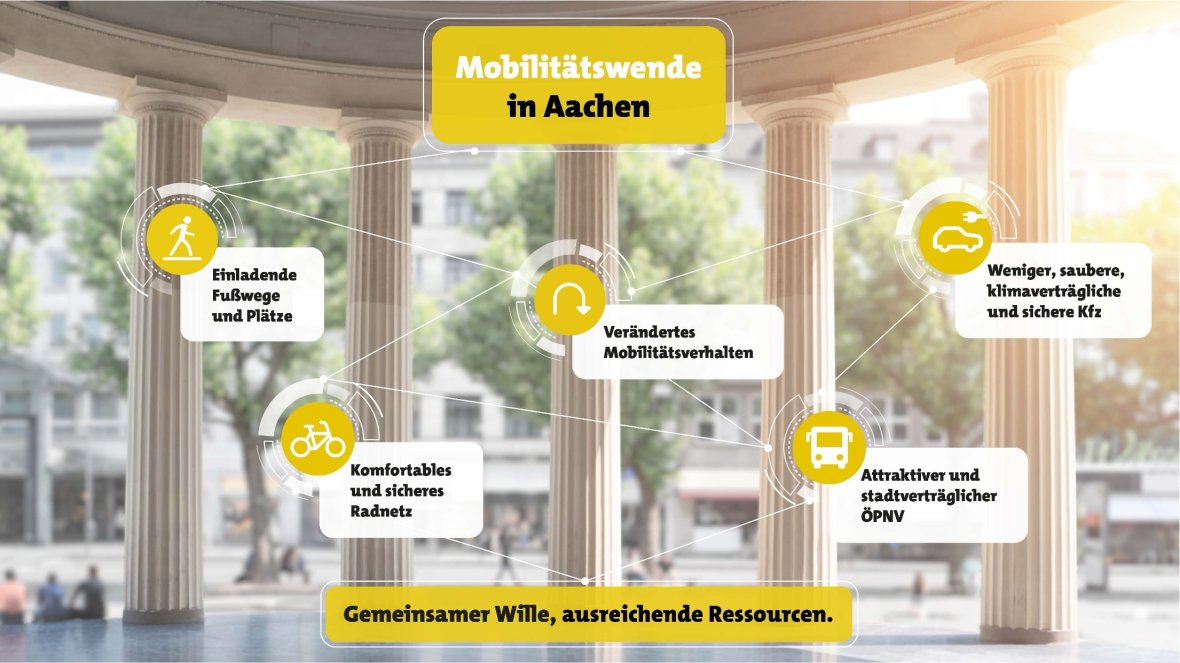
The city of Aachen is planning for all modes of transportation. The mission and goal of the Mobility Strategy 2030 is to reduce the proportion of car traffic in Aachen's transportation system. On the one hand, this requires better infrastructure for walking, cycling and public transport. On the other hand, the desired mobility turnaround depends on people changing their mobility behavior as much as possible. The city administration is working on all of these issues. The mobility transition towards emission-free mobility with few accidents and fair coexistence is a long road. We have set out on this journey.
City of Aachen
The mobility transition in Aachen requires a common will and sufficient resources for the planning, construction and operation of infrastructure and mobility services. The environmental alliance (walking, cycling and public transport) should be expanded and car traffic should be organized in a way that is compatible with the city. People decide whether and how to change their mobility behavior. The city administration is developing concepts and measures for all of these topics. On this page, you can find out about transport-related concepts, concepts for specific sub-areas and for specific groups of people. Accessibility and road safety are key issues that should enable safe mobility for all.
Traffic development plan (VEP)
Since 2011, the city of Aachen has been drawing up a "traffic development plan" as an ongoing process. Taking into account the given, changing framework conditions, the fundamental guidelines for mobility are described and made visible with core projects. The city of Aachen follows the concept of the "Sustainable Urban Mobility Plan (SUMP)". Since the revision of the EU regulation on trans-European networks (TEN-T) in 2024, cities with more than 100,000 inhabitants have been obliged to draw up a SUMP by December 31, 2027.
With Vision Mobility 2050, the city of Aachen has had a guiding principle for emission-free and accident-free mobility since 2014.
In 2020, the objectives of transport development planning were adopted as part of the Mobility Strategy 2030. Concepts for cycling, public transport and electromobility have been adopted. Further VEP concepts are being successively developed to specify how the mission statement and objectives are to be achieved for individual specialist areas.
The mobility status report describes the development of the defined 25 indicators.
Concepts for individual means of transportation
CONORCROWE, © City of Aachen / Crowe
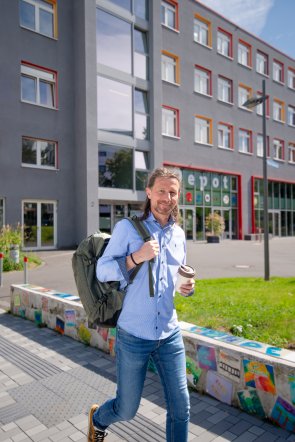
On foot
Premium footpaths. Accessibility. Pedestrian traffic checks.
More
Andreas Steindl, © City of Aachen / Andreas Steindl
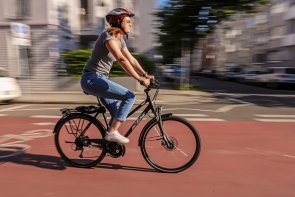
Cycling
Comfortable cycle routes. Safe cycle paths. Safe bicycle parking.
More

CONORCROWE, © City of Aachen / Conor Crowe
Car traffic
Main roads. Parking facilities. Electromobility.
More
Drazen Zigic, © City of Aachen / Marcus Golger
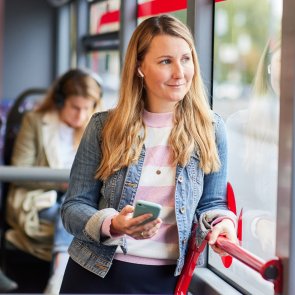
Bus and train
Bus service. Regiotram. Bus stop conversion.
More
CONORCROWE, © City of Aachen Conor Crowe
Sharing
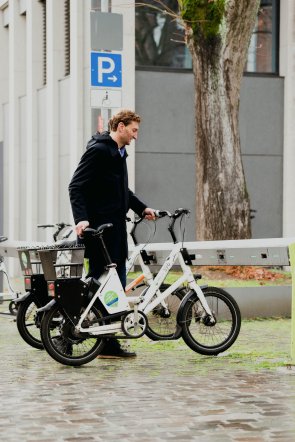
Sharing and multimodality - sharing instead of owning - flexible on the move!
More
Concepts for specific groups of people

© City of Aachen / yella park
For companies
Betriebliches Mobilitätsmanagment - clever mobil is the network for companies in the StädteRegion Aachen that want to systematically improve mobility in their companies.
More

© iStock.com / Alessandro Biascioli
New citizens
Are you new to Aachen? Do you want to know what mobility options you have? Aachen has so much to offer! Here you will find an overview of your options.
More

Peter Hinschlaeger
Visitors
On this page you can find out how to reach Germany's westernmost city in a variety of ways - whether by bike, on foot, by public transport or by car.
More

Inside Creative House, © istockphoto-1338737959-1024x1024
Children and young people
Whether on the way to school or in their free time - with age-appropriate offers, children and young people learn to move safely and independently in traffic.
More
Adam Wasilewski - stock.adobe.com
Barrier-free mobility
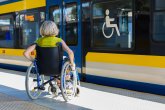
Aachen should be easily accessible and enjoyable for everyone. Accessibility is an important prerequisite for independent mobility.
More
Concepts for Specific Subregions
Mobility plans have already been adopted for several city districts and the downtown area; these plans outline the key measures for improving mobility in the respective districts and neighborhoods. These plans provide the framework that will guide specific redevelopment initiatives and projects. Additional plans are currently being developed.
Here you will find summaries of key measures and planning steps in individual city districts and neighborhoods. The linked pages provide further information on the current status of each initiative.
City center
32,000 people live within Aachen’s Alleenring. Shops, businesses, cultural, medical, and social institutions, as well as government offices, are concentrated here in high density. Therefore, the city center should be easily and safely accessible by all modes of transportation. A bicycle distribution ring on the Grabenring, traffic management for automobile traffic, the expansion of pedestrian zones and premium pedestrian paths, as well as an expansion of public transportation, are the key measures of the comprehensive concept for downtown mobility adopted in 2023. The specific needs of people with disabilities, those requiring care, and delivery vehicles must be taken into account.
Hair
Mobility in Haaren should be organized in a way that is as safe, comfortable, and climate-friendly as possible, through dialogue with residents as well as representatives from business, politics, and associations. As part of the “Haaren Clever Mobil” initiative, the “HaarenMobil” project will test dialogue formats for long-term implementation in 2026 and implement further improvements to mobility. A mobility plan for the town center was approved in July 2026. Public transportation in Haaren has been successfully improved with the SB71 express bus. A plan for the implementation of the Haaren priority bike route has been submitted for funding and is currently awaiting approval.
Eilendorf
A mobility plan was developed for and in collaboration with the Eilendorf district and approved in 2024. It is intended to support the district’s further transportation development. Eilendorf has a key transportation hub in the form of its rail stop; the tunnel there is scheduled for renovation. Eilendorf is the first neighborhood for which a priority bike route has been planned. The greatest need for action lies on Von-Coels-Straße. The district council has yet to prioritize the measures.
Fire
Trierer Straße is the main thoroughfare connecting Aachen’s downtown with the southern suburbs and plays a key role for both car traffic and public transportation. In recent years, the Brand Bicycle Priority Route has been established—a route with few traffic lights and little car traffic that runs parallel to Trierer Straße along numerous bicycle lanes. A mobility plan for Brand was developed by a consulting firm in collaboration with residents and approved by the Brand District Council. Thirty-nine measures that can be implemented in the short term were approved in 2024.
Richterich
A mobility plan for Richterich was commissioned in February 2025. The planning firm has developed initial proposals, which are currently under review by the administration. Public participation took place in the form of a map-based survey and at a town festival in 2025. The results are expected to be presented to the Richterich District Council sometime in 2027.
Aachen city region
Since 2022, the cities and municipalities of the Aachen Urban Region have been coordinating regionally significant mobility projects through the Aachen Region Mobility Transition Network (NEMORA). Plans for urban-region-wide public transit and bicycle networks have been approved. An implementation program is currently being developed to carry out specific measures.
Road safety
For safe and understanding coexistence in road traffic: The "Road Safety Action Plan" is the City of Aachen's framework concept, with the help of which structured and intensive work is being carried out to increase subjective and objective road safety on Aachen's roads.
Working together in traffic
In a three-hour discussion, ten people from Aachen's urban society exchanged views on coexistence in road traffic. They each use different means of transport on their journeys through Aachen. Whether on foot, by bike, bus, car, van or a combination of many modes of transport on a single route - coexistence succeeds when mutual consideration is shown.