Peterstrasse 36-38
Monument #35

Introduction
Such "speaking" façade decoration as an indication of the (former) use is not uncommon. The new buildings on Franzstrasse, which were also constructed in a similar way shortly after the Second World War, show small pretzels in the façades, for example, as a reference to the first use by a bakery.


Moving history
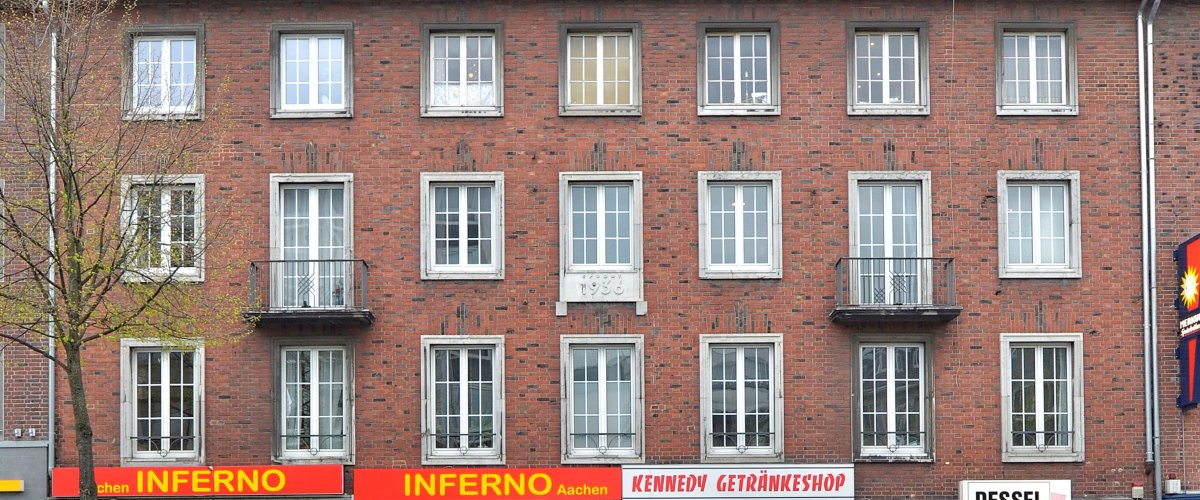
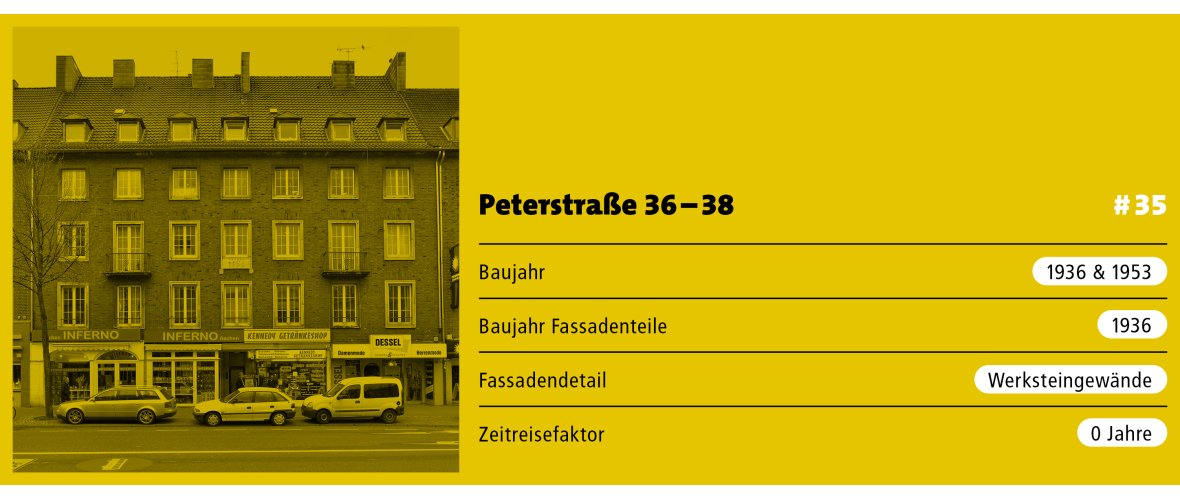
The old district here was not only cramped and neglected in the 1920s. It was also regarded as a "shelter for immoral trades, criminals and communists" (Moritz Wild: Architekturlehre und Städtebau im Regierungsbezirk Aachen, p. 120) and thus gave the city administration of the time cause to comprehensively renovate the district. The originally very small-scale historic buildings on this site were demolished in the 1930s and replaced by the current building no. 36-38. According to the inscription on the façade, it was largely completed in 1936. The building suffered considerable damage during the Second World War and was burnt down to the outer walls and staircase. It was restored in 1953.
Search for clues
Stores were planned for the first floor of all buildings and rental apartments on the upper floors. The ridge heights and façade widths of the buildings vary, but the eaves edge remained almost uniform, which reinforces the perception of a uniform urban context. The seven-axis building itself has a strictly structured façade in the traditional combination of brick and stone. Some movement is added by balustrades, railings and the interplay of bricks fired in different shades of dark.
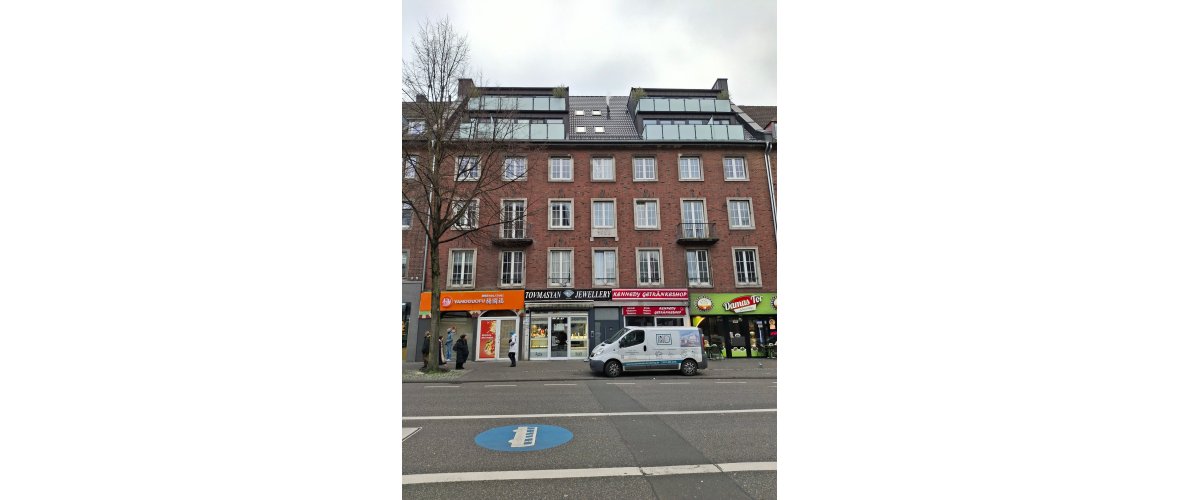
The building has a strictly structured façade, which is broken up by balustrades, railings and bricks of different dark colors.
Special features
Today's street to the left of the building, two houses further on, is named after the spa physician François Blondel, who was instrumental in the expansion of Aachen's spa facilities in the 17th century. Just 100 years ago, the street was called Kurhausstraße, as the large Kurhaus complex was located on the north side of Peterstraße. The baroque part of the old Kurhaus still stands today, while the large garden wing and the Kurhaus garden from the 19th century were destroyed during the war and replaced by the bus station in 1973.
Picture gallery
Discover more

All monuments at a glance
Translocation
The method of translocation was already known and popular in 19th century urban planning. It allowed old building stock to be saved and reused. In Aachen, this method was applied in a special and extensive way.