Yard 9
Monument #29


Introduction
The house at Hof no. 9 is located directly next to the former Quirinusbad (no. 7). In the 1960s, the then city conservator Leo Hugot chose this vacant lot as the location for his future home and architectural office and oversaw the construction of the new building himself.


Moving history
Shortly after the war, the first reconstruction plans were drawn up for the core area of Aachen's city center, including the Hof and Büchel. In the area of the medieval Blasiusspital, there had probably been a gap in construction since the late 19th century, which Leo Hugot closed around 1968 with a new building for his own purposes.
Search for clues
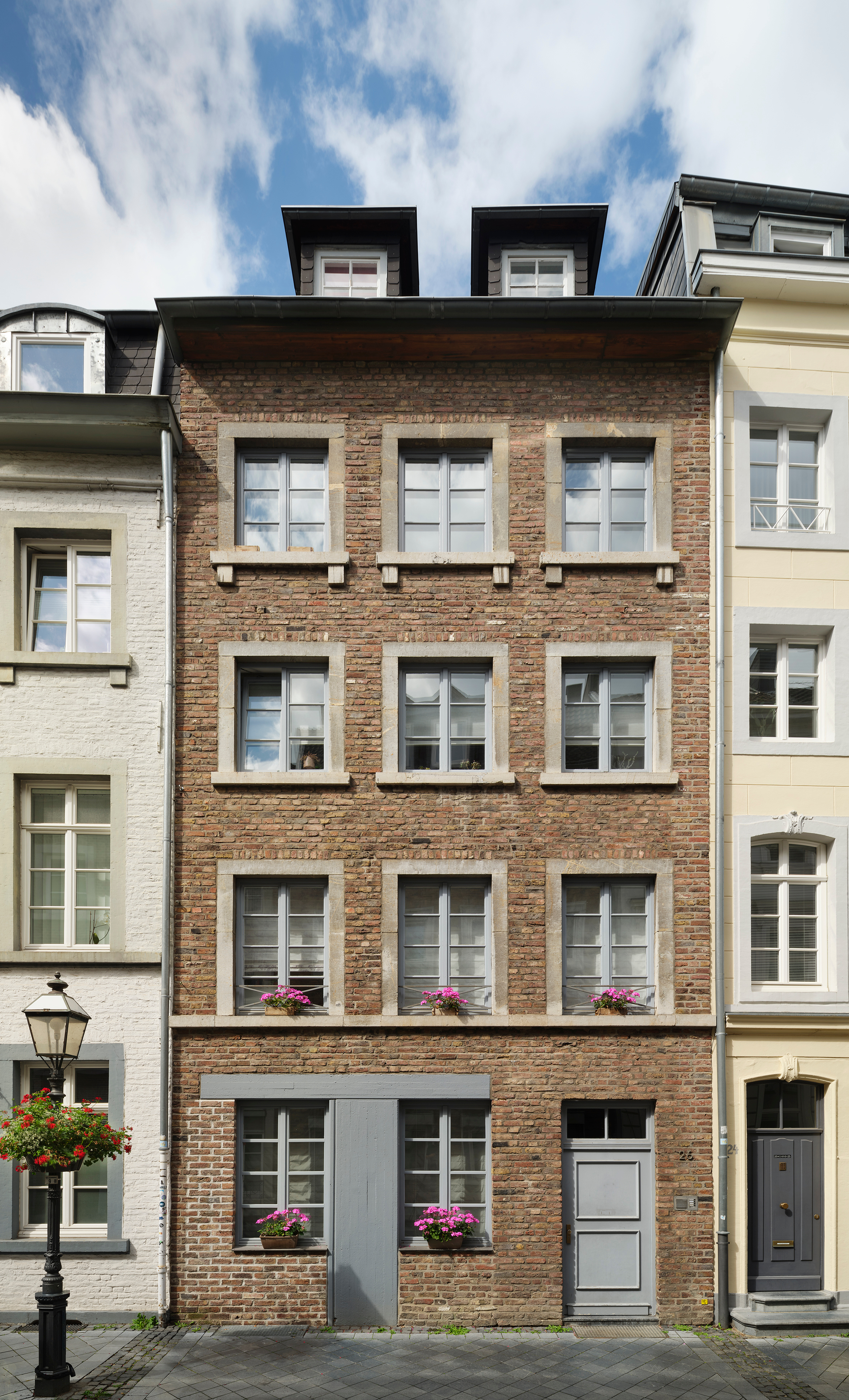
Hugot built a thoroughly modern residential building with integrated offices. The brick and natural stone façade facing the courtyard was designed historically using parts of the previously demolished building at Eilfschornsteinstraße 25, whereby Hugot dispensed with one storey in consideration of the other buildings in the courtyard.

The façade facing the courtyard of the residential building is made of brick and natural stone. It was historically supplemented and designed using the fragments of the house at Eilfschornsteinstraße 25.
Special features
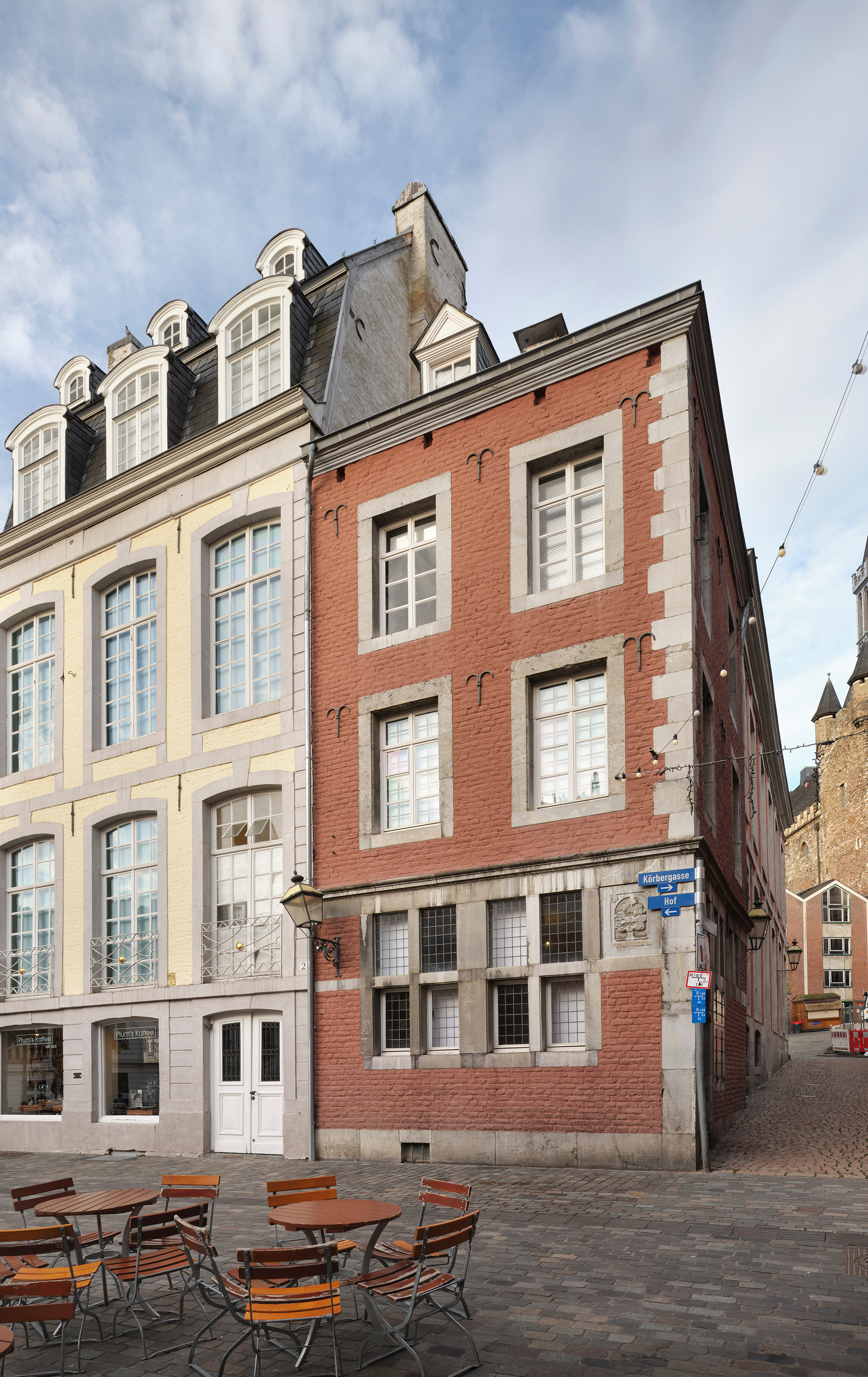
A special feature of the building are the quarry stone walls of the medieval Blasiusspital hospital, which were archaeologically excavated in 1965. In terms of urban planning, the courtyard was to retain its historical character as far as possible and be spared the traffic planning of the post-war period. As a result, many buildings with partially reconstructed or translocated façades have been restored here since the 1950s.
Picture gallery
Discover more

All monuments at a glance
Translocation
The method of translocation was already known and popular in 19th century urban planning. It allowed old building stock to be saved and reused. In Aachen, this method was applied in a special and extensive way.