
Peterstrasse 32-34
Monument #34


Introduction
As early as the time of the Weimar Republic, there were initial plans to modernize certain areas of Aachen. Peterstrasse, with its outdated and neglected building fabric but at the same time strategically good location, was a particular focus of attention. The implementation of the urban redevelopment concept took around 25 years with interruptions.
Moving history
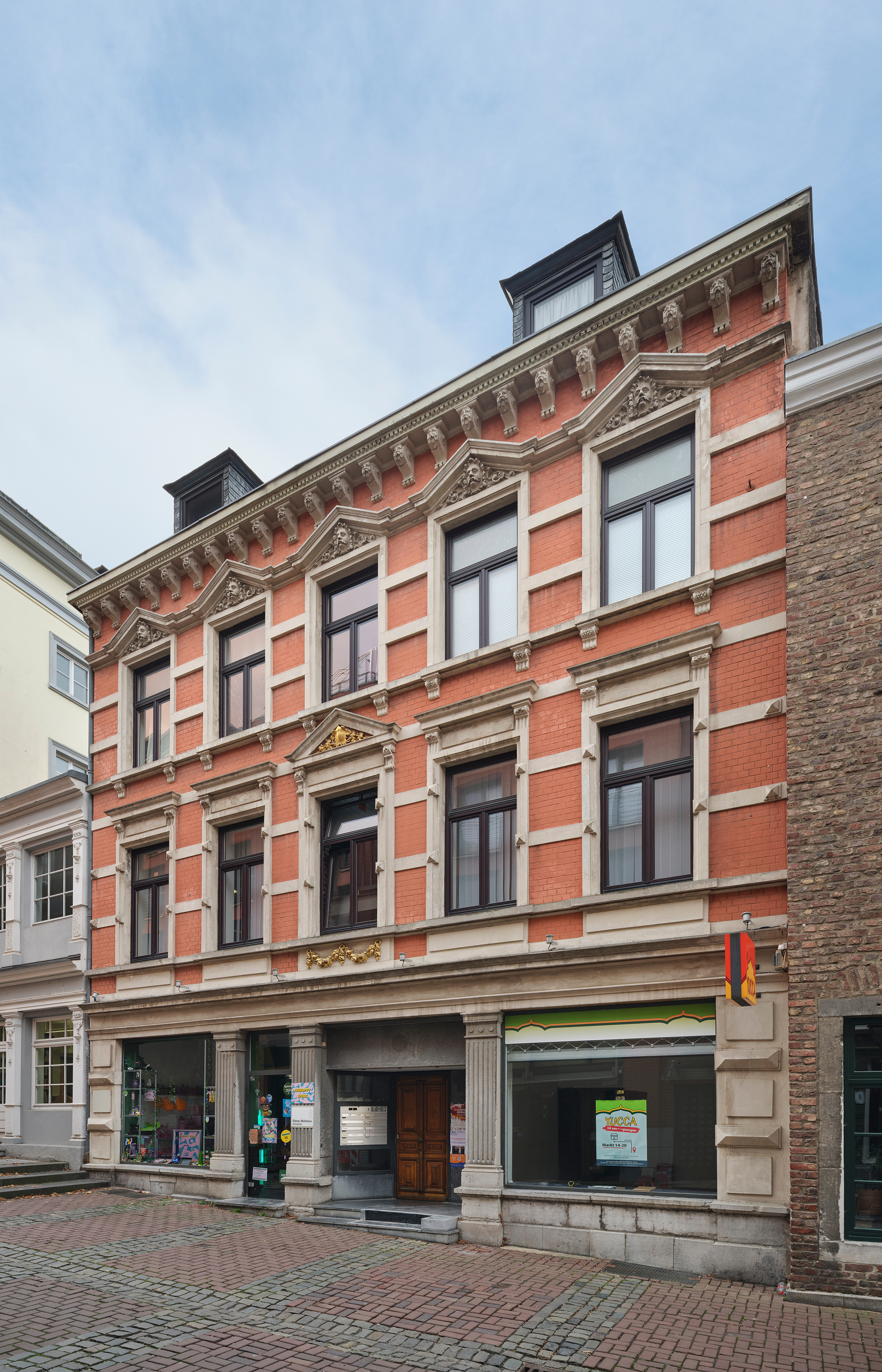
The implementation of the redevelopment plans, which were drawn up in 1933 with the involvement of Professor René von Schöfer, began in 1935 on Peterstraße. The historic, narrow buildings in this area were demolished after most of the properties had been bought up by the city since the 1920s. The building at Peterstraße 32-34, which was probably erected from 1936 onwards, was one of the first buildings to be completed in the area of the new 25-metre-wide street axis, as was the neighboring building at 36-38.
Search for clues
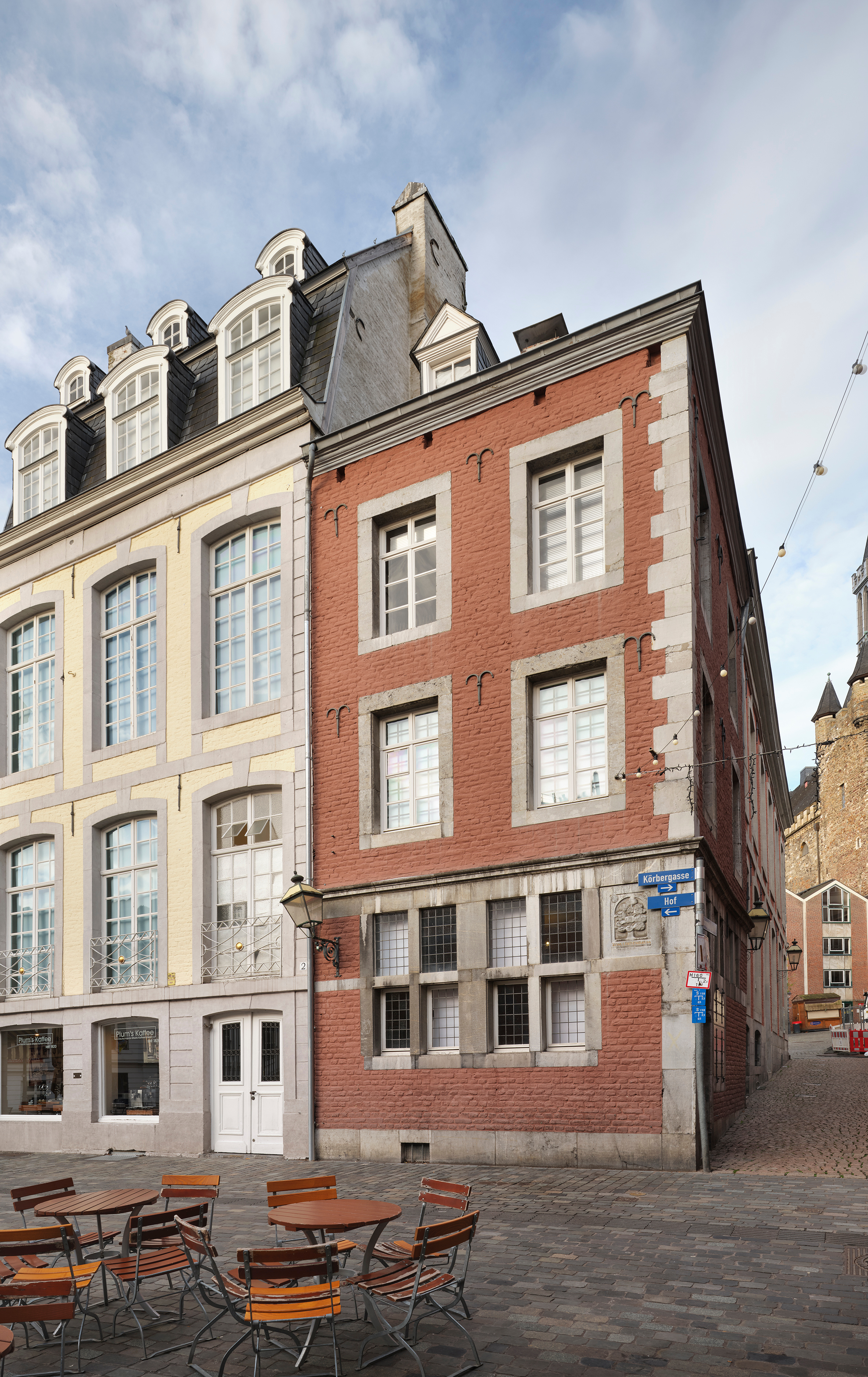
As with the neighboring buildings, the use of brick for the façade and ashlar for the window frames is characteristic, reflecting the traditional architectural language of Aachen's historic buildings. The façade shows a number of details that demonstrate the need for a reduced but traditional design: There are holders for flags under the windows of the second floor - a reference to the intended function as a representative traffic axis in the 1930s. A stone inscription between the windows provides a reference to the previous buildings and their house names. The wedge stones above the windows are also varied, each of which shows a different motif, probably alluding to its use as a restaurant.
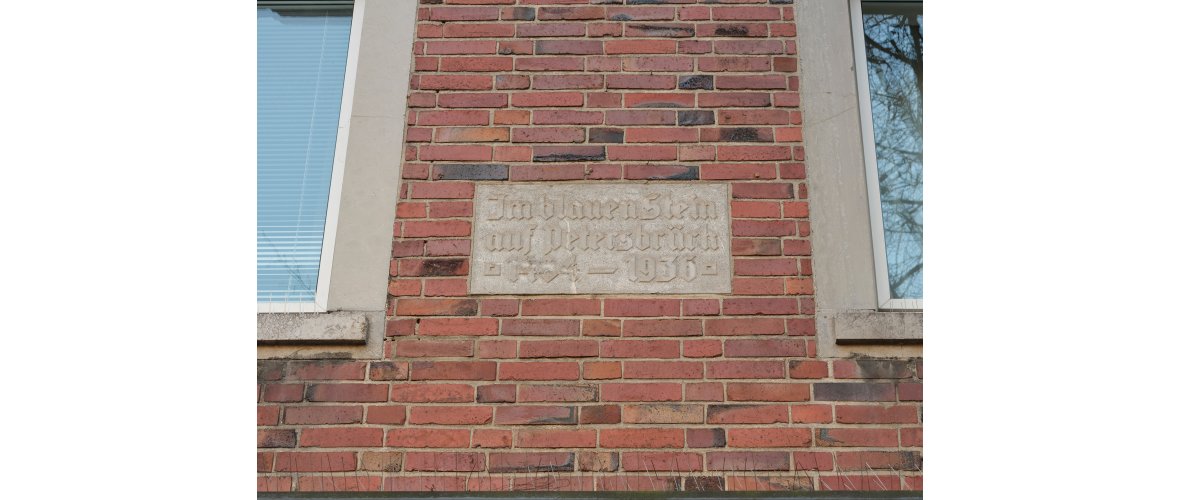
The façade has a minimalist but traditional design. In addition to the wedge stones above the windows, there are also flag holders underneath and a stone inscription between the windows.
Special features
Such "speaking" façade decoration as an indication of the (former) use is not uncommon. The new buildings on Franzstrasse, which were also constructed in a similar way shortly after the Second World War, show small pretzels in the façades, for example, as a reference to the first use by a bakery.
Picture gallery
Discover more
All monuments at a glance
Translocation
The method of translocation was already known and popular in 19th century urban planning. It allowed old building stock to be saved and reused. In Aachen, this method was applied in a special and extensive way.