
Münsterplatz 2
Monument #27

Introduction
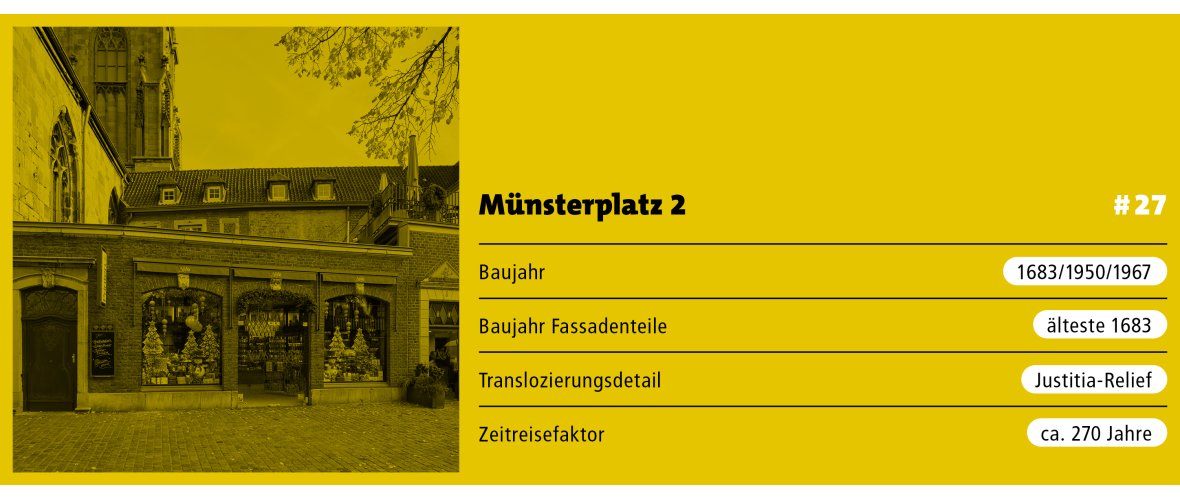
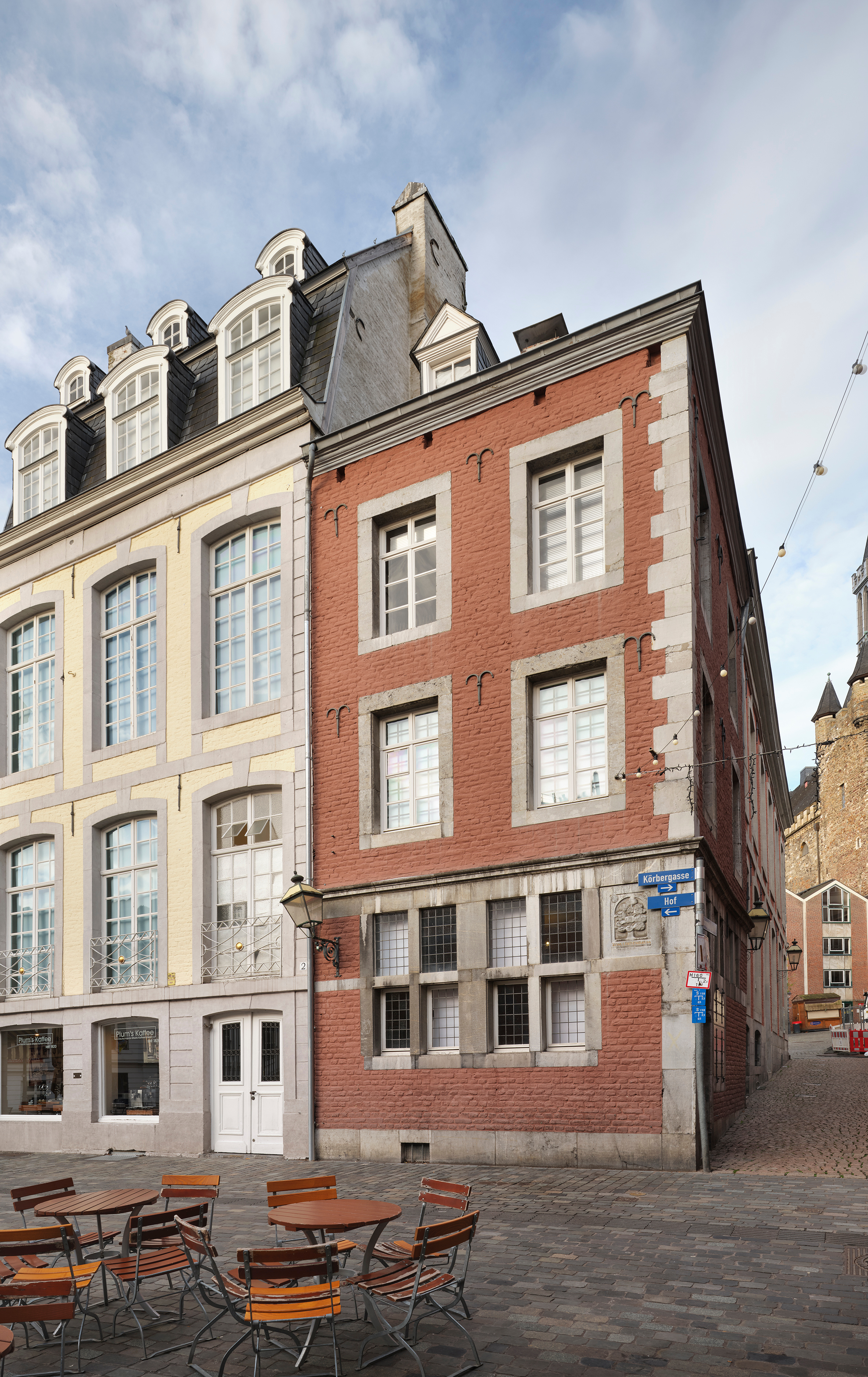
The so-called Sendgericht was once located right next to St. Foillan's Church. Parts of the historic building are still preserved in the largely concealed building in the background, while the front part is a new building from the post-war period.

Moving history
The two-story rear section likely dates in part to the second half of the 17th century. This is also indicated by a magnificent coat-of-arms stone featuring the city eagle, which bears the date 1683. This is where the administration of the Sendgericht court was presumably located. After 1804, the building was used for storage purposes. In 1967, this section of the building was renovated by Leo Hugot. The front, single-story building was rebuilt around 1950 as a business space for the antique dealer Hubert Lüttgens following wartime destruction. Historical elements were incorporated into the façade during this process. Lüttgens was also the initiator of the building at Hühnermarkt 19, one of the first façades to feature reused historical elements.
Search for clues
Two bluestone portals were inserted into the façade: the left one with a segmental arch, decorated wedge stone and delicate wooden door from the Rococo period. The triangular relief of Justitia at the right-hand entrance refers to the former court function.
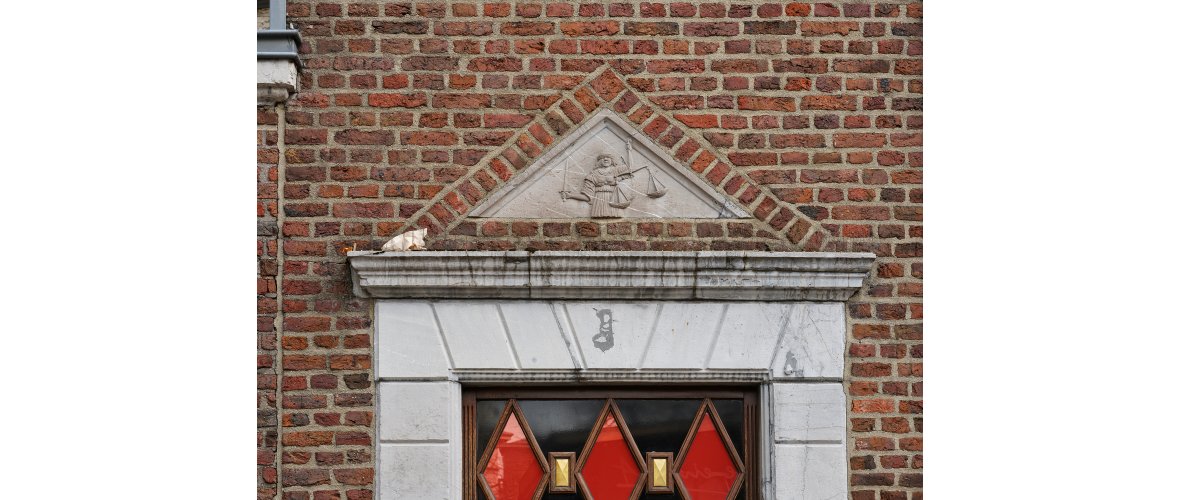
The Justitia relief is a reference to the former purpose of the building at Münsterplatz 2 as an ecclesiastical court.
Special features
The court of justice primarily dealt with and reprimanded ecclesiastical, but also secular misdeeds, sins or e.g. blasphemous speech by parishioners. The Sendgericht existed here from at least the 14th century until secularization in 1804.
Picture gallery
Discover more
All monuments at a glance
Translocation
The method of translocation was already known and popular in 19th century urban planning. It allowed old building stock to be saved and reused. In Aachen, this method was applied in a special and extensive way.