Chicken market 19
Monument #36

Introduction
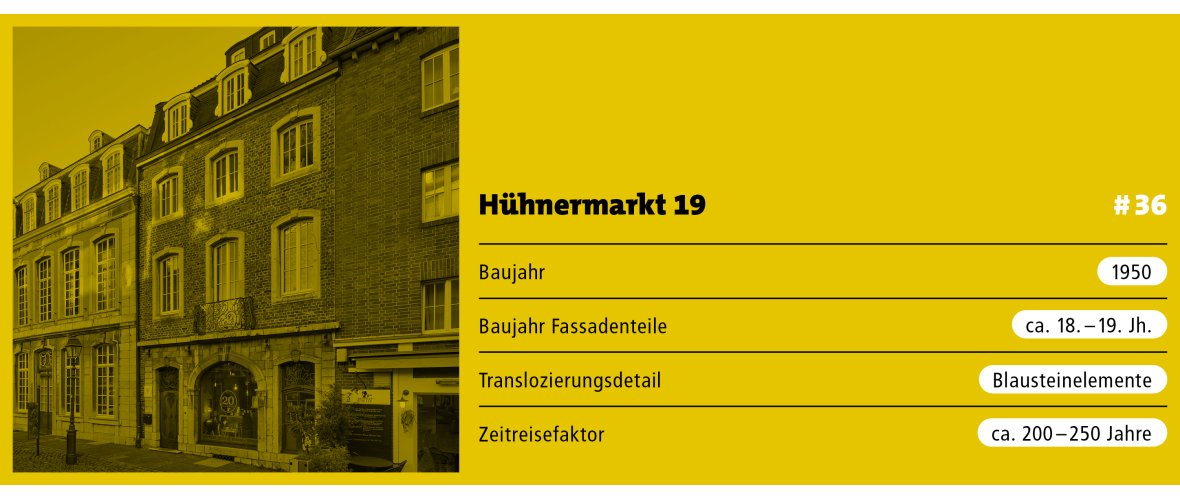
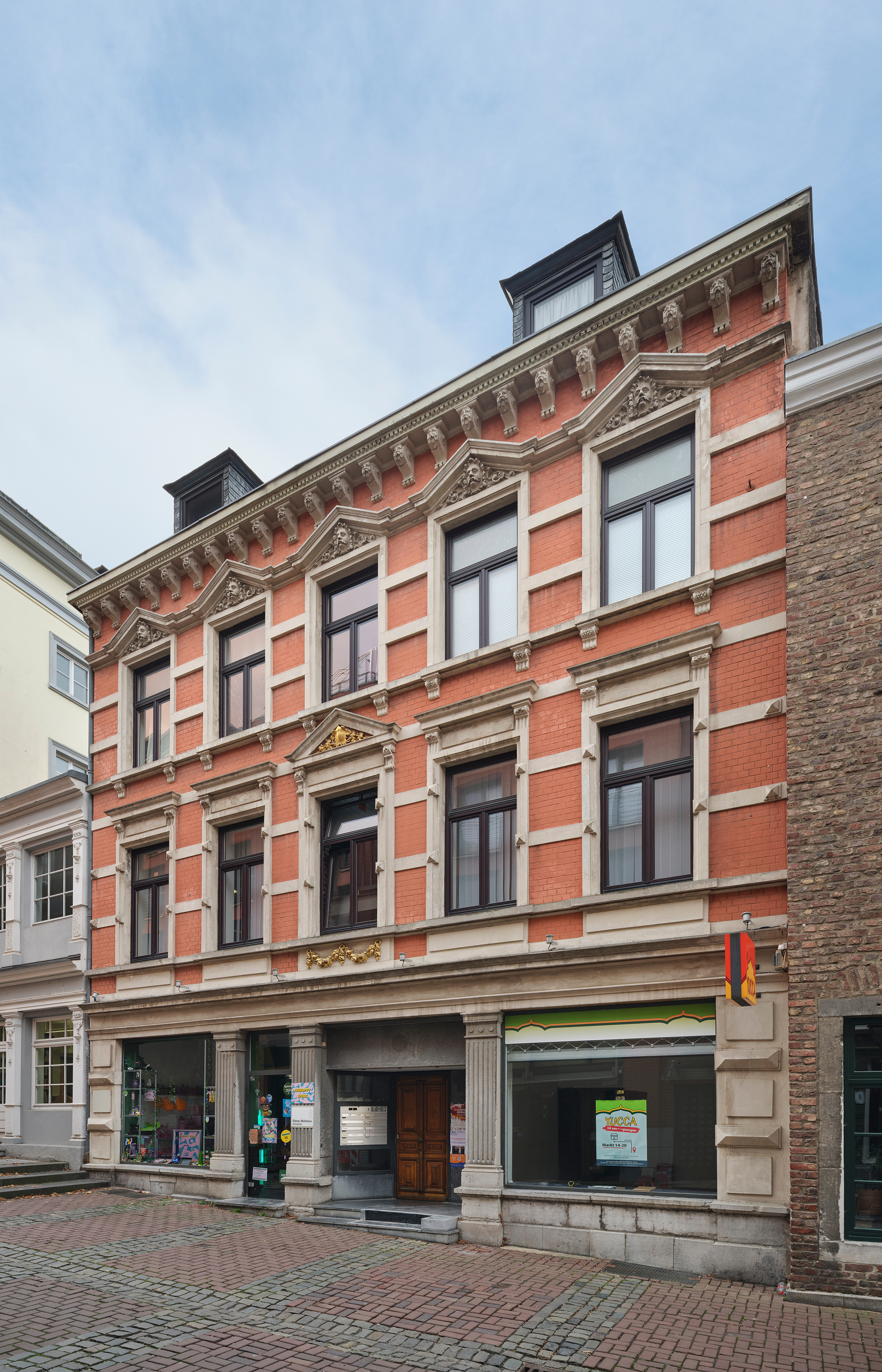
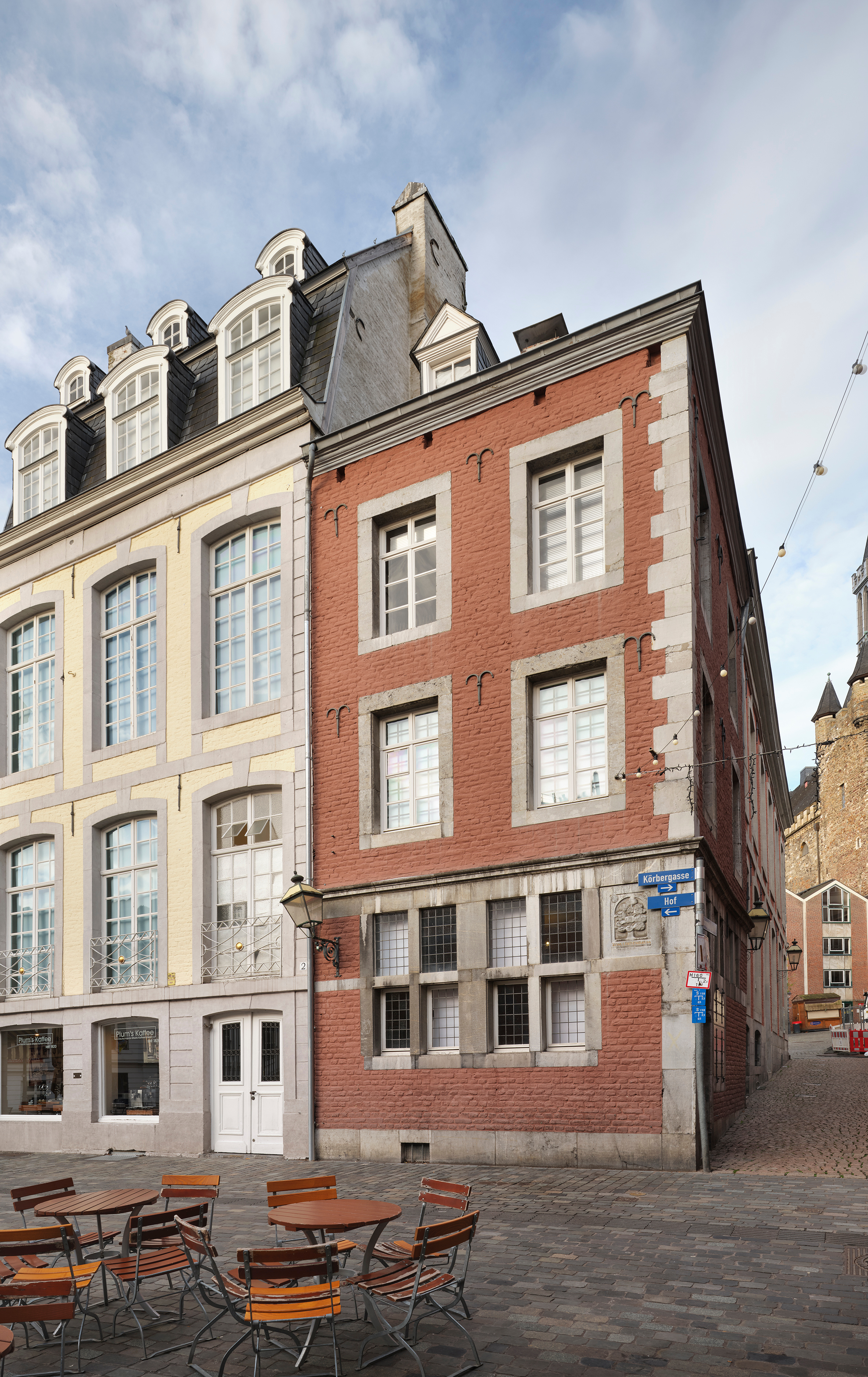
The original house at Hühnermarkt 19 served as the headquarters of the bakers' guild until the dissolution of the guilds in the 19th century. The house was demolished around 1890 and replaced by a residential and commercial building in the historicist style. This was destroyed in the Second World War and replaced by today's new building - an unnoticed but important pioneer of reconstruction.


Moving history
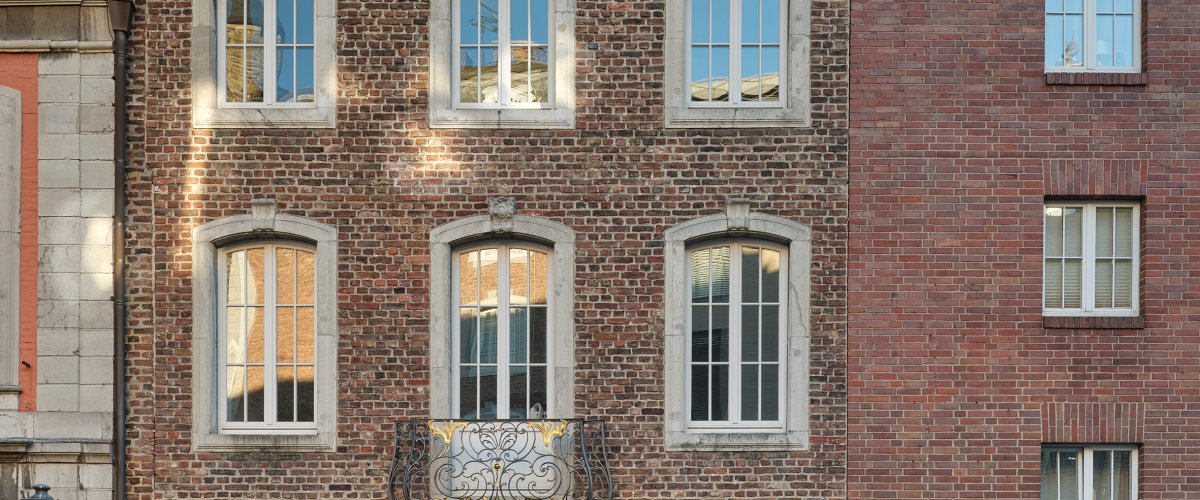
After the war, antiques dealer Hubert Lüttgens bought the ruined site and built a new residential and commercial building there in 1950. His new building was one of the first buildings to be erected in Aachen's city center after the war using historical set pieces from destroyed buildings. Lüttgens was a true pioneer in this respect. The combination of a simple brick façade with historic, translocated bluestone elements and a baroque-looking mansard roof was to become one of the most important characteristics of post-war architecture in Aachen's old town.
Search for clues
Lüttgens designed the façade of his house with bluestone elements from other old buildings that had been destroyed, just as the Aachen city administration was to do on a grand scale ten years later. Parts of the façade came from the house at Krugenofen 15-17. It is possible that a balcony from Franzstraße 8 and the front door of Bahnhofstraße 22 were also reused. The missing window sills on the first floor, the offset stones at the base of the front door and the arched shape of the shop window show that materials were recombined and adapted.
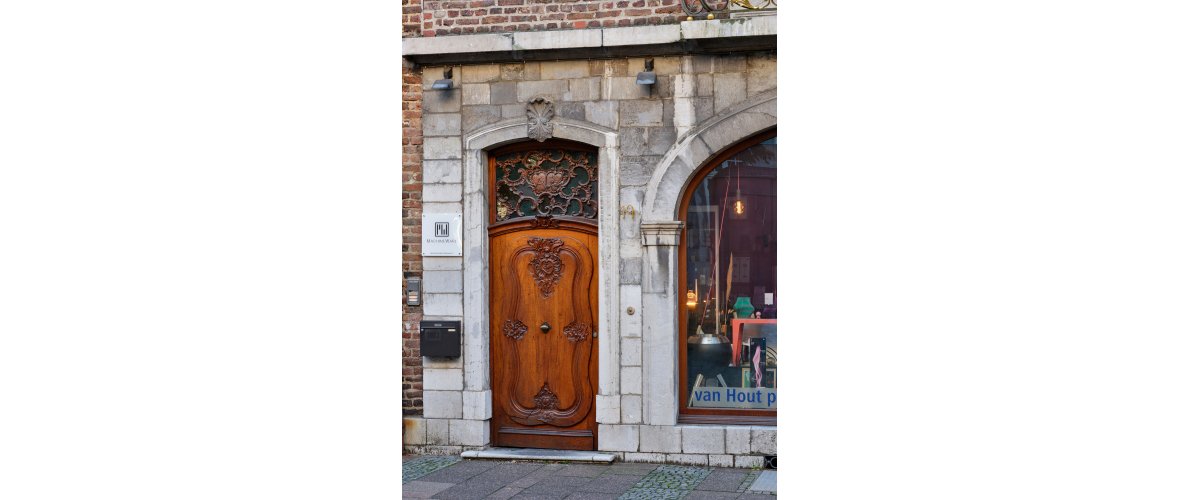
Many elements from other houses come together in the design of this house. It is assumed that the front door of Bahnhofstraße 22 and a balcony from Franzstraße 8 were reused.
Special features
House no. 19 is the first of its kind to play a special role in Aachen's reconstruction history. Without Hubert Lüttgens and his creative approach to the ruins of the war, the Hühnermarkt, and perhaps even the whole of Aachen's old town, might look very different today. After the completion and establishment of the Couven Museum next door, which shows bourgeois living around 1800, the Hühnermarkt was dubbed Aachen's "treasure chest" by the local press.
Picture gallery
Discover more
All monuments at a glance
Translocation
The method of translocation was already known and popular in 19th century urban planning. It allowed old building stock to be saved and reused. In Aachen, this method was applied in a special and extensive way.