Krämerstrasse 7
Monument #37


Introduction
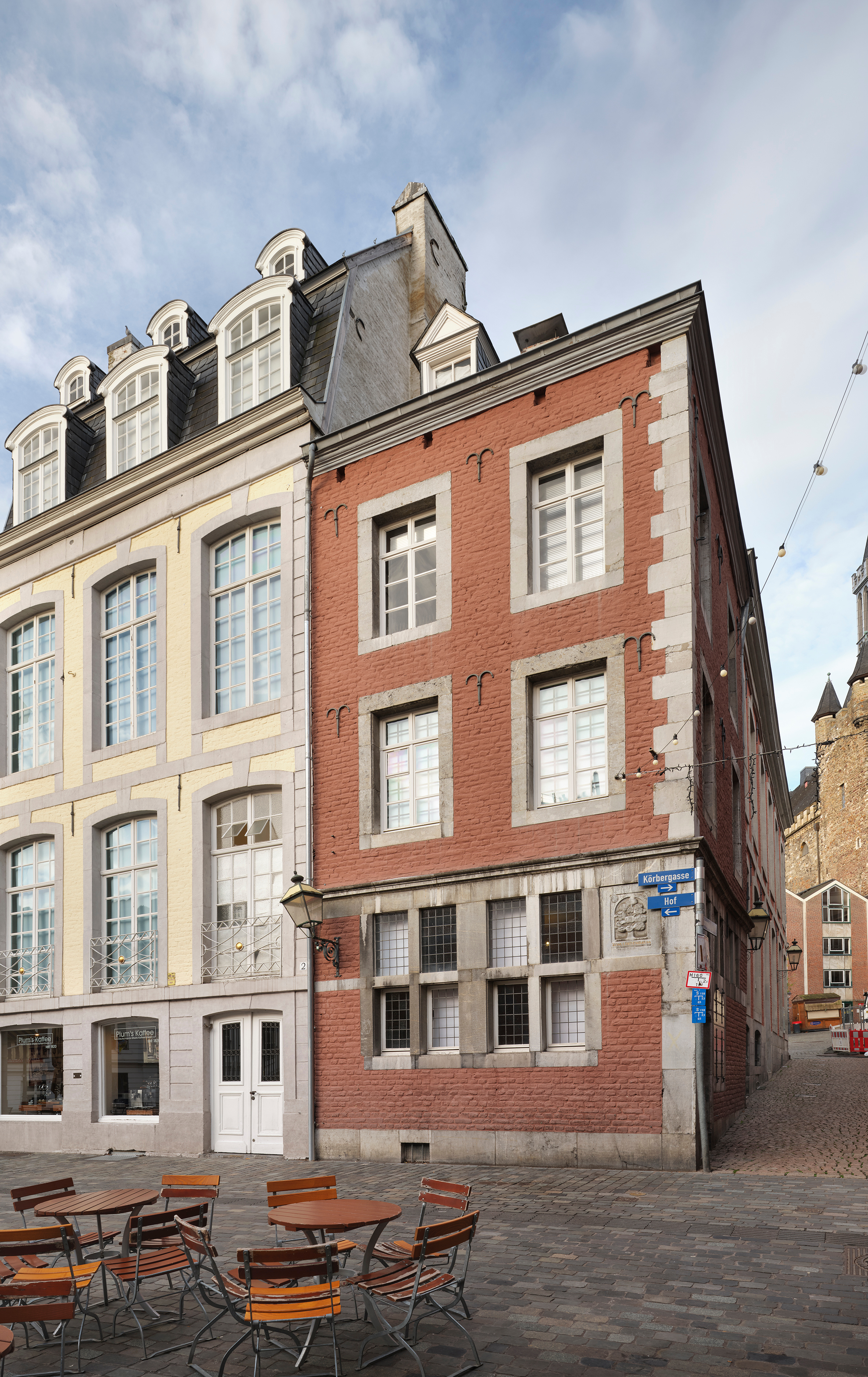
The stately building at Krämerstraße 7 marks the corner between Krämerstraße and Hühnermarkt. With its baroque façade and mansard roof, it is one of the most characteristic buildings in the old town in the immediate vicinity of the cathedral and town hall. However, it was only built in 1967.


Moving history
The historic building on this site with the beautiful name "Zum Apfelbaum" was probably built in the 17th/18th century. Back then, the house had a high pitched roof and a striking stair tower with an onion dome. After the building was destroyed in the Second World War, a low-rise building was erected in 1949 before the current building was constructed in 1967.
Search for clues
The façade of the demolished building at Jakobstraße 120, the so-called Schützenhof, was used for the new building. Its demolition had already been planned in 1941 as part of traffic route planning, but was only carried out after the war. However, the salvaged bluestone walls were not sufficient to furnish the three new façades. Additional walls had to be added from the stocks of the municipal building yard. As with the previous building, there is a statue of the Virgin Mary designed by artist Klaus Iserlohe in a niche above the cornice in the north-west corner.

In a niche above the cornice at the north-west corner of the new building, a statue of the Virgin Mary designed by artist Klaus Iserlohe is reminiscent of the previous building.
Special features
The reconstruction planning after 1945 is decisive for the building in question. The location on Krämerstraße and Hühnermarkt was excluded from major traffic plans in the 1950 reconstruction plans as part of the core of the old town. A complete reconstruction of the former buildings was not intended from the outset, but Krämerstraße was to be revitalized as an old town street with small-scale development. At the time, city conservator Hans Königs repeatedly stated that it had not been possible to rebuild the "Apfelbaum" in its old form for economic reasons, but that a great deal of effort was nevertheless made to restore this "very important urban development site". From 1963, the aim was to preserve the old town ambience by using façades to increase the attractiveness of the city center.
Picture gallery
Discover more
All monuments at a glance
Translocation
The method of translocation was already known and popular in 19th century urban planning. It allowed old building stock to be saved and reused. In Aachen, this method was applied in a special and extensive way.