
Kockerellstrasse Wespienhaus
Monument #10


Introduction
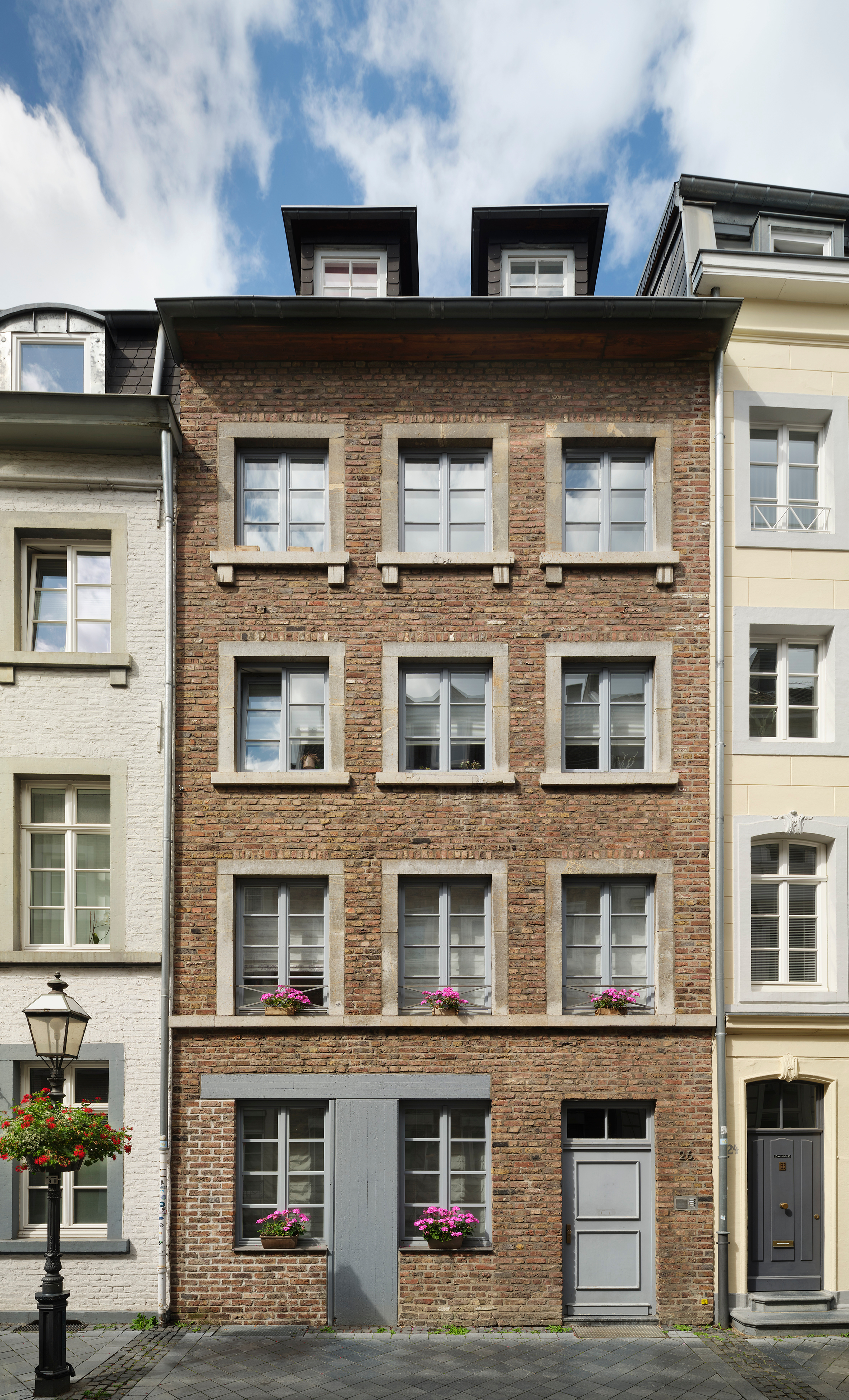
Jakobstraße and Kockerellstraße are core zones of redevelopment area I, in which a complete redevelopment of the west side in its historical guise was pursued in the 1970s. The only translocated façade on the eastern side here is also a special case in the urban reconstruction program.


Moving history
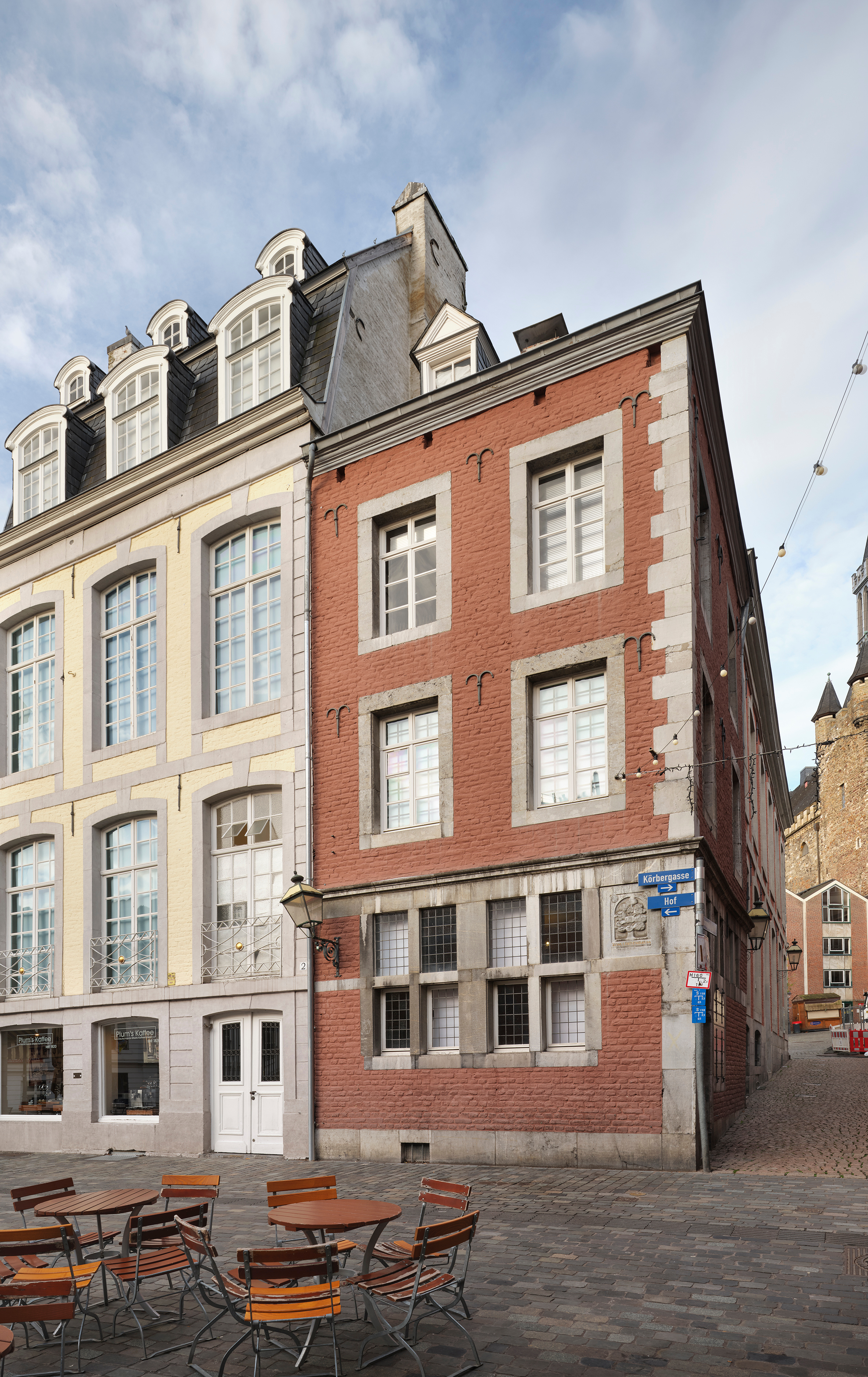
The parts of the façade visible here belong to the so-called Wespienhaus, which stood at Kleinmarschierstraße 45 until 1943. It was one of the most magnificent rococo town houses in Aachen and was built from 1734 by Johann Joseph Couven for the then mayor and cloth manufacturer Johann von Wespien. The house was completed three years later, although the extremely high-quality furnishing of the interior took several more years. The building was also unique because Couven was able to plan the entire façade and floor plan down to the smallest detail of the interior design thanks to the enormous financial strength of his client. The Van Gülpen clothmaking family had lived in the house since 1838, whose heirs put the valuable interior fittings up for auction in 1901. The façade was extensively restored in 1939. Unfortunately, the building was completely destroyed in a bombing raid just four years later, and the few surviving fragments of the façade were subsequently salvaged and stored. On the initiative of the city conservator Leo Hugot, these parts of the façade were put on display in the plain gable wall of the modern gymnasium of the Kaiser-Karls-Gymnasium in 1975.
Search for clues
Parts of the three-axis central risalite from the first and second floors have been preserved and installed here, illustrating the richness of form and the work of the stonemasons. The fragments presented here in an almost museum-like manner are clearly visible, e.g. the incomplete window jambs on the left or the damaged bluestones of the window crowns. In contrast to other façades, the aim here was not to complete the work, but to leave the imperfections and traces of damage visible.

The special feature of this staging of a façade lies in its incompleteness, in order to make traces of the damage from the Second World War visible.
Special features
After all, the sale saved parts of the valuable interior from destruction during the war. The remnants of the interior can be found in the Couven Museum in Aachen, the Germanisches Nationalmuseum in Nuremberg ("Aachener Zimmer") and in the USA. The last attempt by the city of Aachen to buy back parts of the interior was unsuccessful in 1999.
Picture gallery
Discover more
All monuments at a glance
Translocation
The method of translocation was already known and popular in 19th century urban planning. It allowed old building stock to be saved and reused. In Aachen, this method was applied in a special and extensive way.