Kockerellstrasse 5
Monument #4

Introduction
Kockerellstraße was probably built in Roman times. It led over a bridge on the Johannisbach stream up to the market hill. There are various theories about the origins of the name, one of which states that it could have something to do with the chicken or pheasant farm in the Palatinate (Kockerell = Hahnenstall). What is certain is that the family name "Kockerel" appears in various municipal documents from the 13th century onwards.
Moving history
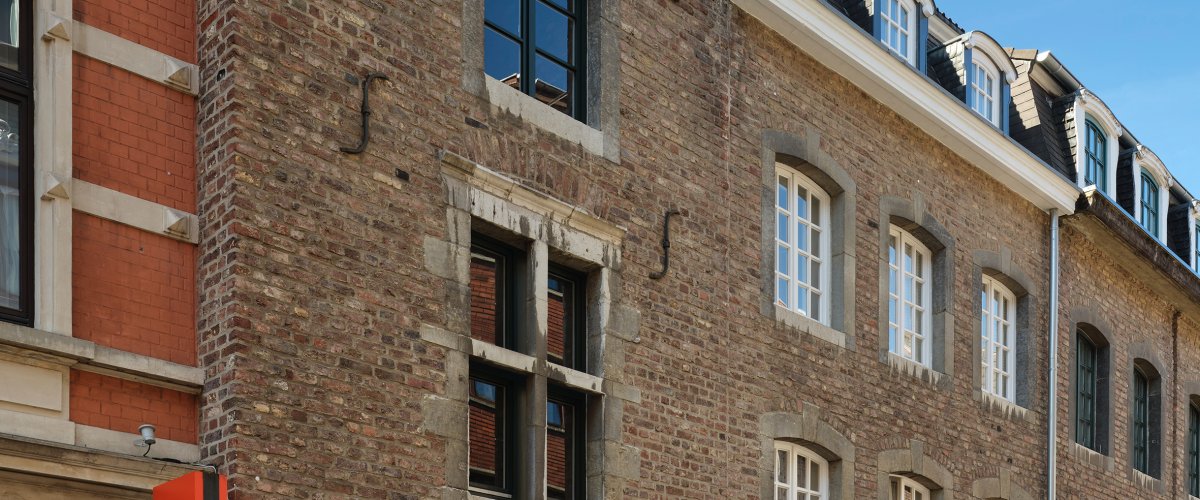
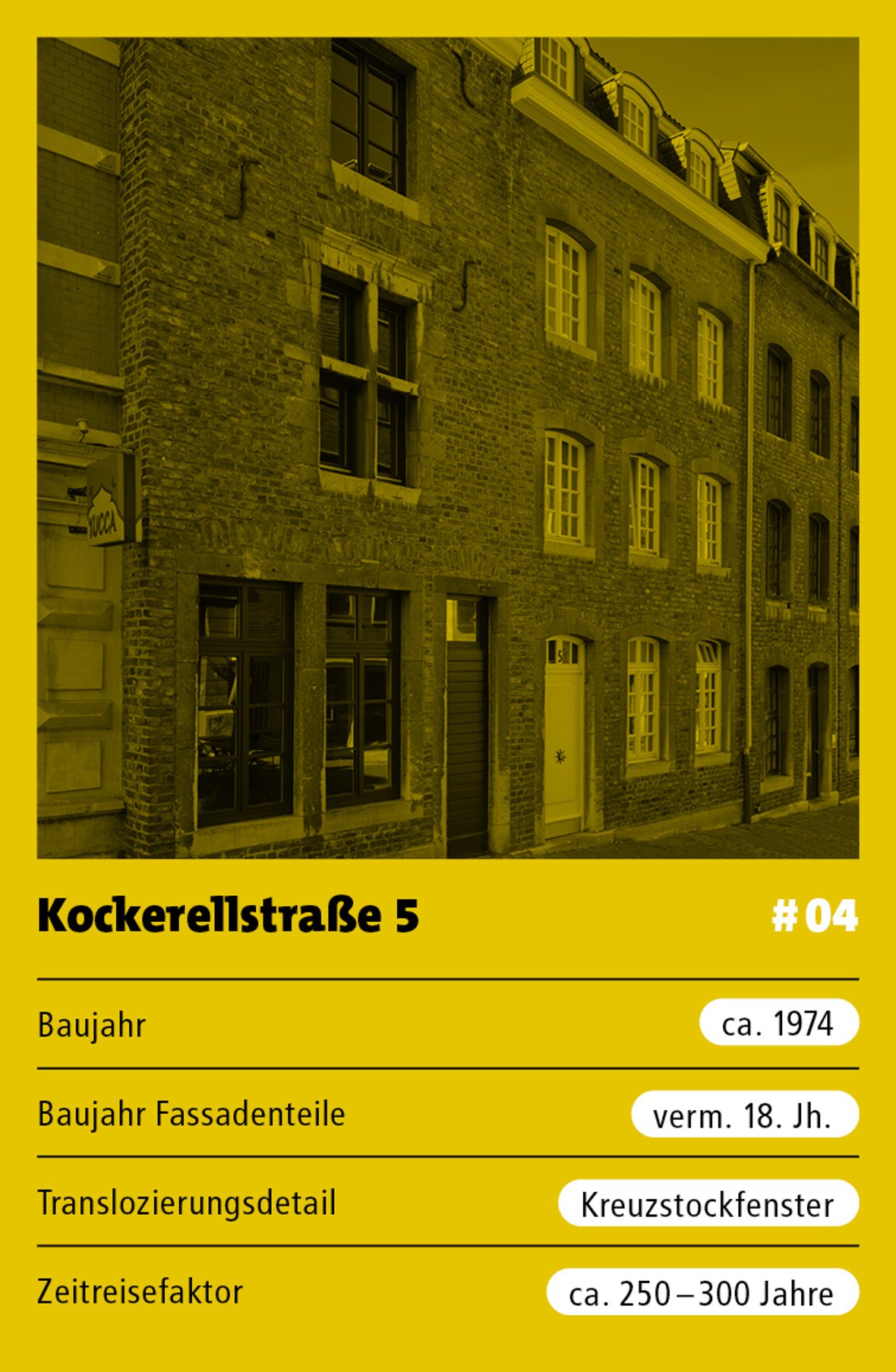
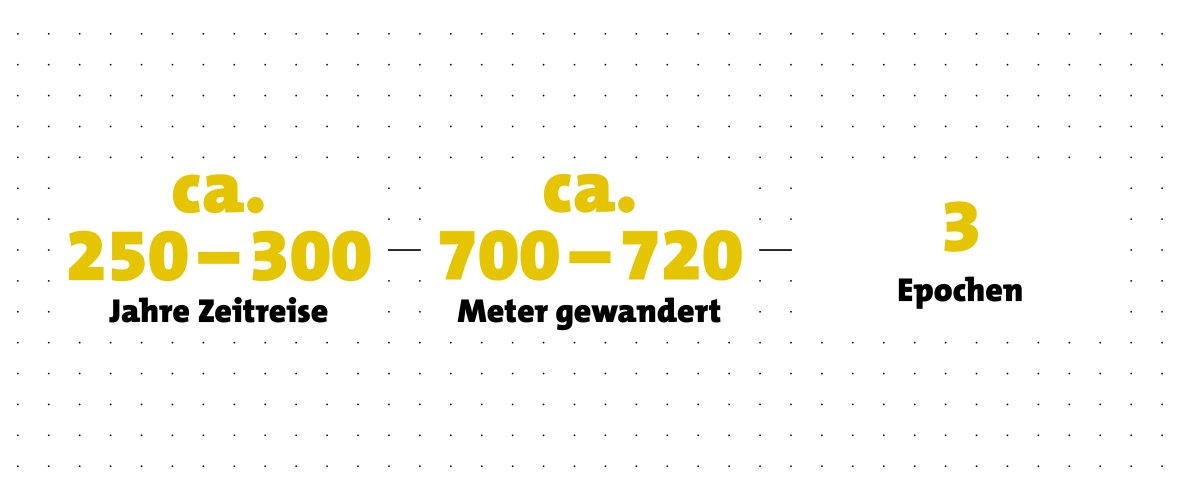
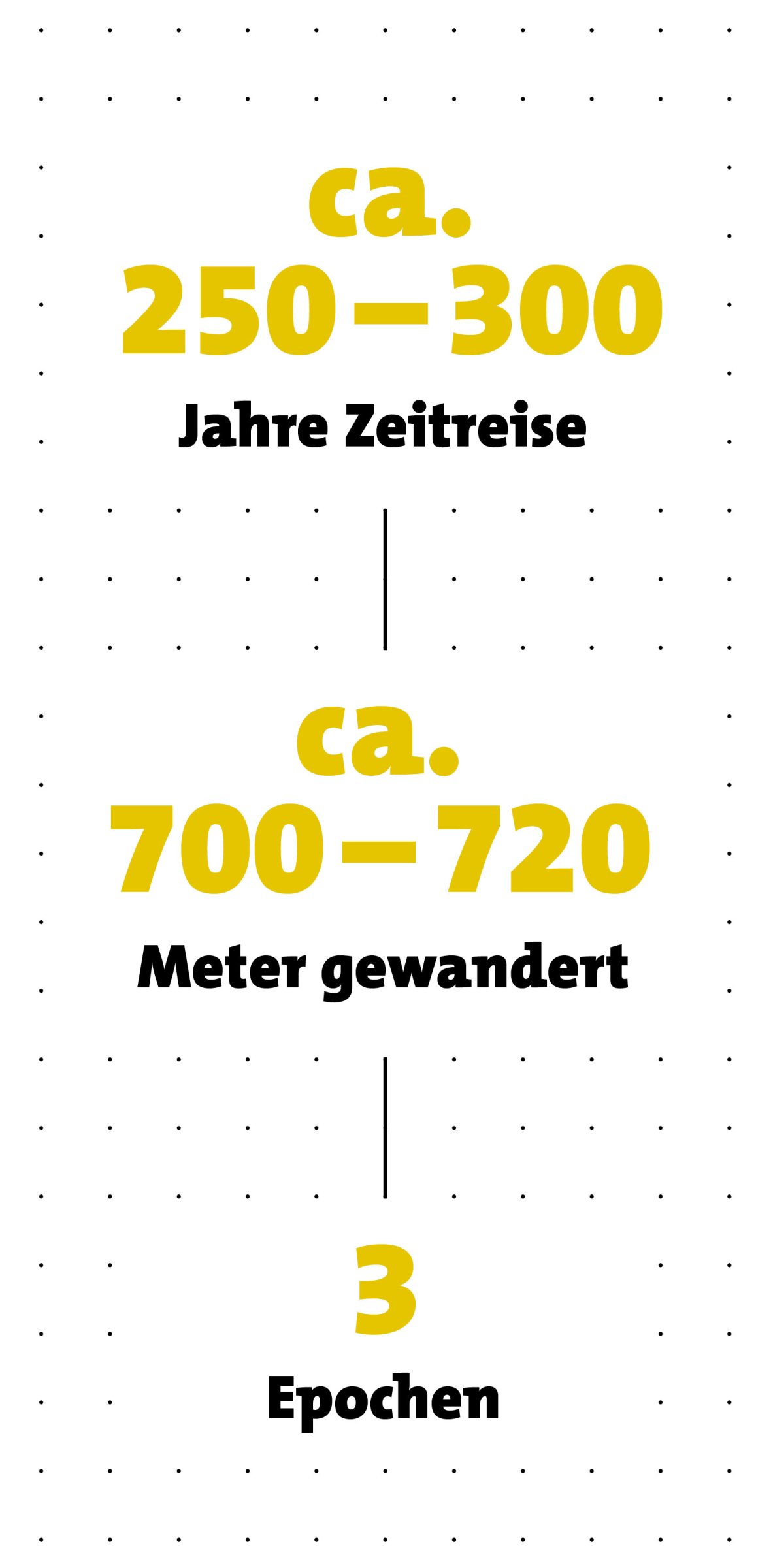
The old buildings at Kockerellstrasse 5 and 7 were demolished, parts of the façade were stored and rebuilt around 1974 as one continuous building with the house number 5. The left part of the building contains parts of the façade of the old building no. 5, while the origin of the right half of the house is not clear, as incorrect information was given in the documents of the time. It is possible that the parts originate from the house at Judengasse 24 or Peterstraße 51. The architect of the building was Heinz Schopp.
Search for clues
During the demolition of the building at Kockerellstrasse 5, the walls of the single-axis façade were stored and reinstalled in the new building. The plinth was made lower, so that all the jambs are about 30 cm lower. The missing crossbar of the upper floor window was reconstructed. Holes and brackets on the walls of the first floor indicate that these stones were reused several times. The right-hand façade in Baroque style shows far fewer "historical" details than the left-hand section.
Holes and staples on the walls suggest that some stones were used several times.
Special features
Different concepts - reconstruction and arrangement - were applied to the façades: Parts of the left-hand façade were reconstructed, i.e. details were restored as faithfully as possible to the original. On the right, bluestone elements of various origins were rearranged to create a strict, uniform façade.
Picture gallery
Discover more
All monuments at a glance
Translocation
The method of translocation was already known and popular in 19th century urban planning. It allowed old building stock to be saved and reused. In Aachen, this method was applied in a special and extensive way.