
Fish market 1
Monument #25
Introduction
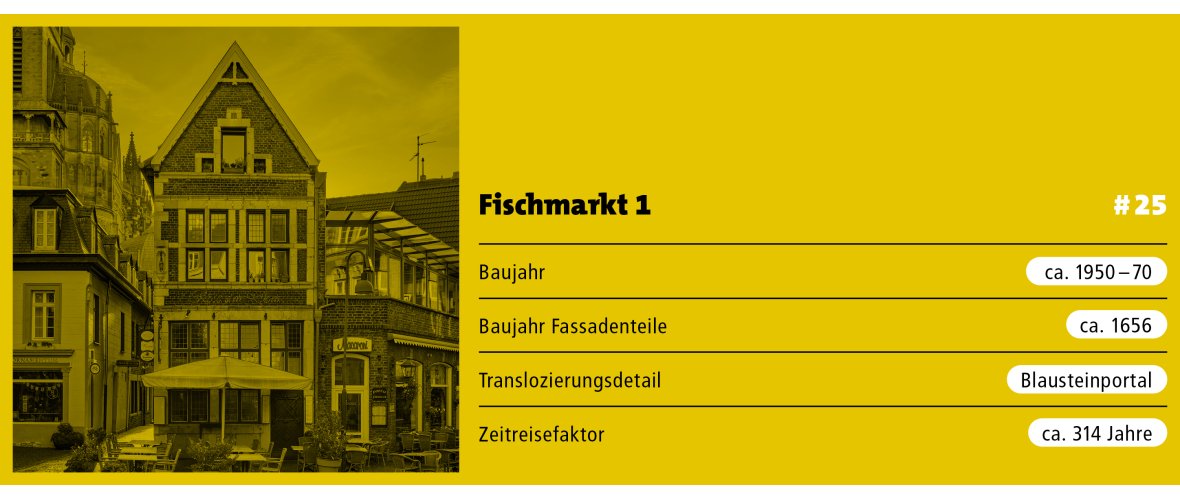
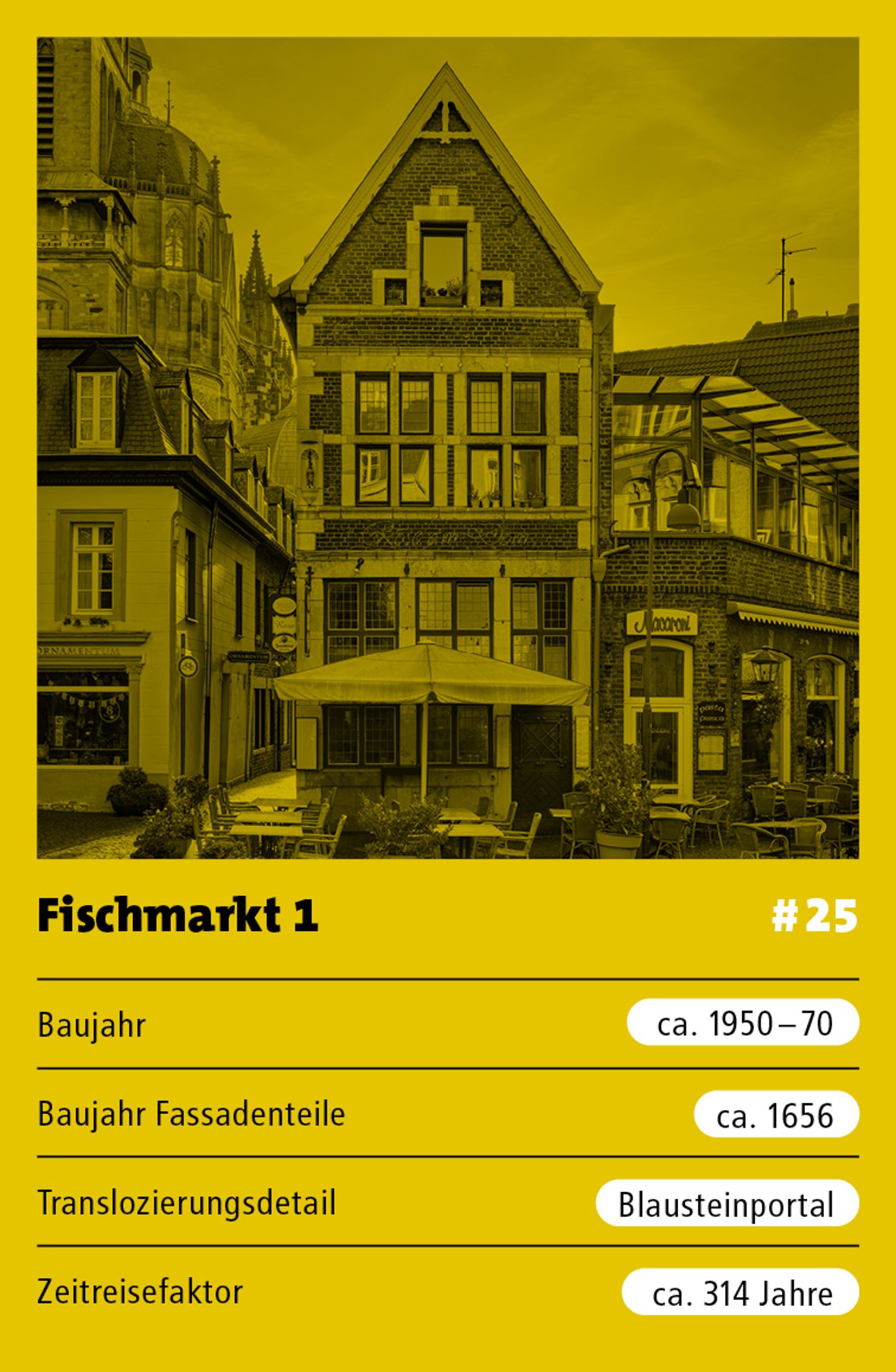
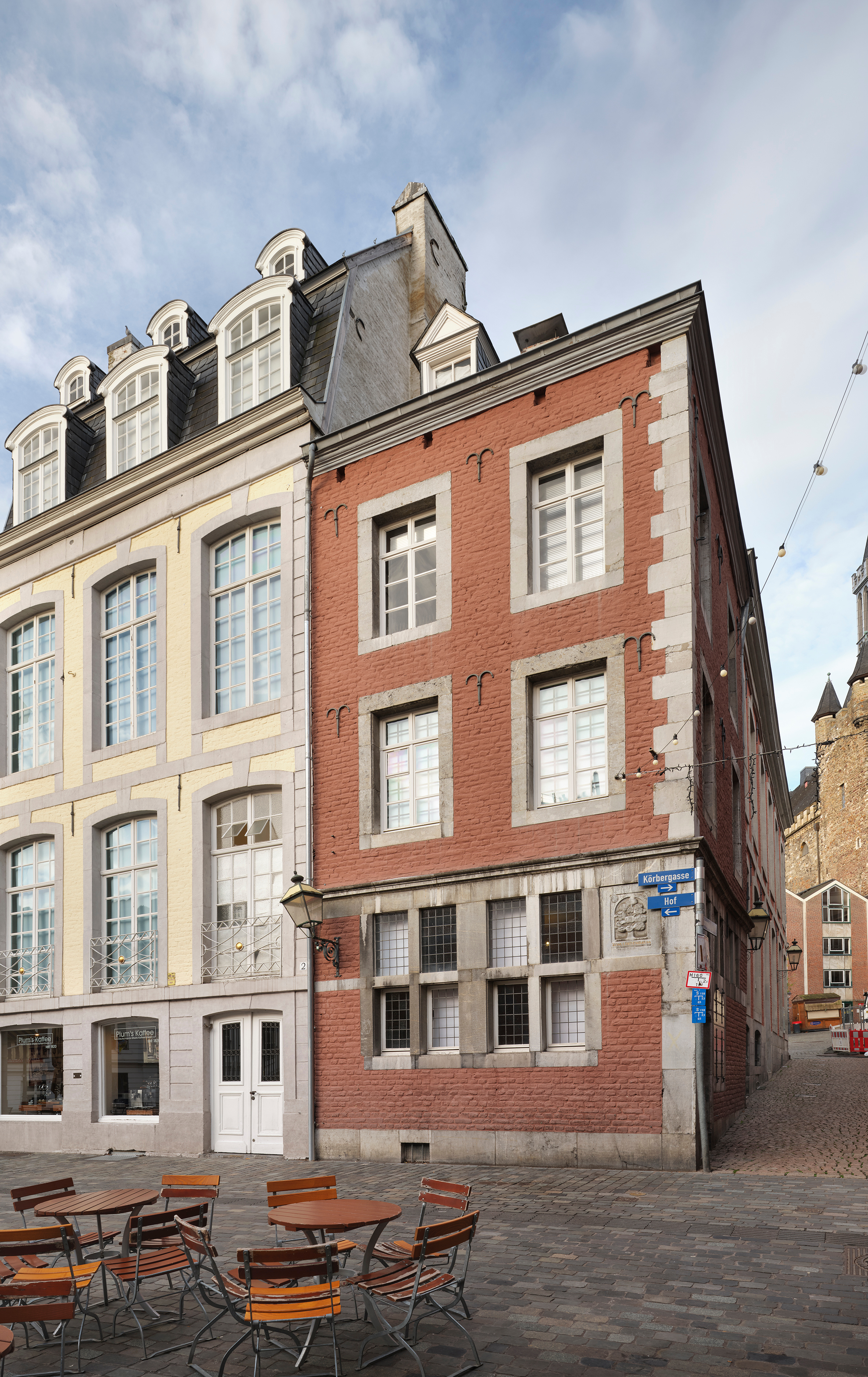
Fischmarkt 1, known as "Rose am Dom", has been a restaurant for centuries. The building was erected shortly after the great city fire of 1656 as the "Haus zur Rose" and shows typical features of the period with its structuring bluestone elements (so-called stone half-timbering), mullioned windows and floating gables. The well-known building was badly damaged during the Second World War.
Moving history
Reconstruction work began as early as the 1950s, as the aim was to save a well-known old Aachen house in the immediate vicinity of the cathedral. The main façade on Fischmarkt was restored to its 17th century state under city conservator Hans Königs and supplemented with bluestone elements from other houses. His successor Leo Hugot had the building renovated again in 1970: This time, the main façade was left as it was and the rest of the building was rebuilt in its historical guise instead. A façade with mullioned windows on a quarry stone base was created facing Spitzgässchen. The part of the building facing Münsterplatz was renovated with a slate-covered mansard roof, dormers with scroll volutes and segmental arch windows in the 18th century style.
Search for clues
Leo Hugot added authentic-looking details to the exterior and interior of his new building, such as anchor ironwork, beamed ceilings and a fireplace. A modern two-storey glass element was added facing Spitzgasse. Concrete was used for some of the windows instead of bluestone. The first floor windows of the main façade are made up of different parts. Found a trace?

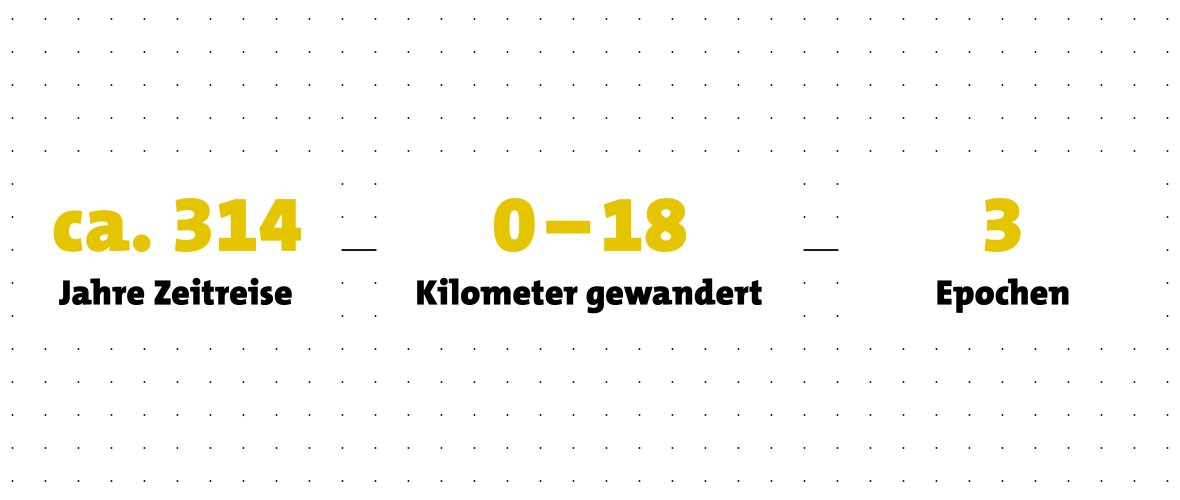
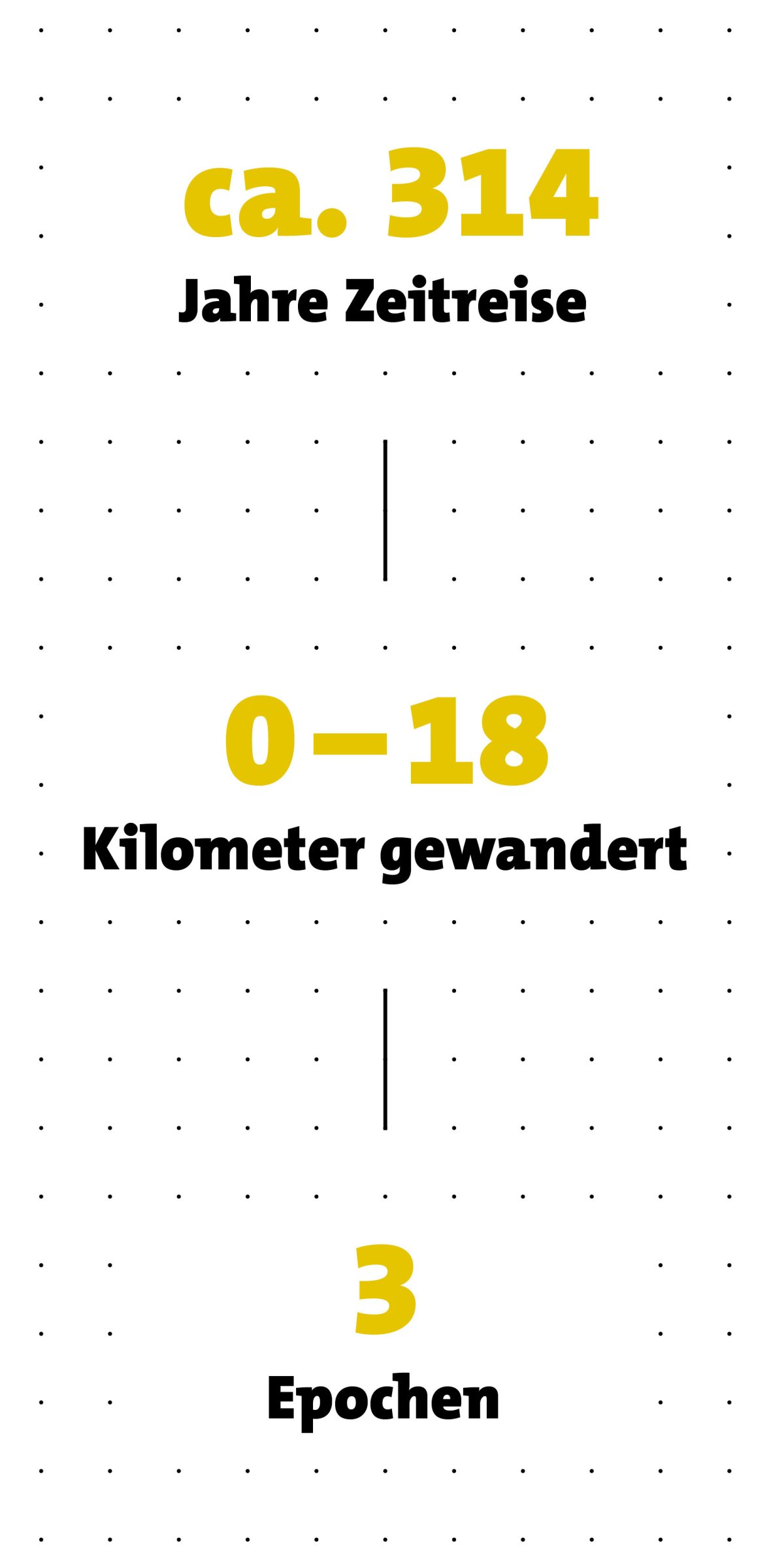
Here you can see one of the longest "hikes" of the translocations in the Aachen model: The bluestone portal comes from Lürken Castle in Eschweiler.
Special features
The bluestone portal in Spitzgasse is also not part of the original building, but comes from Lürken Castle near Eschweiler, which had to make way for open-cast lignite mining in the 1960s. Instead of the single-storey building to the right of the "Rose", there were multi-storey buildings here until the war, and the street was correspondingly narrow.
Picture gallery
Discover more
All monuments at a glance
Translocation
The method of translocation was already known and popular in 19th century urban planning. It allowed old building stock to be saved and reused. In Aachen, this method was applied in a special and extensive way.