Annastrasse 9
Monument #24
Introduction
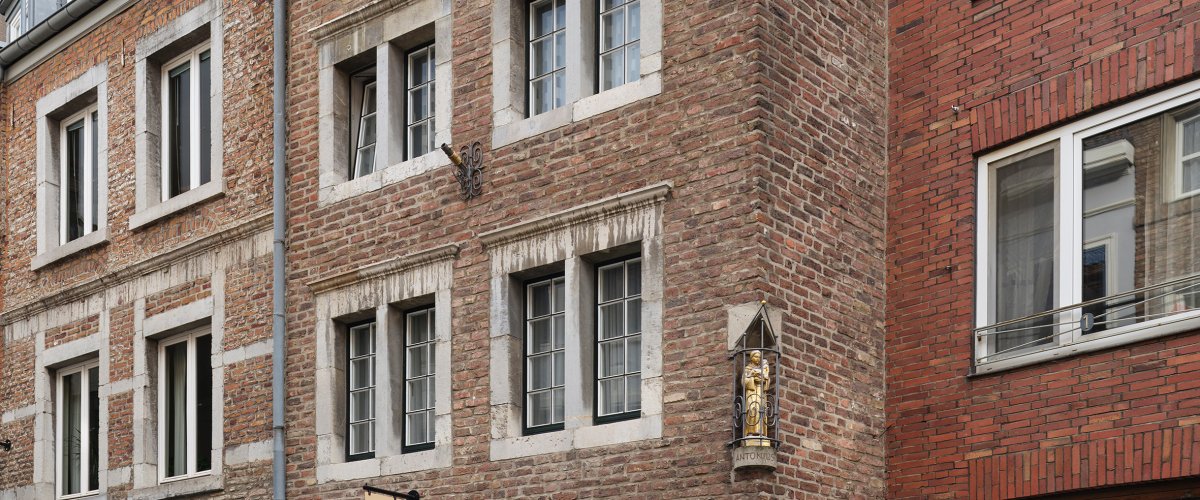
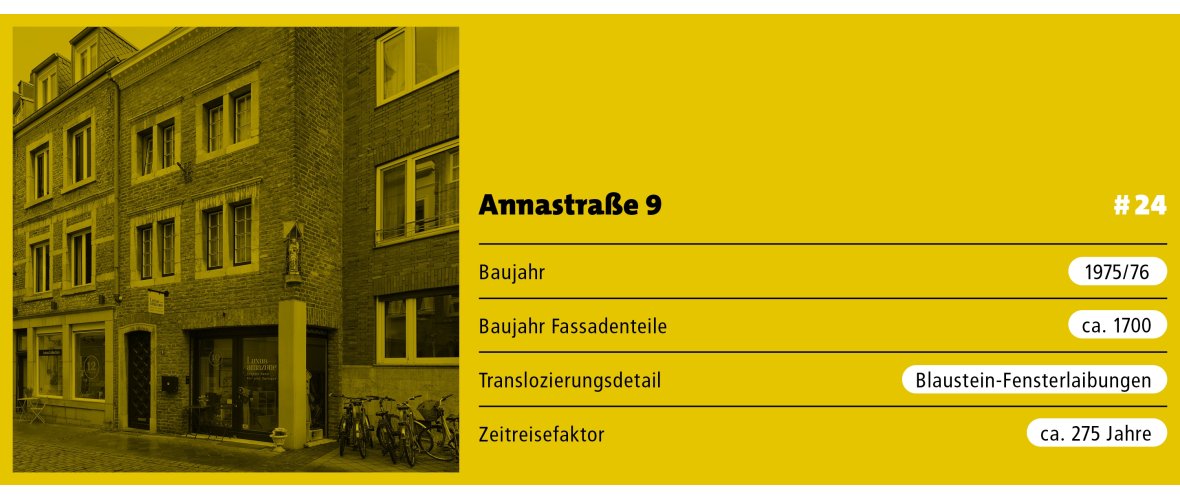
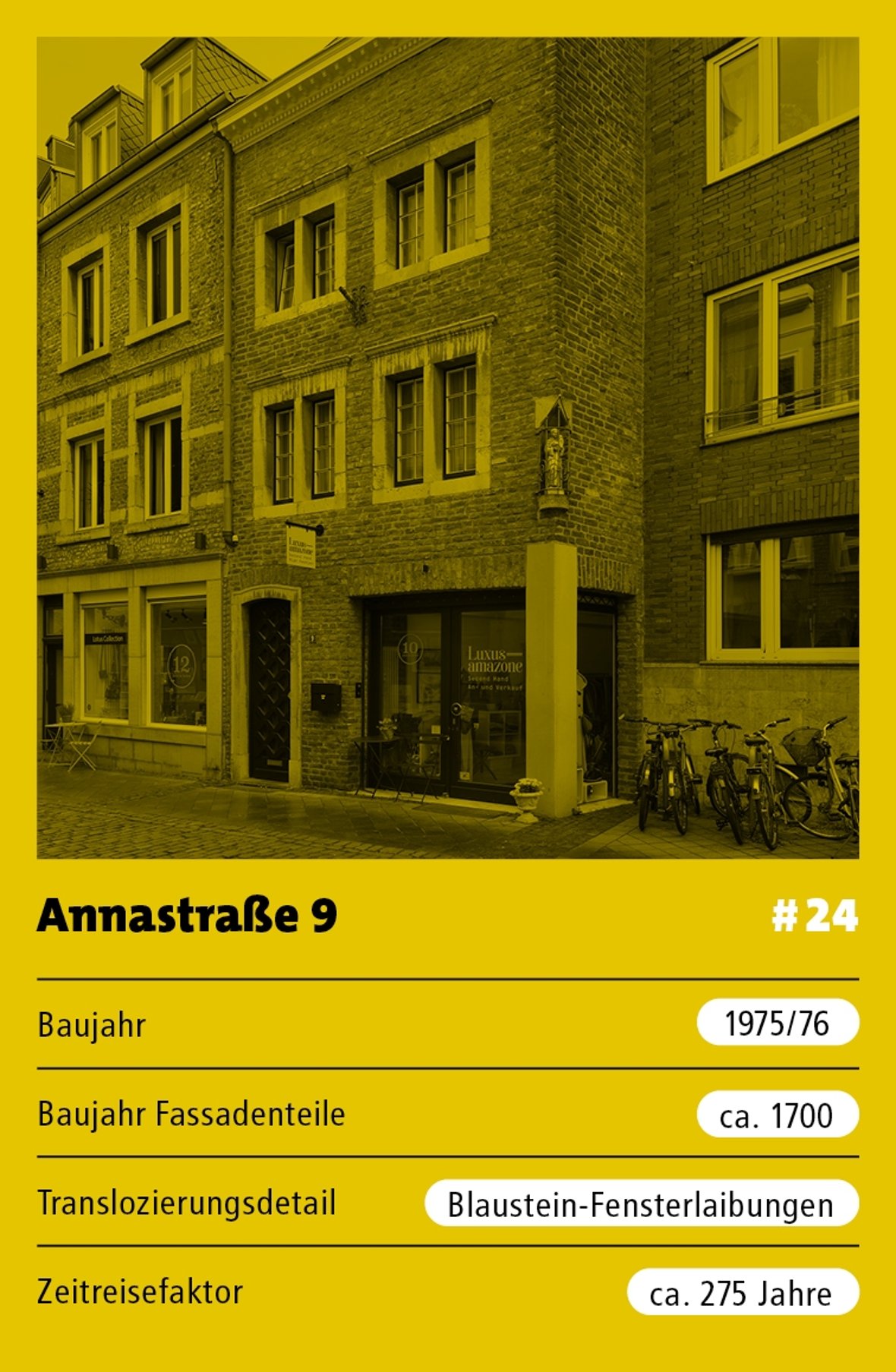
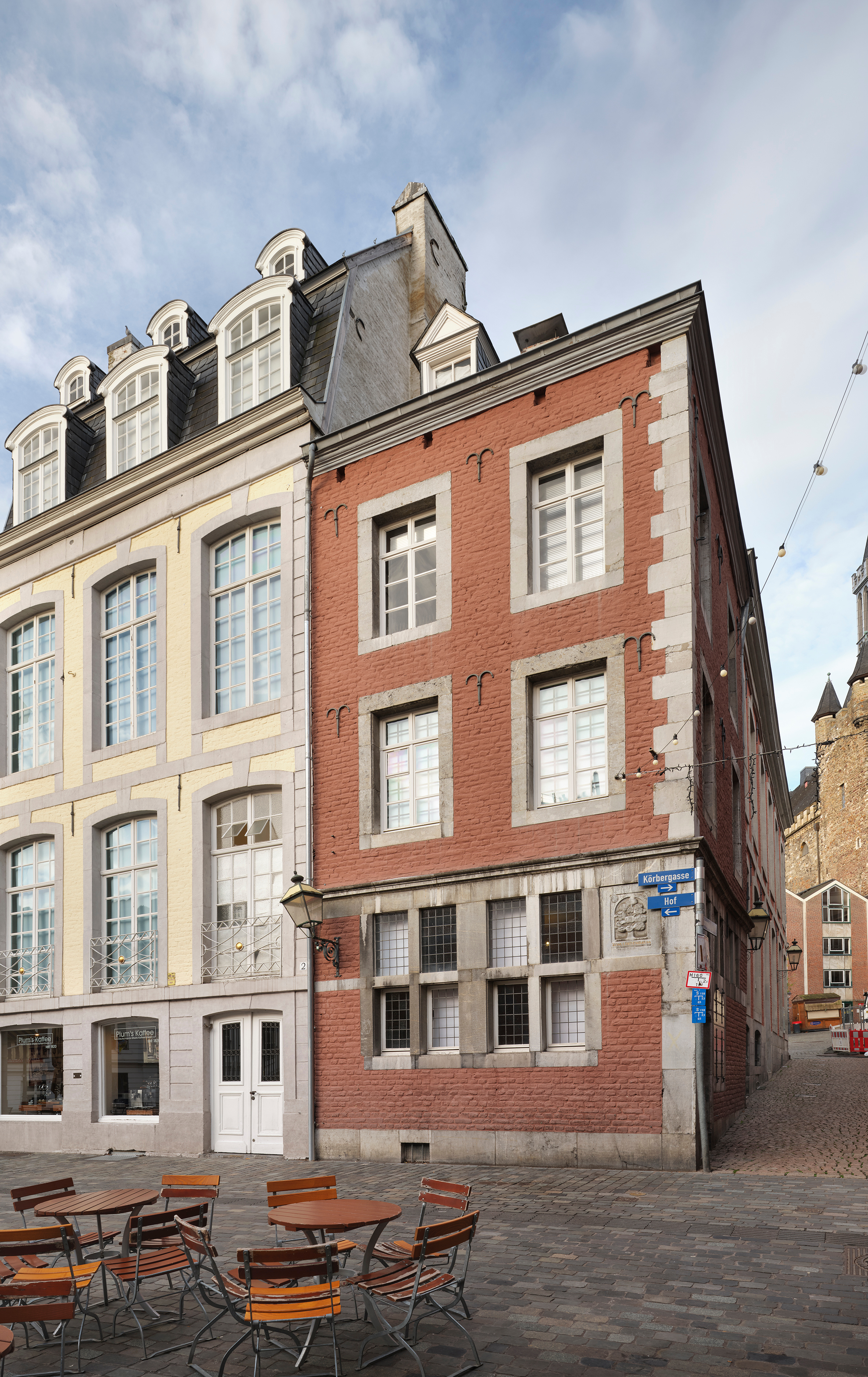
All historical, all real? Only partially. The building at Annastrasse 9 is a new construction from 1975/1976, in which individual elements of the baroque predecessor building were reused. The city conservator and architect at the time, Leo Hugot, was responsible for this.
Moving history
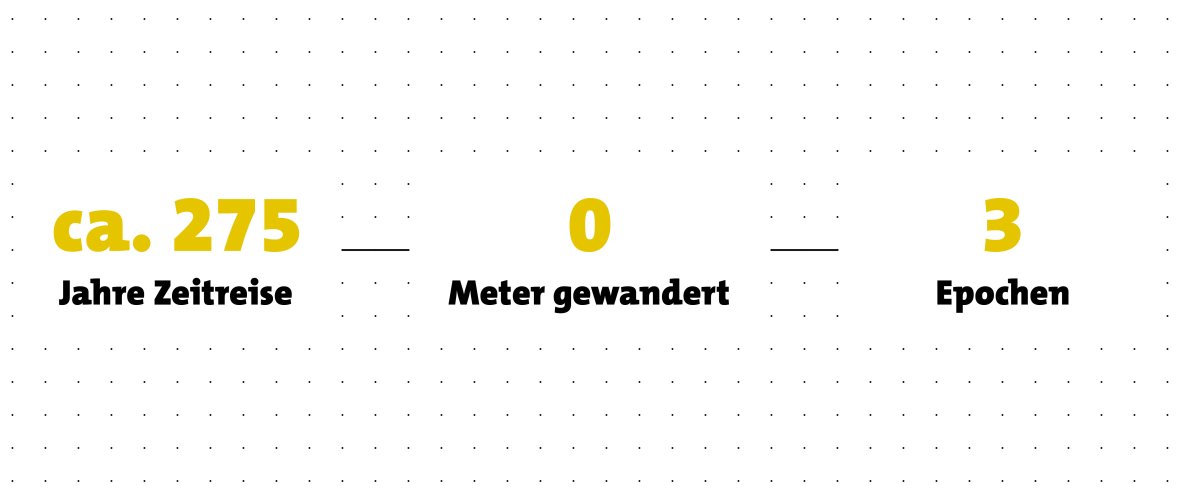
First, the old building was completely gutted and demolished. During reconstruction, new materials such as concrete and sand-lime brick were used for the most part. For the façade design, the historic bluestone window reveals from around 1700 were reused and supplemented with the vertical central mullions, which were probably removed in the 19th century. In addition, the storey heights were adapted to modern requirements, as can be clearly seen in comparison with a photo taken before the demolition.
Search for clues
The concrete support at the corner is a clear indication of the new building. The left-hand door jamb is not part of the original building and, due to the curved lintel, can also be stylistically assigned to a different period. It was taken from the municipal building yard's stock at the time. Unfortunately, it is no longer possible to determine where it actually came from.
The house at Annastrasse 9 has a house sign in the form of a figure of a saint. Originally, most houses had a house sign.
Special features
On the corner is the house statue of St. Anthony, which was added in 1976. Originally, almost all houses in Aachen had a house sign or a house statue. A tradition has been revived here. The wooden eaves cornice with block frieze is particularly beautifully designed and was modeled exactly on that of the previous building.
Picture gallery
Discover more
All monuments at a glance
Translocation
The method of translocation was already known and popular in 19th century urban planning. It allowed old building stock to be saved and reused. In Aachen, this method was applied in a special and extensive way.