
New gate 8-10
Monument #39


Introduction
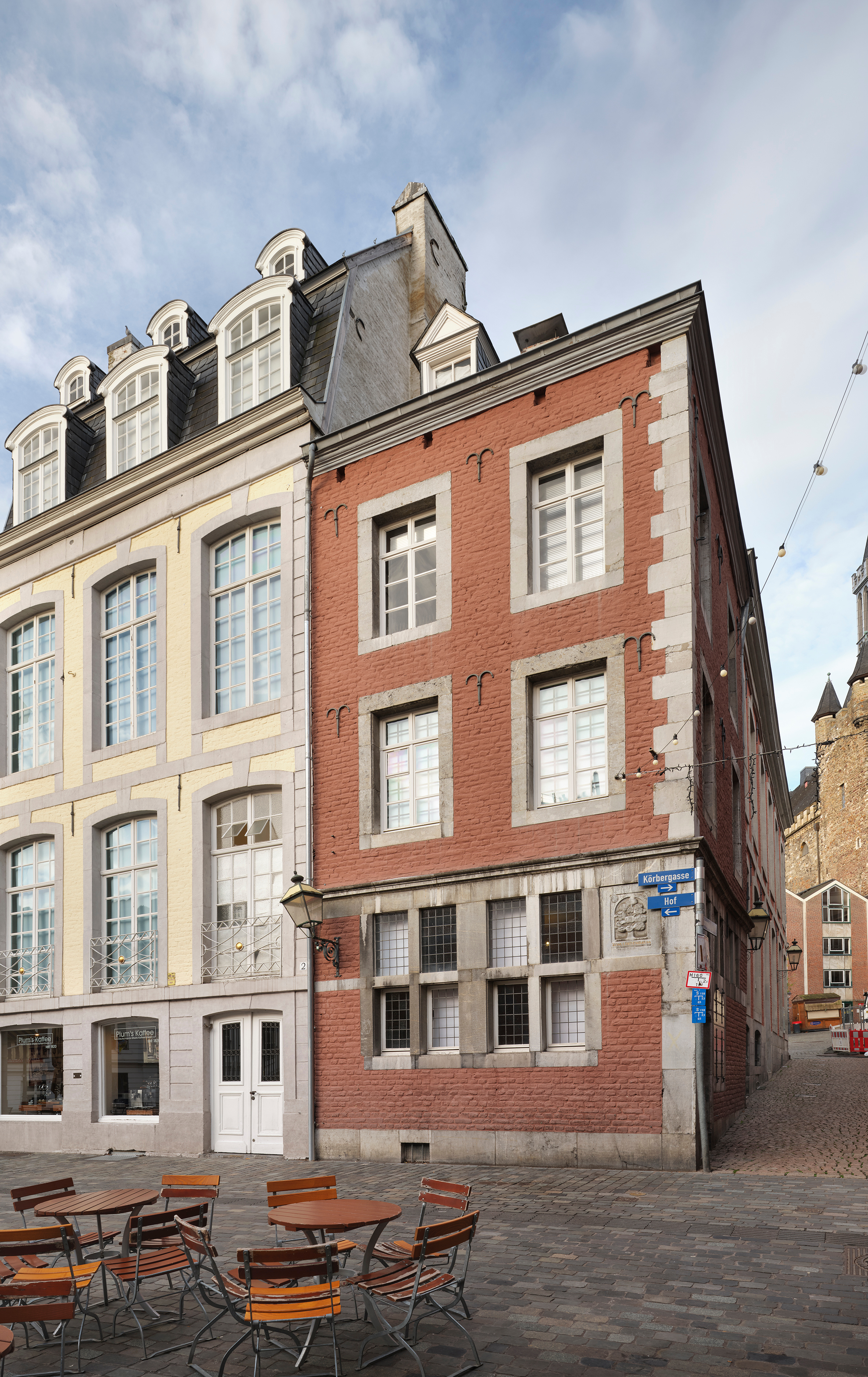
On the corner of Neupforte and Mostardstraße are two baroque-looking residential buildings with high mansard roofs. Despite their appearance, both are among the most recent projects from the period of urban redevelopment - and were accompanied by massive public protests.


Moving history
The area around Neupforte and Mostardstraße was part of redevelopment area III. As early as 1968, the city began buying up houses in this area and preparing them with walls, not least to prevent squatting. In addition to creating new living space, the street was also to be widened with new building lines. When Leo Hugot also began to demolish and replace the old houses on the right-hand side, a citizens' initiative was formed. Despite the opposition, renovation work began in the district in 1975. In 1980, the two houses at Neupforte 8 and 10 were completed by architect Kurt Nellessen.
On the site of today's Neupforte 10, there was a two-and-a-half-storey residential building with a first floor still in Baroque style, simple upper floors and a pitched roof. The neighboring, war-damaged corner building no. 8 dates from the Historicist period. Both houses were replaced by new buildings in 1980, with the historic brick and bluestone facing.
Search for clues
In house no. 10, the existing four-axis window structure of the first floor was reused. Instead of simple upper floor windows, the building yard installed blue stone walls and both upper floors were raised by approx. 50 cm. The pitched roof was replaced by a high mansard roof, which made significantly more living space possible. At no. 8, the striking corner bracing with figure niche, which originates from a demolished building from 1738 on Klosterbongard, is particularly striking. Further jambs came from Eilfschornsteinstraße and presumably from Burtscheid.
The changes to Neupforte 10 were all aimed at creating more living space. The ceilings were raised and the roof replaced. The special feature of Neupforte 8 is the striking corner structure with a statue niche.
Special features
The protests reached their peak with the redevelopment area III in the 1970s. The demolition of historic structures and the city's approach were heavily criticized. But Leo Hugot was also personally attacked as an "executor of the will of capital" and for creating a "paradise for the rich". This counter-movement, which incidentally flared up throughout Germany as a result of civic protests against further demolition and the loss of historic building culture, was a harbinger of the forthcoming monument protection laws of 1980.
Picture gallery
Discover more
All monuments at a glance
Translocation
The method of translocation was already known and popular in 19th century urban planning. It allowed old building stock to be saved and reused. In Aachen, this method was applied in a special and extensive way.