Horseback Riding Trails and Riding Paths in the Aachen Forest: Significant Effort for Maximum Safety
As is well known, for many people, the greatest happiness on earth is found on horseback. And where in Aachen is there a more beautiful place to ride than in the Aachen Forest? There are approximately 70 kilometers of marked riding trails and riding paths within the city limits of Aachen. These trails need to be maintained so that they remain safe and accessible for riders. Intensive work has been carried out in recent weeks along the Augustinerweg on Eupener Straße to Hitfeld, the Klausbergweg, the Osterweg to Siebenwege, and the Postweg.
A lot of work: Every year, the shoulders of all riding trails and riding paths, that is, the shoulder next to the riding trails, is mulched, and the “clearance profile” is trimmed at least every two years—and even annually for hedges and where necessary—to minimize hazards and ensure riders have sufficient headroom. In concrete terms, this means that branches from trees and shrubs that grow into the trails are pruned back. The ecological aspect always remains a priority in all work planning: For example, the trail shoulders and ditches are mulched or maintained relatively late—at the end of July—so that insects can find sufficient alternative food sources by that time and the metamorphosis of amphibians is largely complete. By then, the grass and weeds are already tall and obstruct the view of the actual trail for both horses and riders. Wild boars are very fond of these areas in their search for worms and other food and root around in the trails. This can create tripping hazards that are no longer easily recognizable. These must also be repaired.
The trails are inspected just under a year in advance—primarily through visual inspections by forestry office staff, but also based on feedback from riders—and work on them begins the following year. Of course, it is often the heavily used trails that need to be repaired first, but not exclusively. In recent years, increasingly frequent heavy rain events have proven to be a growing problem, often damaging entire sections of trails. In some cases, entire trails must then be restored, and the water flow must be significantly altered—as is the case, for example, on the Grünweg in its steep sections.
The timeframe for the work is tight: The trail improvements are primarily funded through the equestrian trail subsidy program and can therefore only be carried out within the few months during which a funding approval from the district government is valid—usually from June at the earliest through October. All work contracted out to third-party companies through a bidding process that begins only after the funding approval is received must be settled with the district government by the end of November, meaning the absolute deadline for the work in the forest is mid-November.
What do the signs mean? Who is allowed to use the trails?
Horse trails and horse paths are clearly marked. A large blue sign—42 centimeters in diameter—with a white rider on it does not mean “Caution: Horses may be coming,” but rather indicates a trail that may be used exclusively by riders—that is, a trail reserved solely for horseback riding. Its smaller counterpart—a blue sign with a white rider, 12 centimeters in diameter—indicates a so-called riding shoulder, a riding lane running parallel to a forest road. This path is also reserved exclusively for riders and their horses. Conversely, however, riders are only permitted to ride on riding trails and riding paths. They may use other paths only if they lead their horses by the reins.
This strict separation is intended to ensure the safety of all forest visitors: Horses are flight animals, and their reactions—bolting, kicking, rearing, or similar behaviors—to unexpected situations are not always predictable. Separate trails for horses and riders are therefore intended to ensure safety.
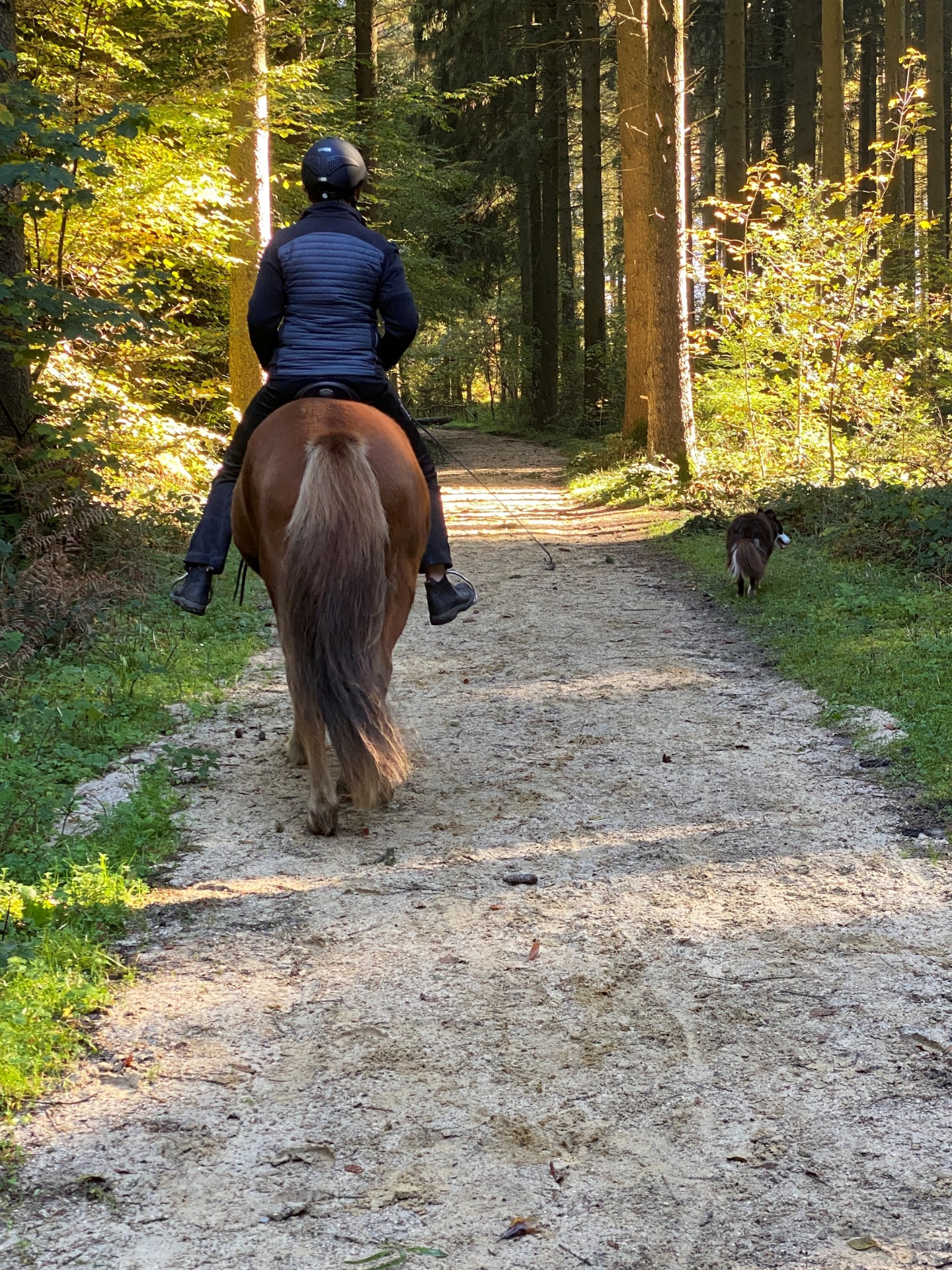
Enjoy Horseback Riding: More than 70 kilometers of riding trails and paths invite you to explore the Aachen metropolitan area.
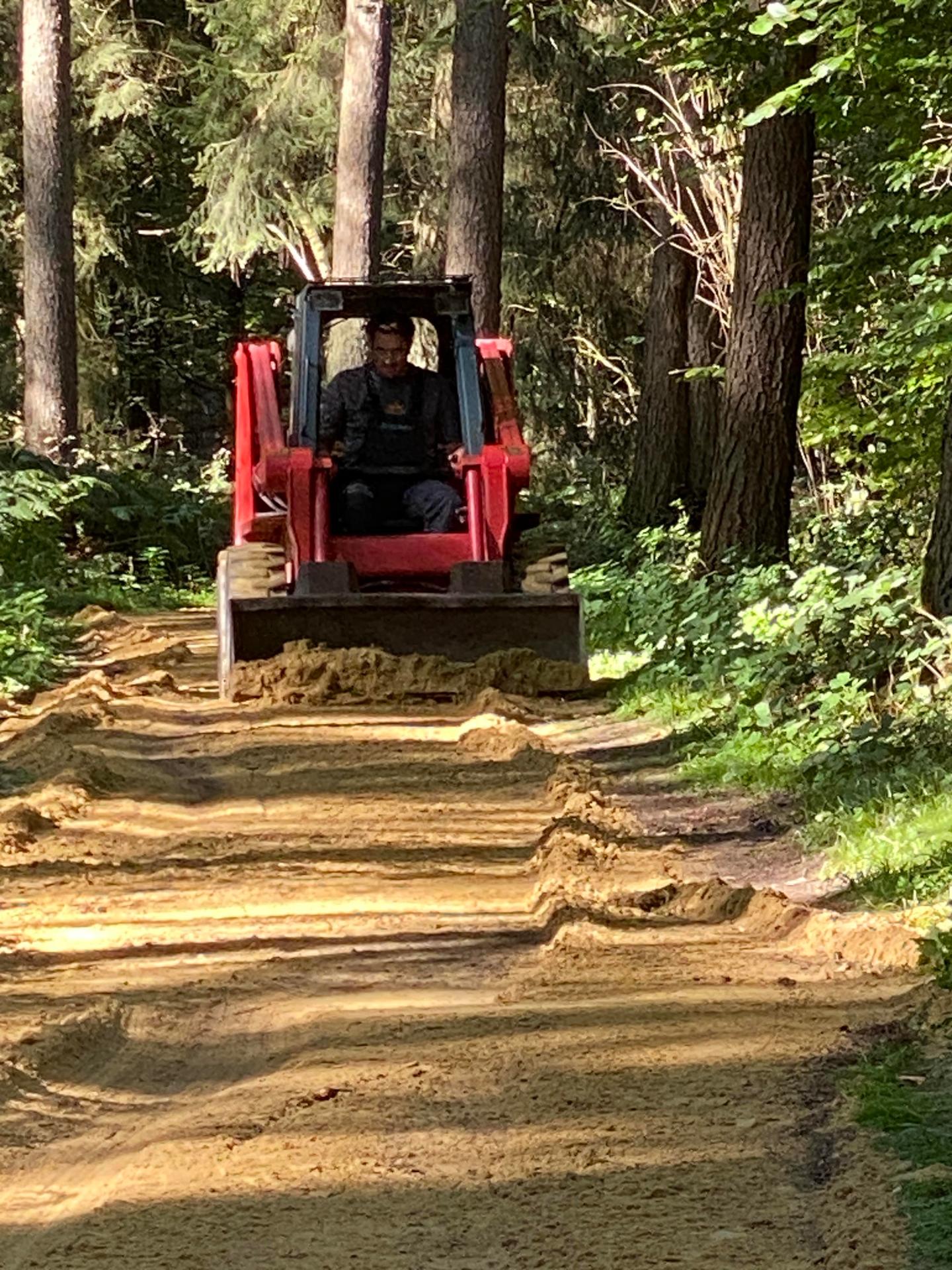
Heavy equipment required: Excavators, trucks, and rollers are used to maintain and repair the riding trails and shoulders in the Aachen Forest.
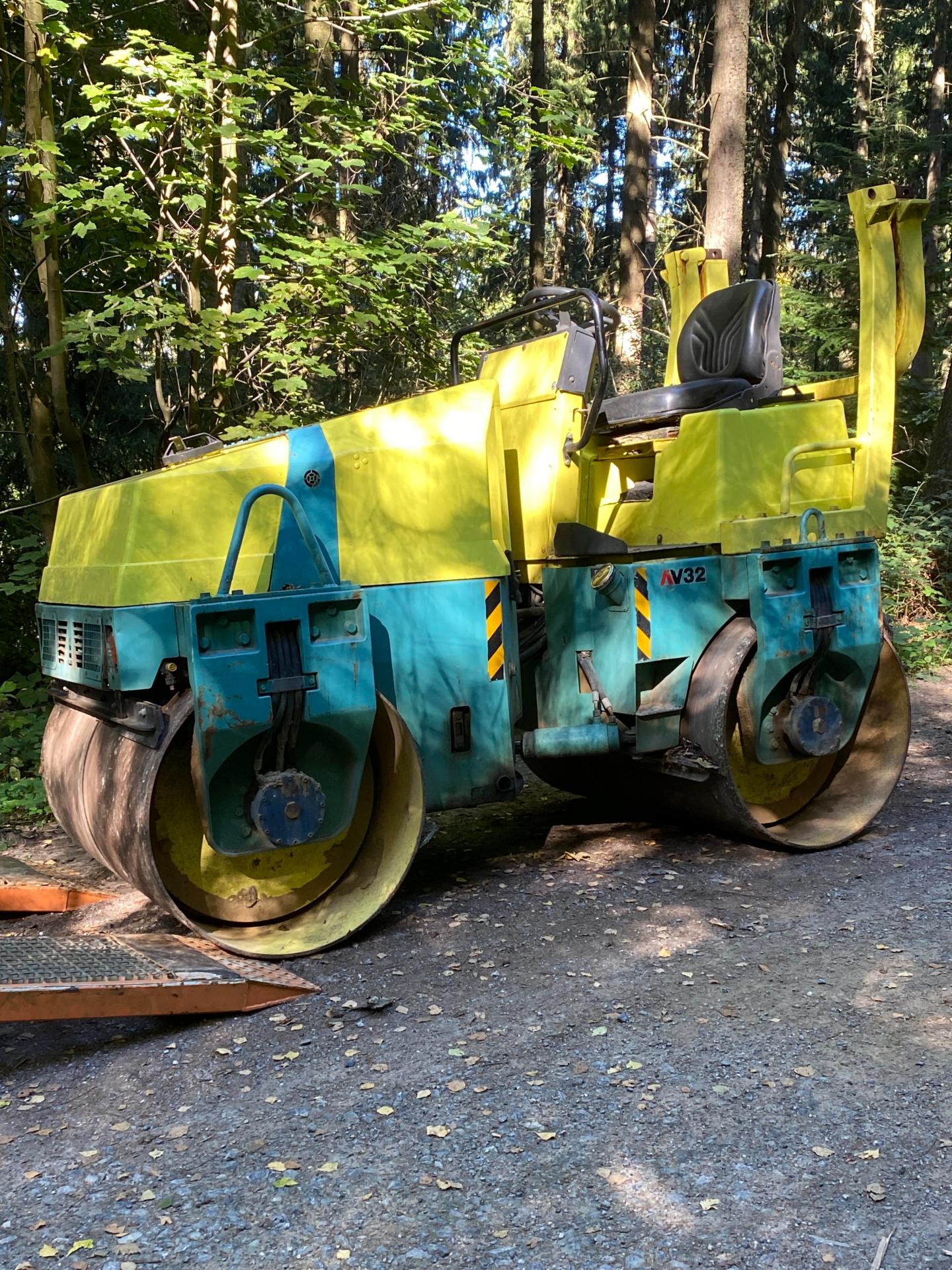
Heavy equipment required: Excavators, trucks, and rollers are used to maintain and repair the riding trails and shoulders in the Aachen Forest.
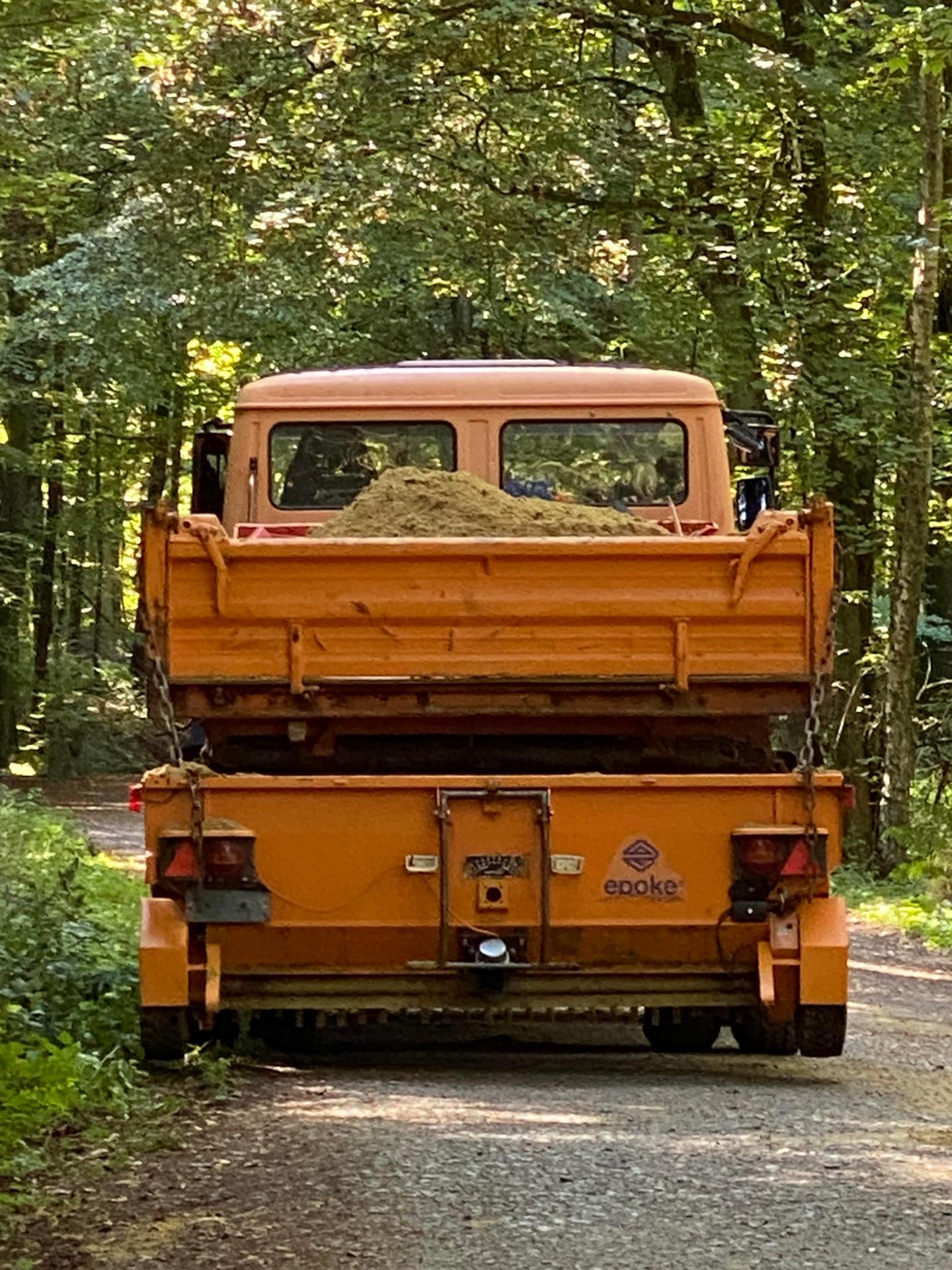
Heavy equipment required: Excavators, trucks, and rollers are used to maintain and repair the riding trails and shoulders in the Aachen Forest.
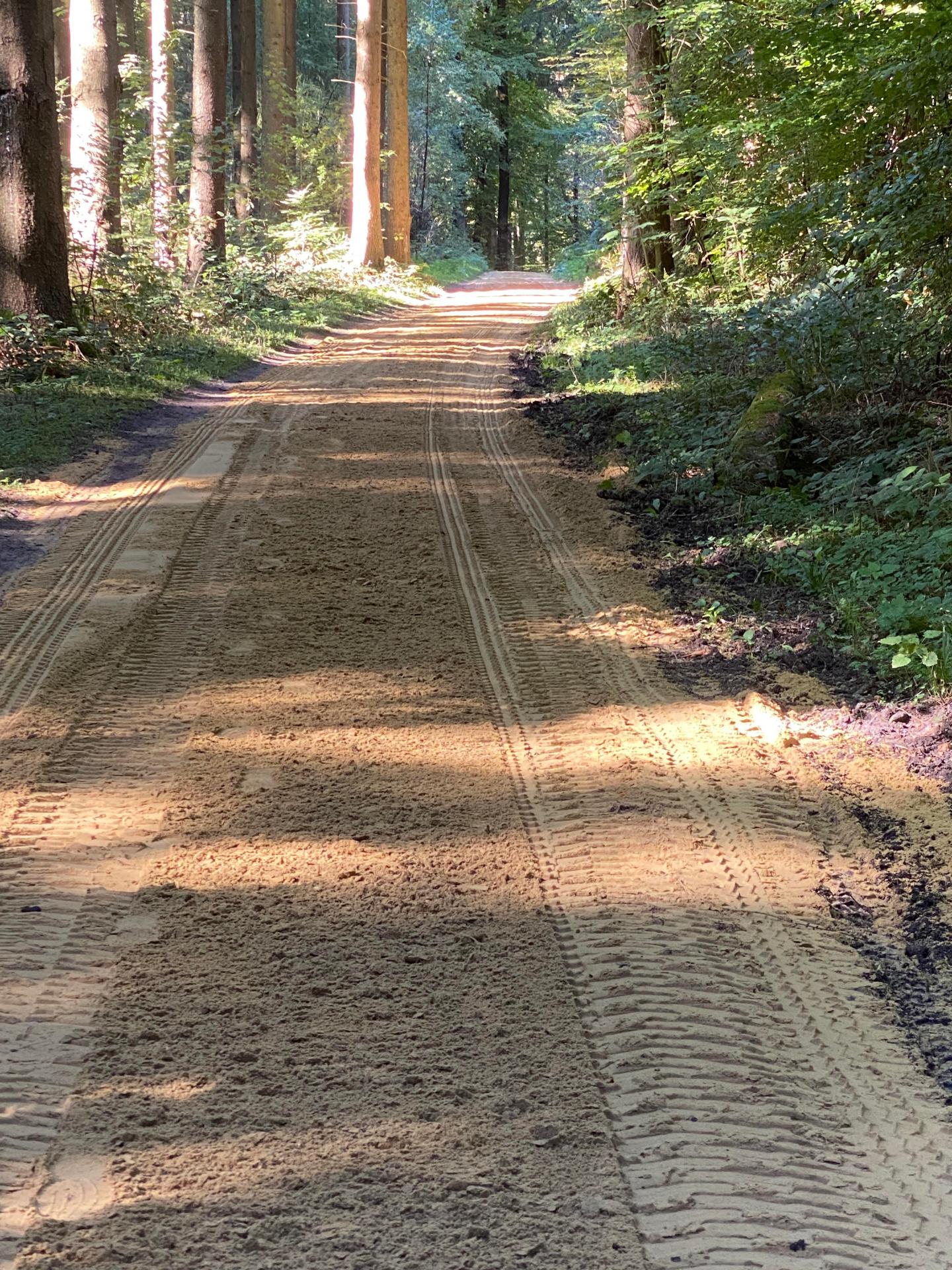
Safe to use: The horseback riding trails in the Aachen Forest are regularly repaired and maintained.
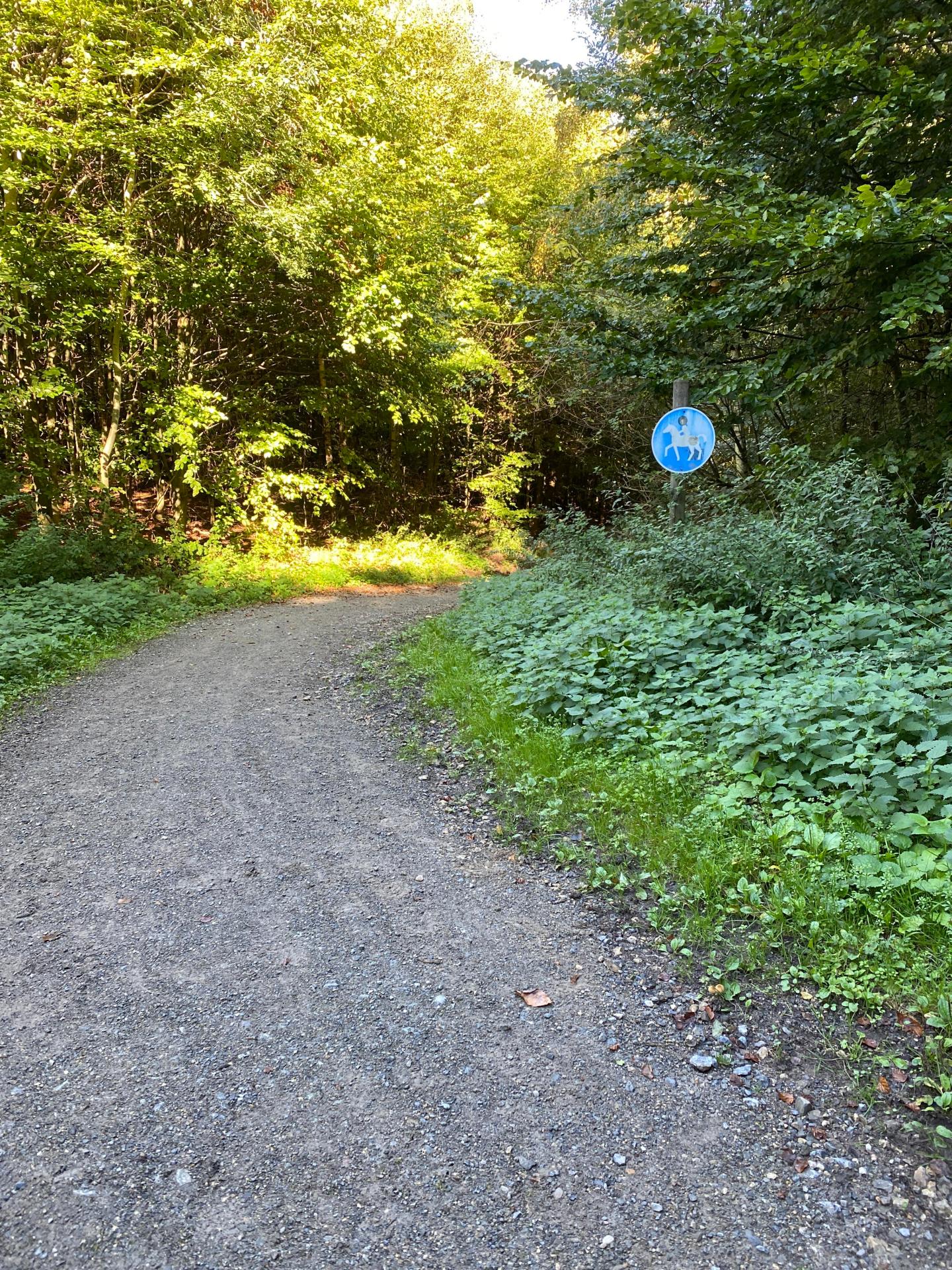
Repaired: The Grünweg had been partially damaged by heavy rain.
You can subscribe to our RSS feed for our press releases here https://www.aachen.de/rss-feed-pressemitteilungen/rss.xml