Interim Report on the Archaeological Excavations at Münsterplatz: Extraordinary Insights into the City’s History
- Archaeological excavations on Münsterplatz are bringing to light significant finds related to Aachen's city history.
- A pilgrim's grave, a suspected twin burial, and numerous other graves offer new insights into the past of the area surrounding the cathedral.
- The excavations are taking place in two tree pits, which will subsequently be replanted with two linden trees.
“Aachen is a city that takes pride in its historical heritage. Preserving it means exploring it. Archaeological work, such as the prominent excavation here on Münsterplatz, makes our history tangible for our citizens,” emphasized Mayor Dr. Michael Ziemons during the presentation of the preliminary findings from the archaeological excavations near the cathedral.
A Rare Opportunity for Excavation on Münsterplatz
: Since the end of February, city archaeologist Andreas Schaub and volunteer assistants from the Archaeological Working Group (AAA) have been working by hand, layer by layer, through two tree pits. The two linden trees previously planted there had been felled by a storm in 2023. Once the archaeological work is complete, two new linden trees will be planted in the tree pits. Since the tree pits must first be prepared, this presented a rare opportunity for the archaeologists: construction on Münsterplatz is a rare occurrence. Any excavation at this historic site is supervised by archaeologists and often yields interesting finds.
Medieval Cemetery with Unusual Burials
: The findings from the first tree ring provide a glimpse into times long past: First and foremost, extensive remains of the medieval cemetery—the Münsterkirchhof—were discovered. It has been documented since the 13th century. However, the oldest graves that the archaeological team has now found date back at least to the 12th century. The cemetery was in use until the Napoleonic era, before cemeteries were relocated from city centers for sanitary reasons.
In total, the archaeologists were able to identify about 45 burials within an area of four square meters—an extremely high density of burials. Of particular note is the skeleton of a pilgrim who was buried with three scallop shells from Santiago. In addition, one grave pit contained multiple individuals—an indication that victims of an epidemic were buried there in the 16th century. A skull with a deliberately made hole is also among the remarkable finds.
Collaborative Work on Two Particularly Fragile Finds
: In the second tree stump, Schaub and his volunteer assistants have just uncovered two infant skeletons. The fact that they were buried in the same grave, along with the skeletons’ apparent similarity in age, suggests they may be twins. City archaeologist Schaub explained: “These are finds that move even us experts and reveal the fates of the people who lived back then. Since the bones were so delicate, we immediately informed our colleagues at the LVR State Museum in Bonn.” Not only conservators from the museum but also anthropologists from the University of Bonn traveled immediately to Aachen, examined the skeletons, and carefully excavated them. They were amazed by how well-preserved the Aachen finds were. They even managed to recover the smallest human bones—the stapes in the ear. “These bones are smaller than a grain of rice,” Schaub explained.
To the south, the cemetery was bounded by a wall that also marked the legal boundaries of the cathedral’s immunity. As hoped, Andreas Schaub’s team was able to confirm the existence of this wall. It likely lies directly above a wall from the Roman baths. Among the finds were displaced fragments of the baths’ once-lavish interior decoration, such as mosaic stones and marble tiles. Several displaced shards dating from the early Middle Ages attest to continuous settlement of Münsterplatz since Roman times.
Scientific Analysis of the Finds
: The archaeological team is excavating the finds, documenting them, and cataloging them. A medical researcher, who is currently working on his doctoral dissertation based on the finds at Münsterplatz, will conduct an anthropological examination of the bones and analyze them scientifically. Once these investigations are complete, the Aachen finds will be stored in the LVR State Museum’s repository in Meckenheim.
The excavations at this heavily trafficked square have attracted the attention of countless passersby in recent months. No wonder, since the skeletons were visible to the naked eye in the planting pits. The archaeologists patiently answered questions from people of all ages. To ensure that the work wasn’t disrupted, the city’s Department of Communications and City Marketing quickly designed posters explaining the excavations.
New Linden Trees After
Excavations Are Complete Sven Rachau from the Green Planning and Construction Division of the Climate and Environment Department explained the next steps regarding the two tree pits: “As soon as the archaeological work on the front planting pit is finished, we will backfill it and, with the support of the City Maintenance Department, plant it with a variety of flowers. This will allow us to reduce the construction area on Münsterplatz as quickly as possible.” The archaeologists are expected to have cleared the second pit by the next planting season in September. At that point, two linden trees will be planted in the tree pits, thereby restoring the linden tree ensemble on Münsterplatz.
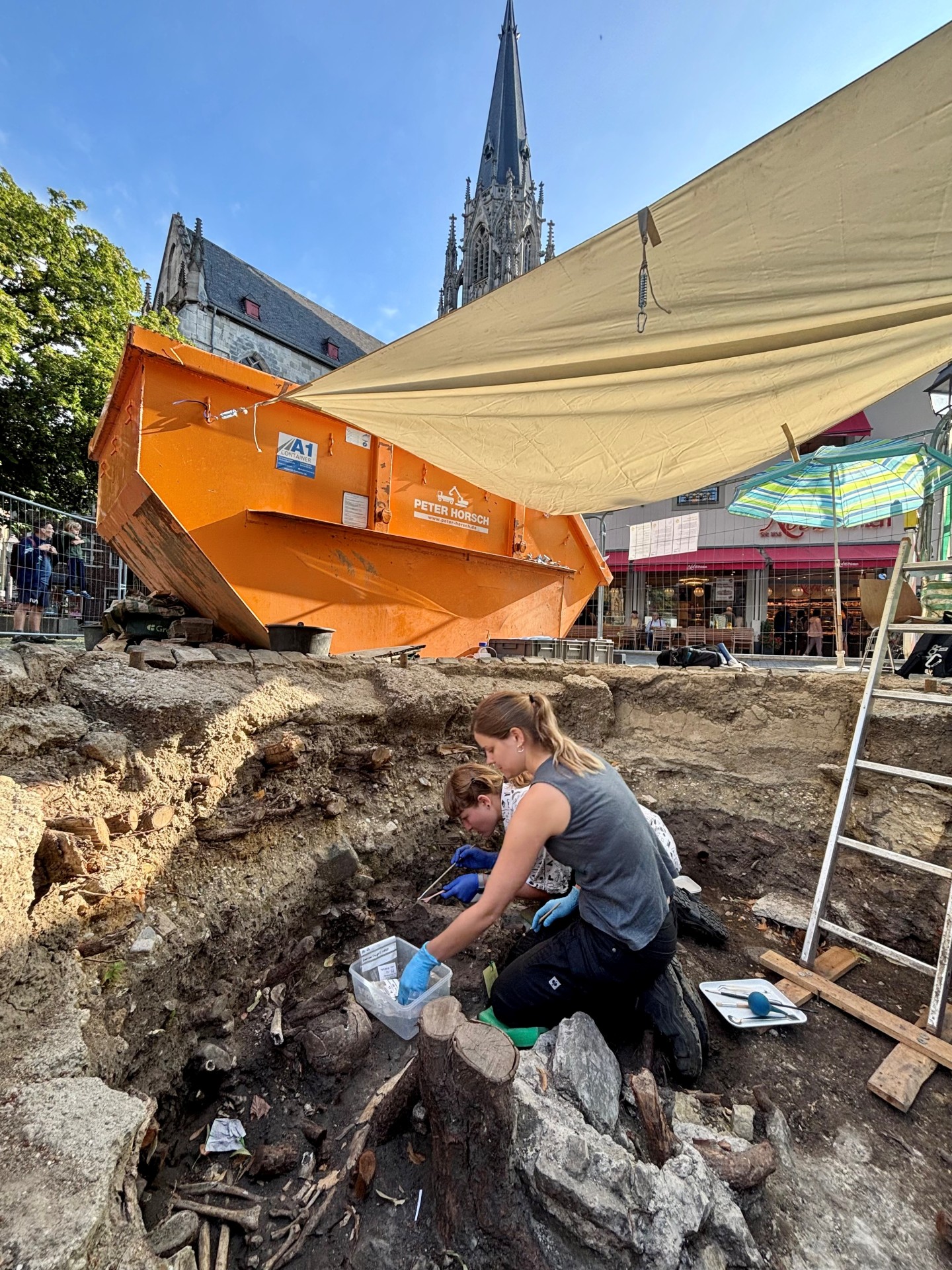
Excavation in the Shadow of the Cathedral and St. Foillan: Archaeological excavations are progressing on Münsterplatz. Due to some remarkable finds, the city team is receiving support from Susanne Domke (front) and Katja Schüller from the State Museum in Bonn and the Rhineland Regional Council.
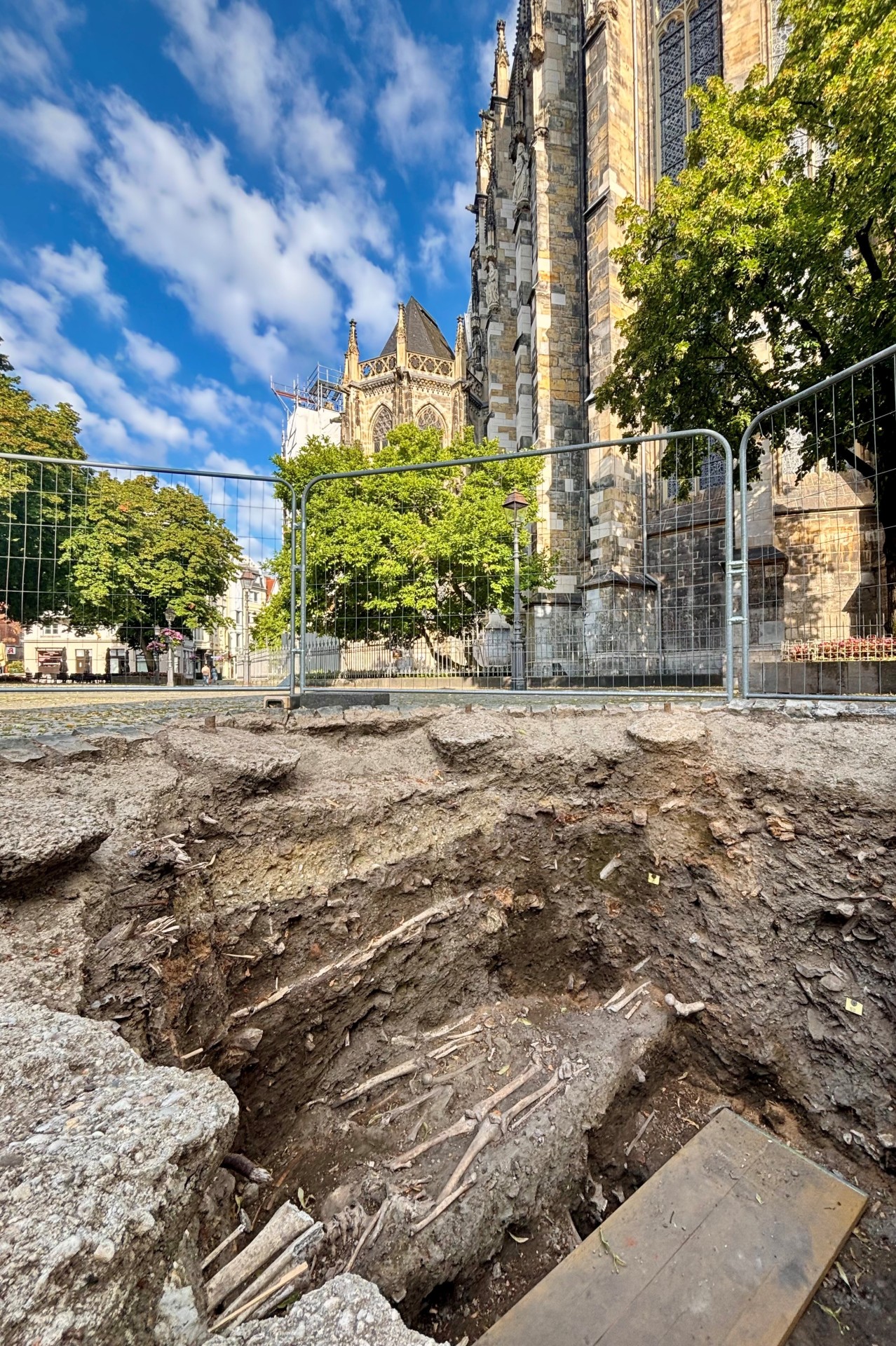
Old Cemetery: A good 45 skeletons, or remains thereof, were discovered in the first pit near Aachen Cathedral. The bone remains were documented by experts, removed as necessary, and the rest of the pit will soon be filled in with soil and a tree planted there in the fall.
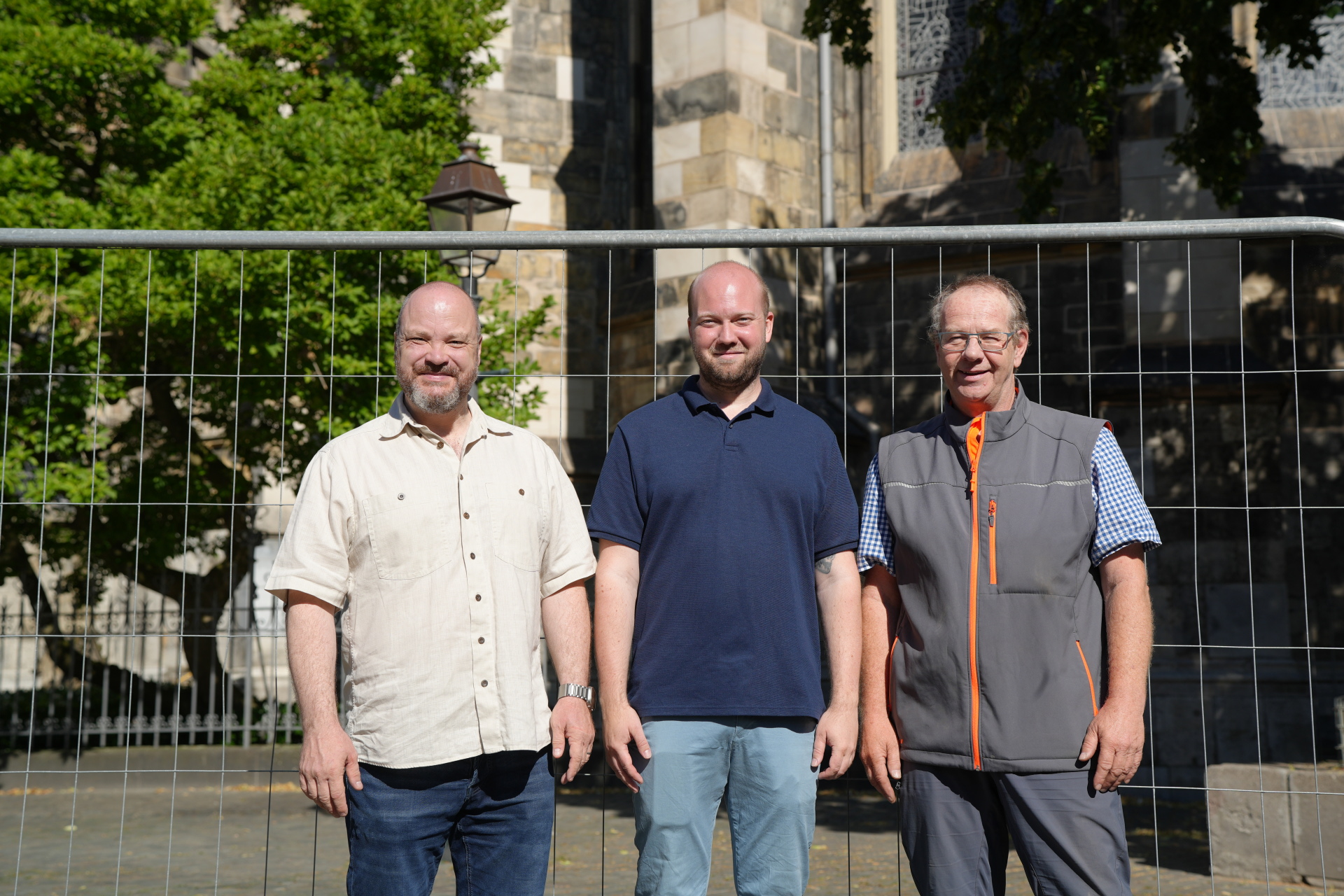
Aachen is steeped in history: (from left) Mayor Dr. Michael Ziemons, Sven Rachau from the Climate and Environment Department, and City Archaeologist Andreas Schaub discussed the findings from the excavation at Münsterplatz to date.
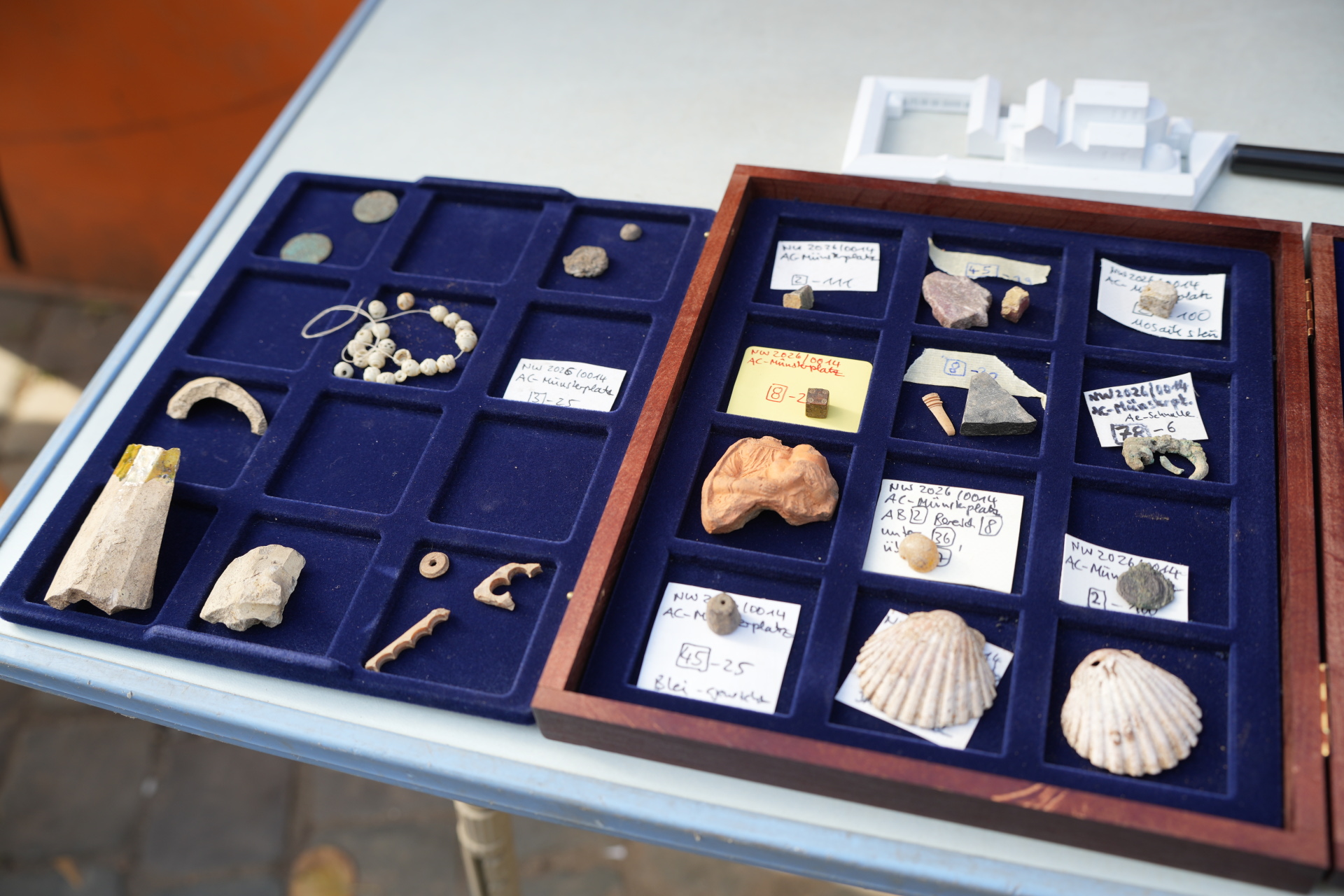
Numerous individual finds: Among other things, the city’s archaeological team unearthed scallop shells that had been placed with a pilgrim, an old rosary, and mosaic fragments from the Roman baths.
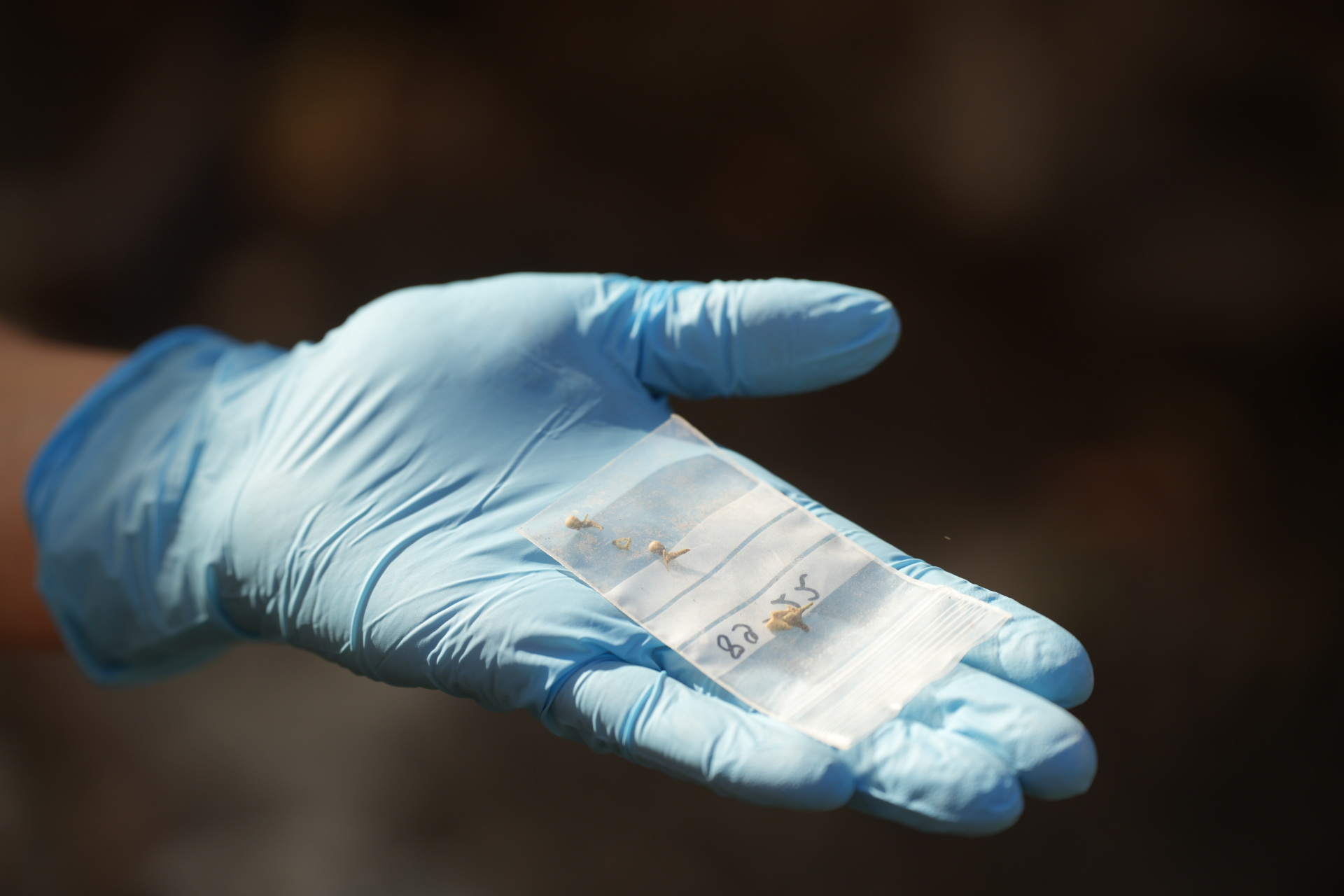
Extremely rare: Conservators have secured some tiny ear bones. They belonged to an infant who was buried about 400 years ago in the late-Medieval Münster churchyard. The finds will undergo further scientific analysis in the laboratory.
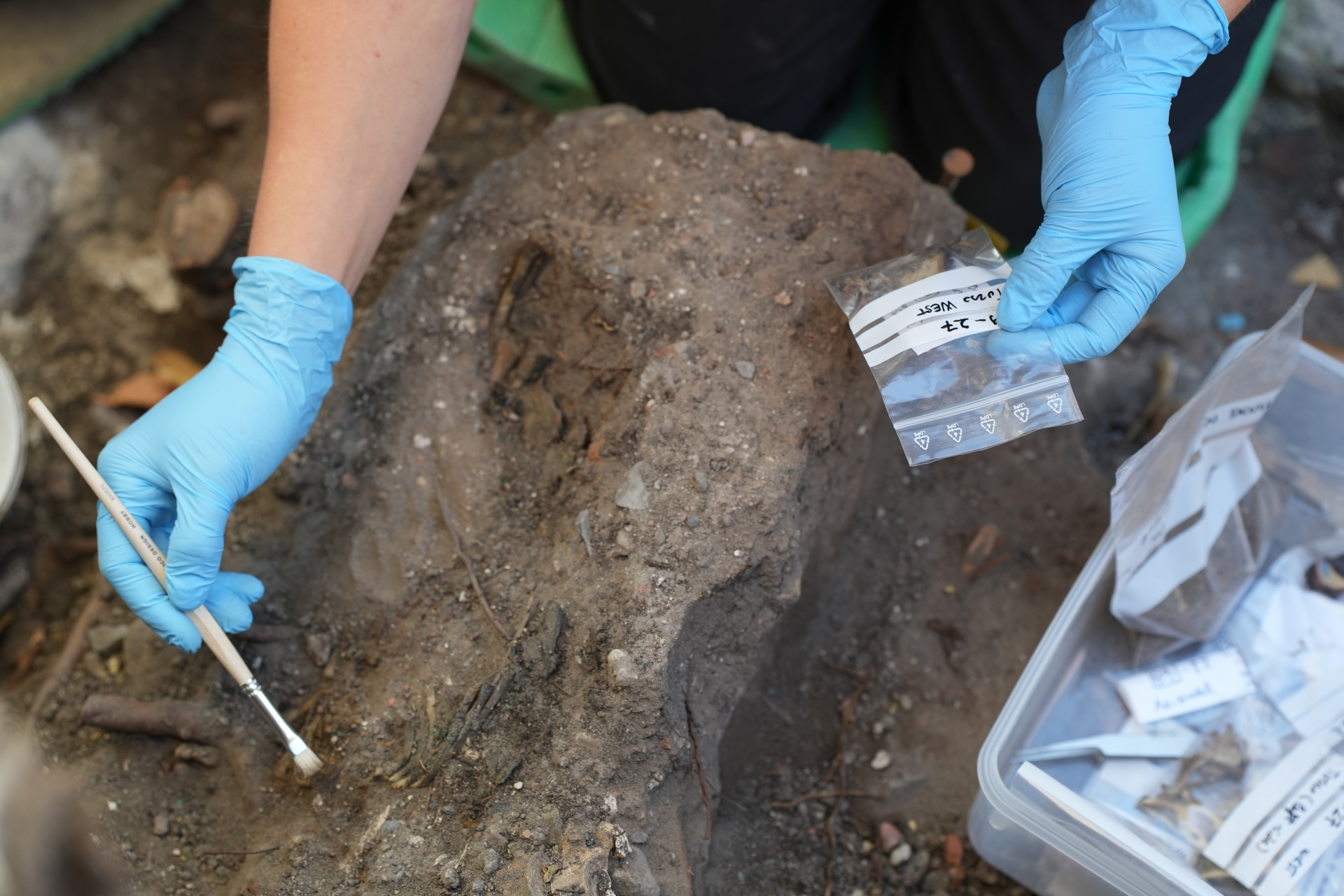
With a delicate touch: The rare and fragile bone finds uncovered during the excavation at Münsterplatz require a high degree of precision and specialized expertise.
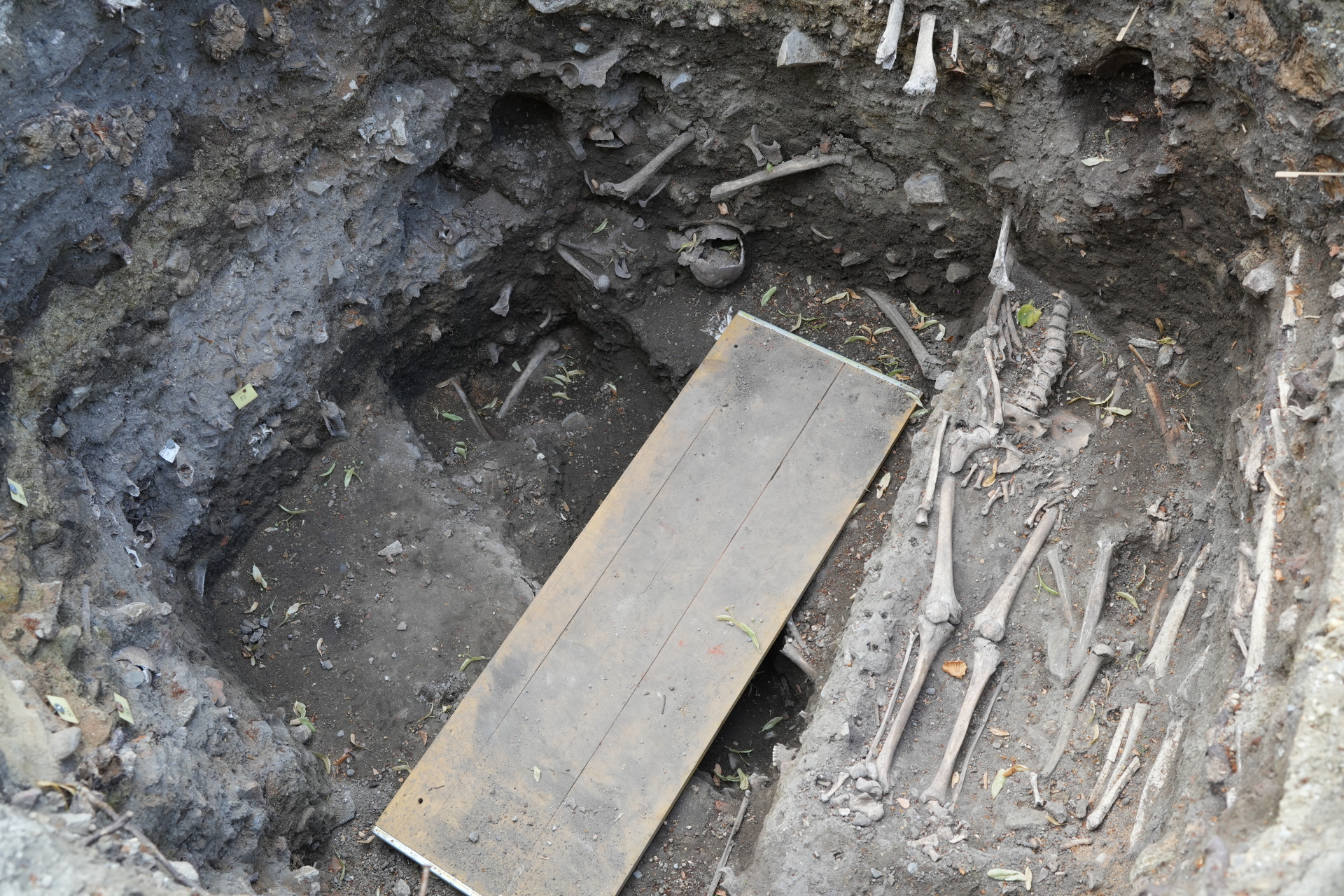
A final look into Pit One: The hole will be filled in within a few days. The archaeological finds were removed only to the extent necessary for the planned planting of a new tree. The remaining bones will be covered and left in the ground.
You can subscribe to our RSS feed for our press releases here https://www.aachen.de/rss-feed-pressemitteilungen/rss.xml