Enter at your own risk: Increased risk in the Frankenwald Nature Reserve
- Age, climate, and fungi are taking a toll on the trees in Aachen's oldest nature reserve.
- Effective immediately, signs are in place to warn of an increased risk in the Frankenwald.
- In the nature reserve, old trees and deadwood promote biodiversity and help stabilize the forest microclimate.
For most people, a walk in the woods is pure relaxation: For many, strolling leisurely through the fresh, cool forest air is synonymous with rest and slowing down. But a visit to the woods is, of course, never entirely free of natural hazards, even though the Aachen City Forestry Department constantly strives to minimize such risks. One section of the forest is therefore currently under closer observation by experts from the Climate and Environment Department: the municipal Frankenwald in Aachen-Kornelimünster poses an increased risk compared to other forested areas in the city.
Nature Reserve Since 1928 “This
area is the oldest nature reserve in the city of Aachen. It has been under protection since 1928,” explains Klaus Meiners, head of the city’s Climate and Environment Department. The Lower Nature Conservation Authority and the City of Aachen’s Municipal Forestry Office are now drawing attention to a particularly dangerous situation in this nature reserve. Meiners continues: “For the past 23 years, the Frankenwald has been left to its own devices in accordance with the forest’s FSC certification, to allow for the natural development of this forest habitat. Consequently, no maintenance measures are being carried out, meaning that all diseased, damaged, or unstable trees remain in the forest. The only requirement to remove hazards applies to the damaged trees along the school and the road.”
Age, Climate, and Fungal
Infestation: Helmut Rink, tree inspector at the Forestry Office: “The health of the trees in the nature reserve has deteriorated significantly in recent years due to the trees’ advanced age, fungal infestation, and climate-related factors. Old beech trees, for example, show signs of sunscald, are drying out starting from the crown, and are breaking apart uncontrollably. Ash trees suffer from ash dieback, a species-specific fungal infection, and can fall over suddenly.” Therefore: “The City of Aachen’s Department of the Environment—we at the Forestry Office—are drawing the attention of forest visitors to this particular situation with a warning sign,” said Klaus Meiners. “A forest visitor must always be prepared for hazards typical of nature and the forest, such as falling branches, falling trees, or uneven paths. This also applies to designated hiking trails. Hazards typical of nature and the forest are therefore part of the general risk of life. This applies not only to nature reserves such as the Franconian Forest, but to all forested areas,” says Dr. Gerd Krämer, head of the municipal forestry office, referring to legal regulations.
“The right of public access to forests in Germany is a special achievement rooted in the social obligation associated with property ownership. Not everywhere is the shared use of forests for recreational purposes regulated as generously as it is in Germany,” says Meiners. There are only a few restrictions in Germany; recreational use is free of charge and must be tolerated by the forest owner—usually the state, a municipality, or a private individual. In return, no special obligations to ensure safety are imposed on the forest owner. This means that entering the forest is at your own risk. Simply closing off the forest is not that easy to do. Incidentally, in a nature reserve such as the Franconian Forest, visitors are only allowed to stay on the trails. This further limits potential hazards. So the rule is: Do not walk off the hiking and walking trails into the woods.
Old Trees for the Preservation of Biodiversity
: However, removing all trees that pose a potential hazard is not advisable either. On the contrary: The Lower Nature Conservation Authority points out the high ecological value of old and, in some cases, dying trees. From a nature conservation perspective, these should be preserved as much as possible. “Preserving these old trees contributes significantly to promoting biodiversity and stabilizing the cool, humid climate within the forest. This benefits spring geophytes in particular—such as wood anemones and wild garlic—which depend on these site conditions. Old and dying beech trees serve as habitats for many animals, fungi, and other organisms through their cavities, bark crevices, and decaying wood,” says Henning Nießen, who is responsible for species conservation at the Lower Nature Conservation Authority of the City of Aachen, summarizing this important role.
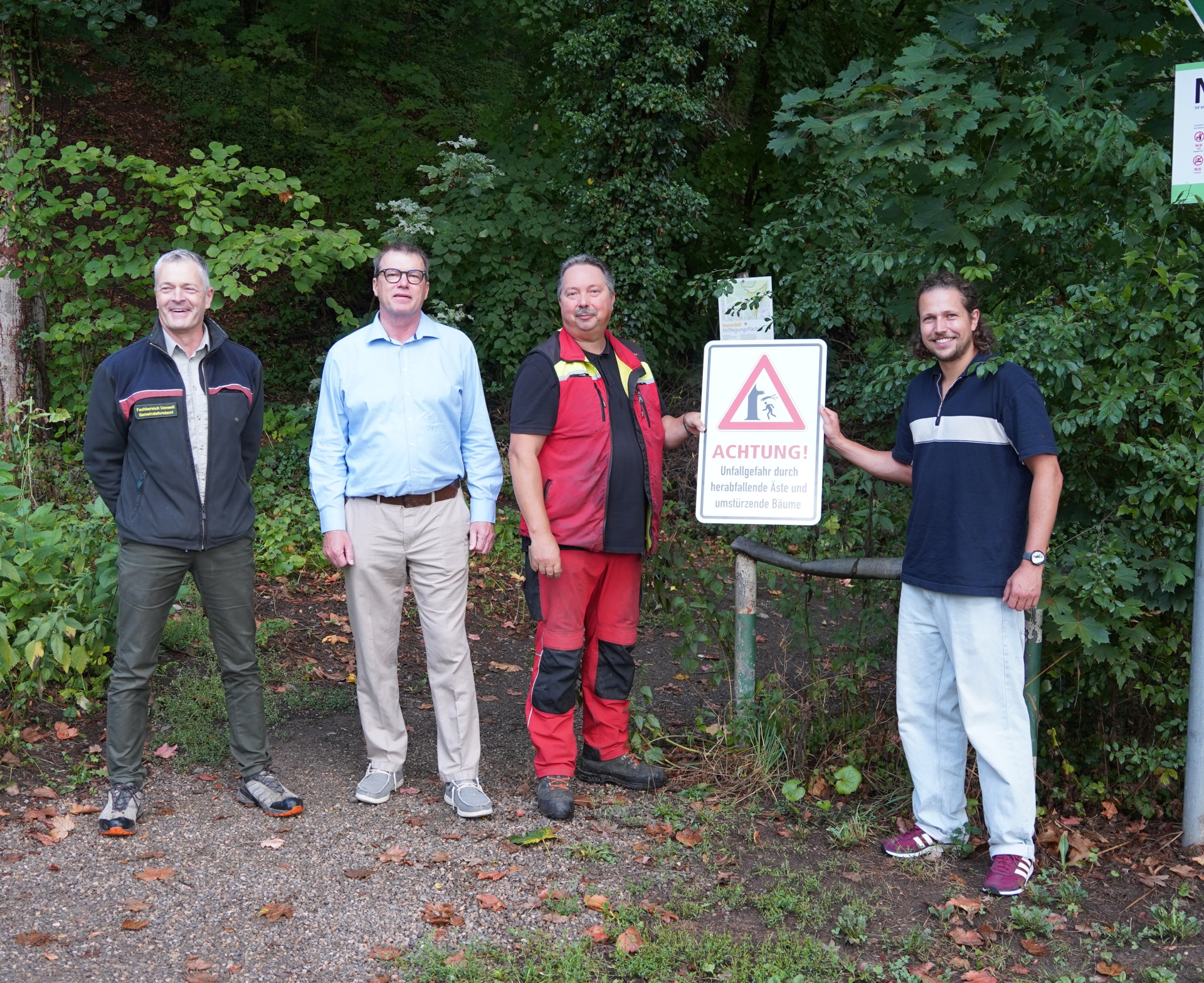
Keep your eyes open during a walk in the woods: Forest Service Director Dr. Gerd Krämer, Department Head Klaus Meiners, Tree Inspector Helmut Rink, and Wildlife Conservationist Henning Nießen present the new warning signs for the Franconian Forest. (from left)
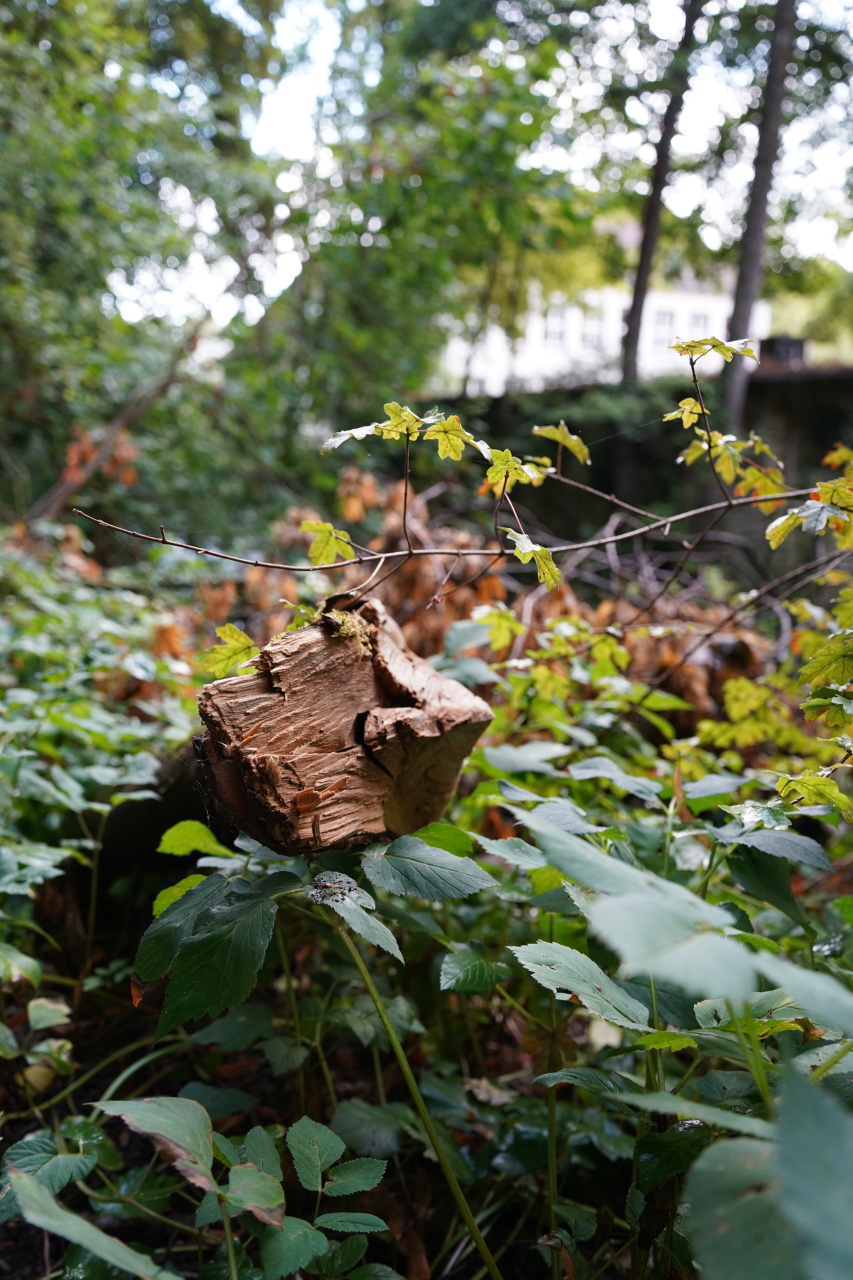
"Branch Breakage": Affects even healthy trees: During periods of extreme heat stress, branches can break off.
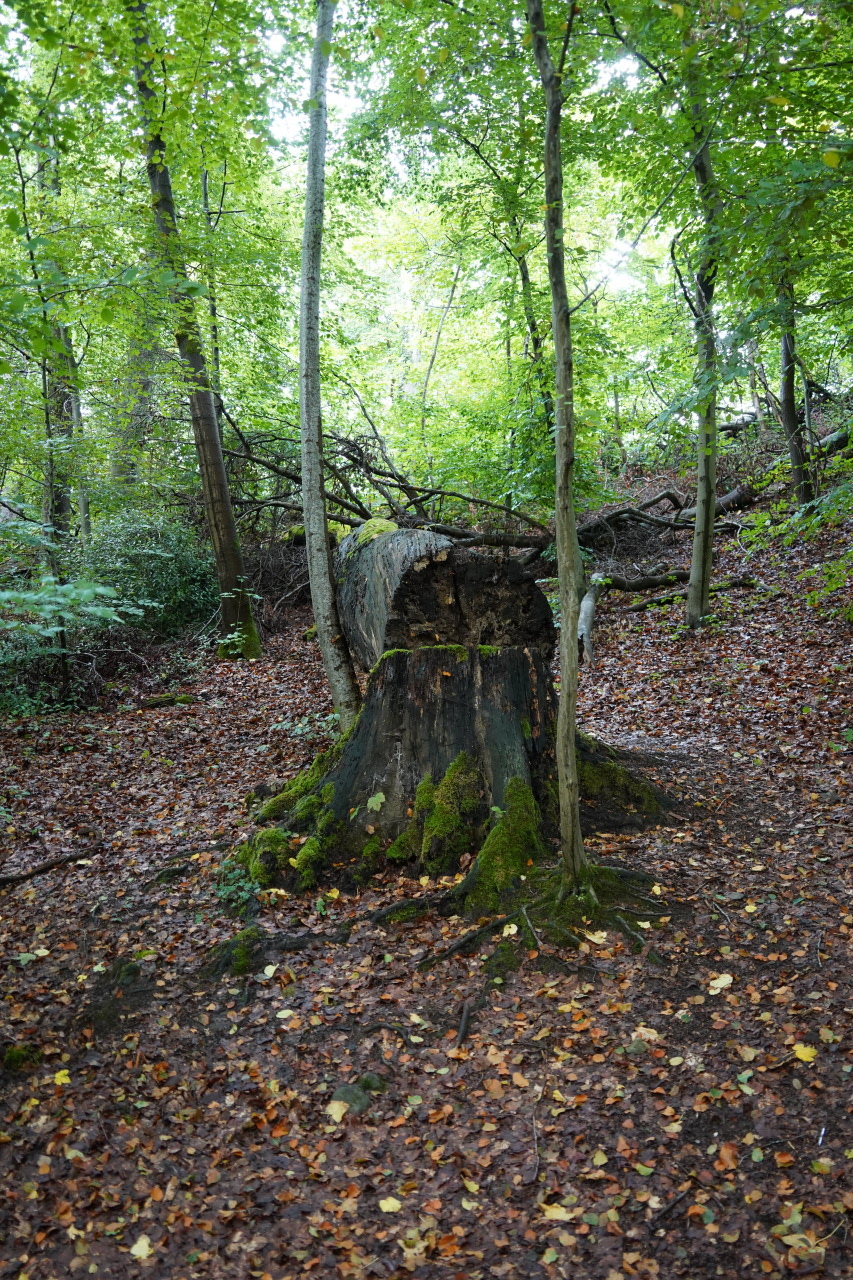
Dead trees: habitats for animals, plants, fungi, and other organisms—and important for the forest microclimate.
You can subscribe to our RSS feed for our press releases here https://www.aachen.de/rss-feed-pressemitteilungen/rss.xml