Diese Seite wurde automatisch übersetzt. Es kann daher zu Abweichungen oder Ungenauigkeiten im Text kommen. Verbindlich ist ausschließlich die Originalfassung. Rechtsansprüche aus Inhalten der übersetzten Version sind ausgeschlossen.
Facade Renovation at the Laurensberg School Complex
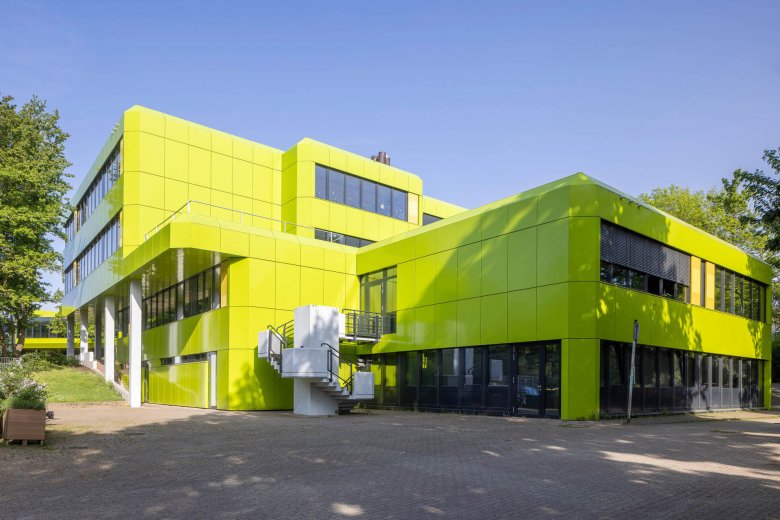
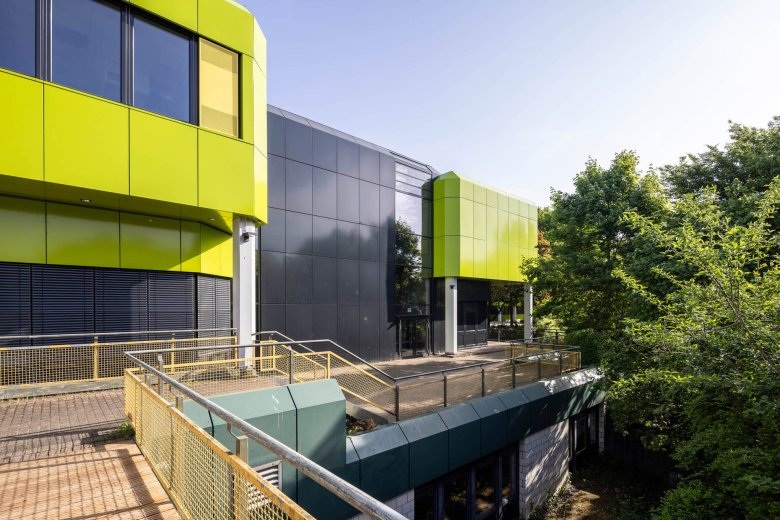
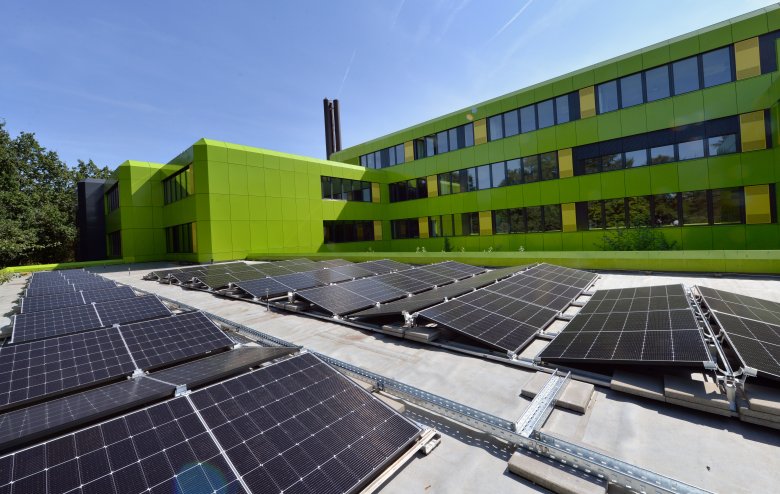
The aim of the measure was to bring the 40-year-old building envelope of component A up to today's energy standards while preserving the architectural character of the 1970s building.
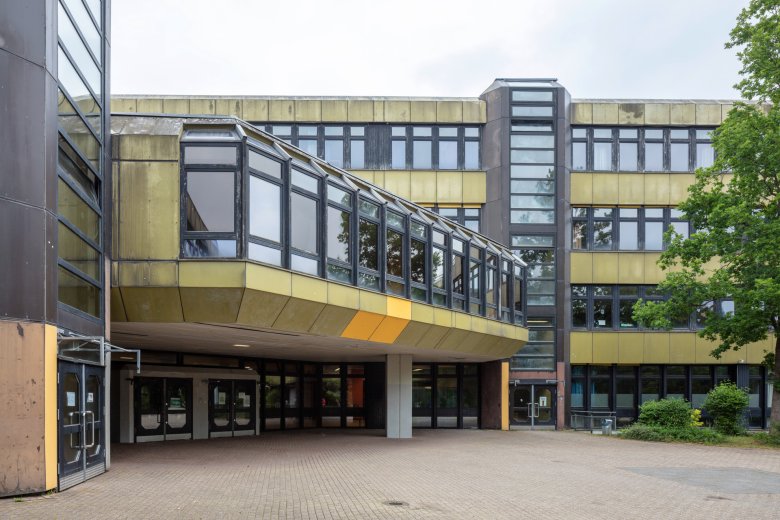
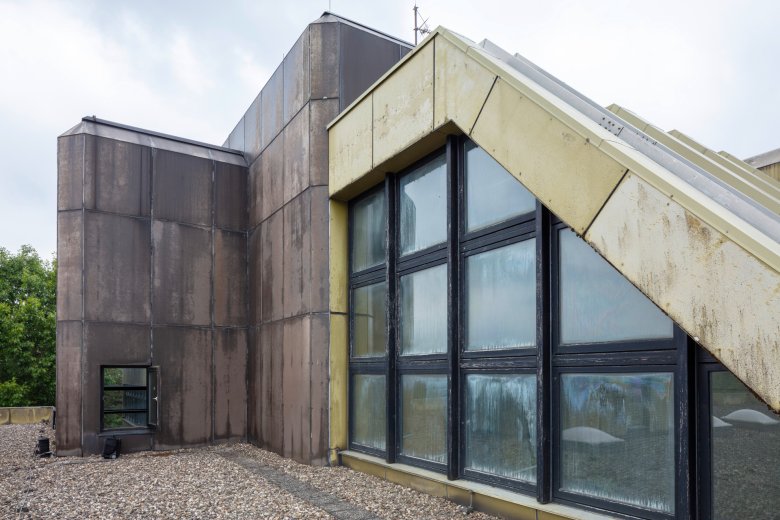
Energy-Efficient Façade Renovation : Weathering and 40 years of use had left clear marks on the façade, and its former freshness had been lost. In addition, requirements regarding energy performance have changed significantly since the 1970s. Energy efficiency and optimized indoor climate conditions have since become much more important. The goal was therefore to renovate the facade of the 1970s building to improve its energy efficiency and aesthetic appeal, bringing it up to current standards.
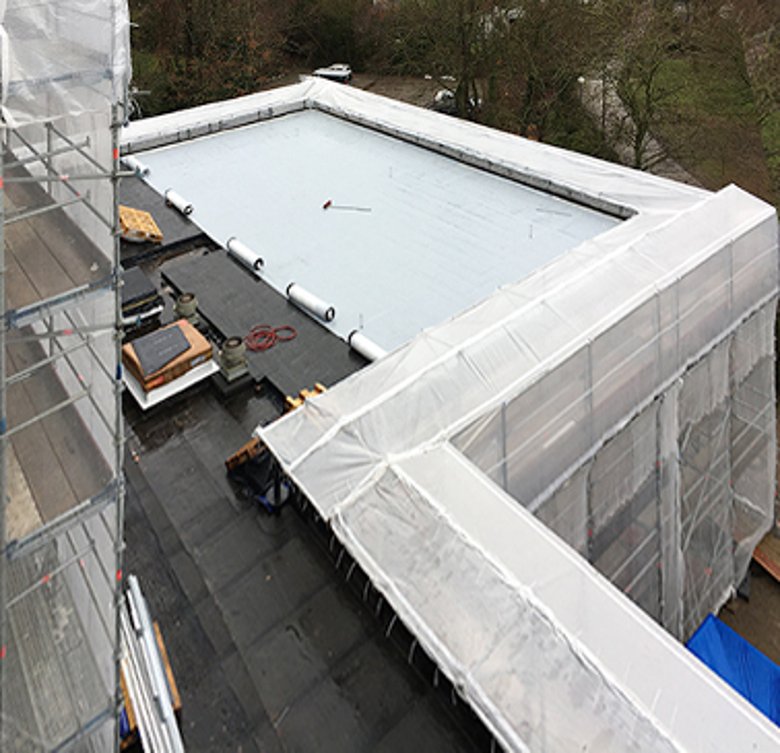
The existing façade, windows and roof sealing were demolished or dismantled and replaced with new constructions that meet the Aachen standard (energy standard of the city of Aachen: e.g. external wall U-value 0.2 W/(m²K, windows 1.0 W/(m²K)): Exterior wall U-value 0.2 W/(m²K), windows 1.0 W/(m²K)).
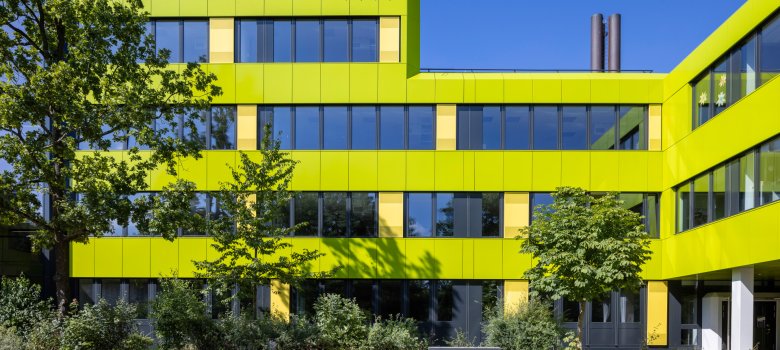
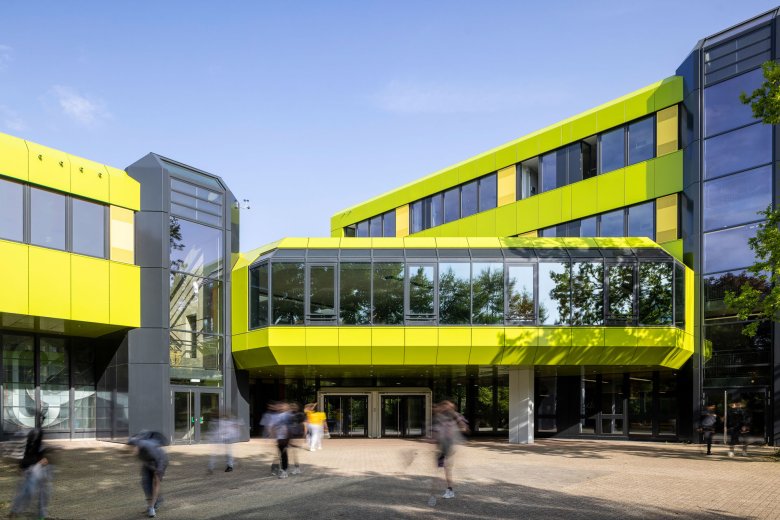
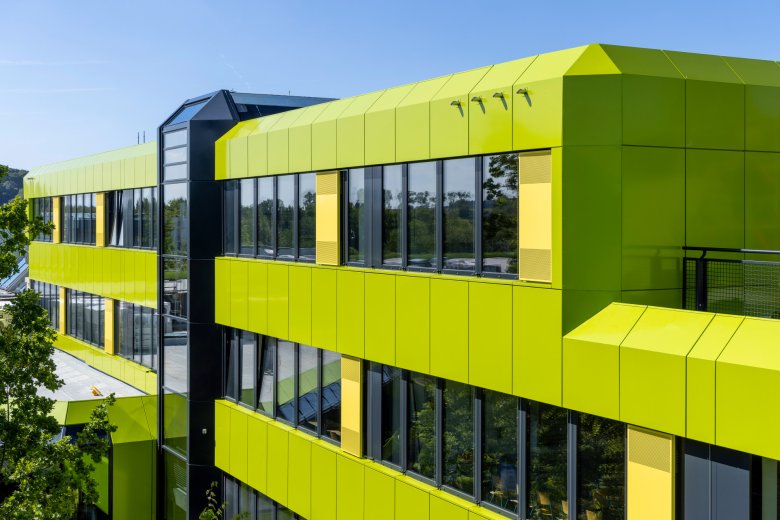
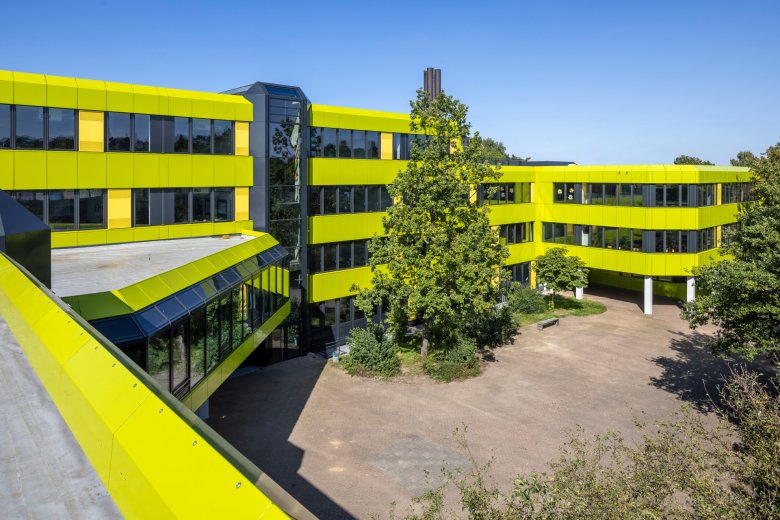
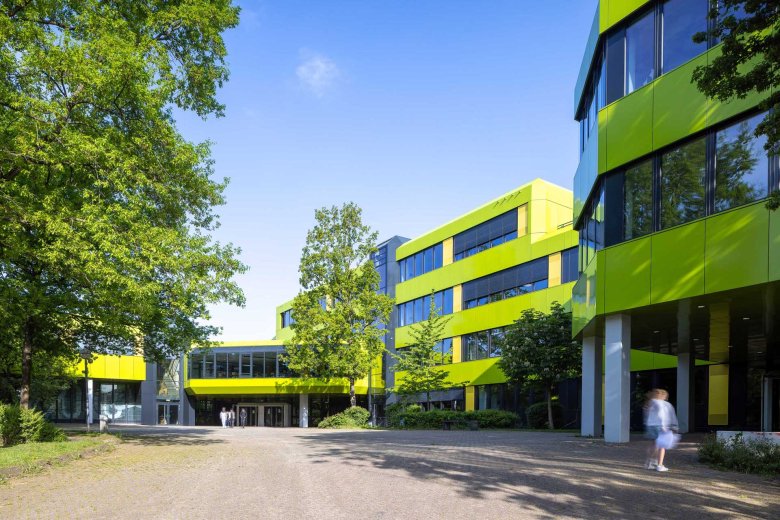
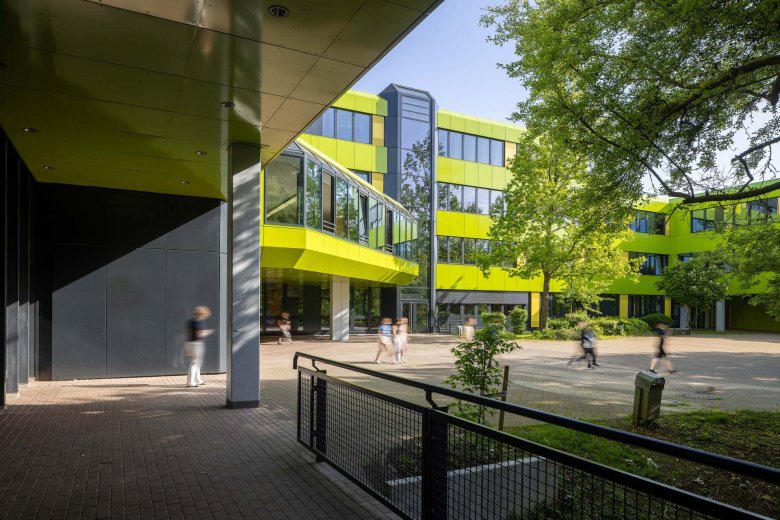
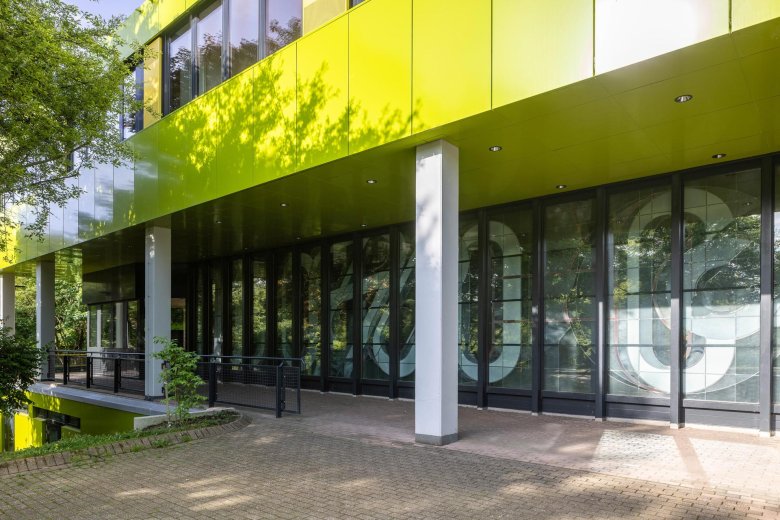
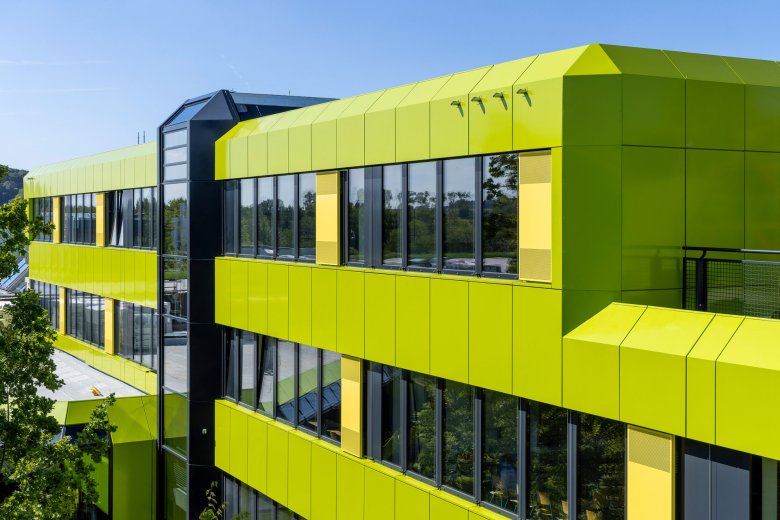
Preserving the Building'sCharacterDespite the extensive renovation work, the character of this striking building was to be preserved. The essential features of the façade—with its distinctive 45-degree angles and characteristic color scheme—were to be retained so that, even after completion, the interior and exterior would remain in harmony.
The choice of colors was reduced to three significant basic tones:
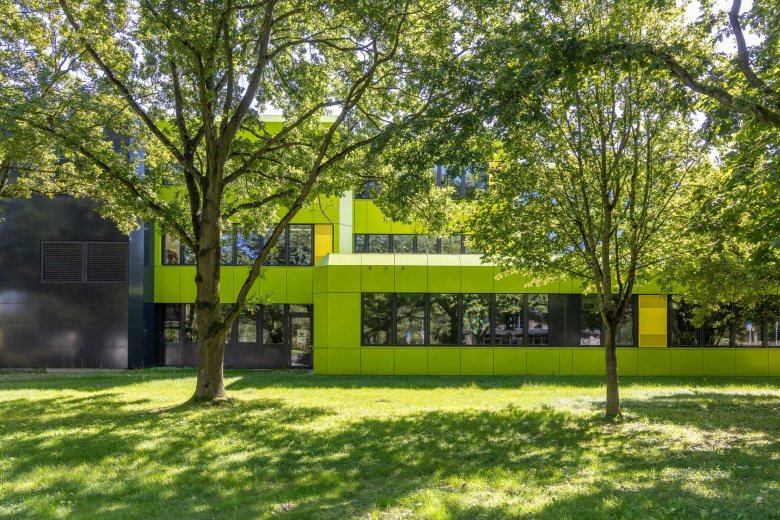
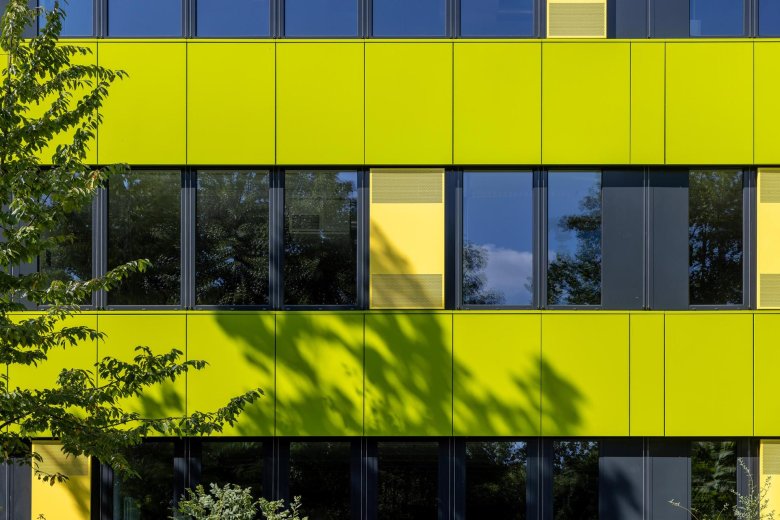
The color of the closed façade surfaces: Green, as a quotation of the primary previous façade color
The color of the window strips and staircases: dark grey / anthracite
The color of the supply and exhaust air elements of the decentralized ventilation: yellow, as a reference to the former sun protection and as an invigorating contrast to the green of the closed façade
The School Complex: An Authentic Testament to 1970s Architecture: Building A of the Laurensberg School Complex was designed in the mid-1970s by the Aachen-based architectural cooperative Plangruppe 70. Construction was completed and the building opened in the late 1970s.
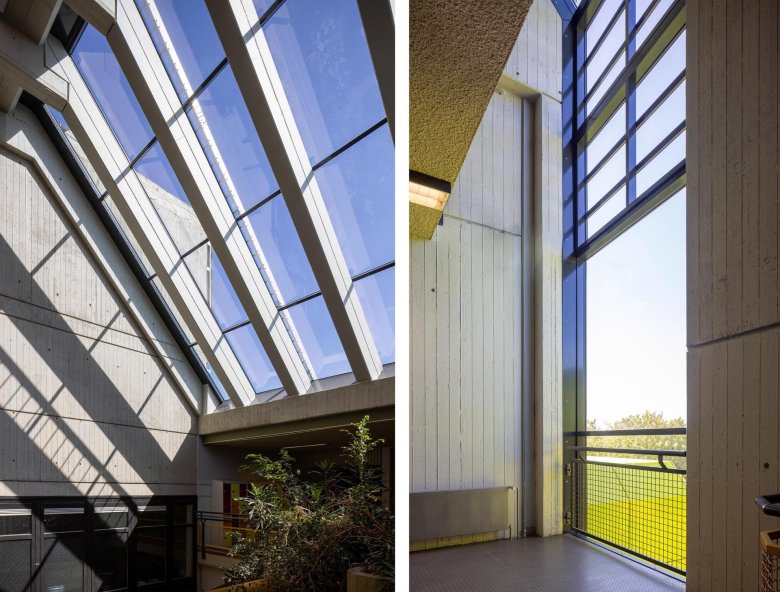
With its ventilated and insulated façade, the strongly structured building was considered innovative and its details were executed to a high standard for the time. Today, it is one of the few remaining representatives of 1970s architecture in our region whose interior and exterior appearance were consistently and consistently conceived in a single design language. The structure of the façade and all the façade connections with their characteristic 45° corners are carefully coordinated. This quality is characteristic of the entire building.
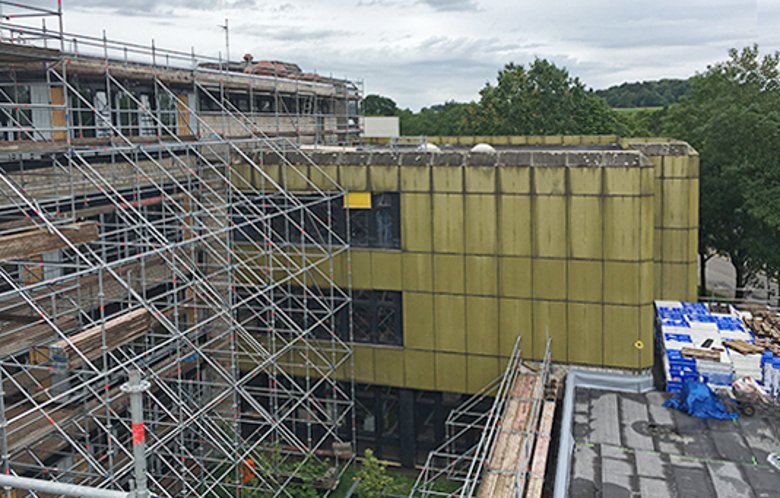
As part of the school building’s energy-efficiency renovation, certain remediation work was required to remove hazardous materials. The primary focus was on dismantling the facade, which consisted of tightly bonded asbestos cement with synthetic mineral wool (KMF) backing. The dismantling work was carried out primarily during school breaks.
In four sections, a total of approximately 5,500 m² of facade, including insulation, had to be dismantled, packed, and disposed of. The work was carried out non-destructively by drilling out the rivet fasteners, in compliance with the requirements of TRGS 519 (asbestos) and TRGS 521 (man-made mineral fibers). Prior to removal, the asbestos-cement panels were sprayed with a residual fiber-binding agent; after being loosened, they were packed into big bags and disposed of properly. The areas where the panels were removed were cleaned up using approved fine-dust vacuum cleaners.
Construction Process and Phases: To minimize disruptions to school operations, the renovation was carried out in four phases. The school administration arranged for the timely relocation of classes from the affected classrooms, ensuring that the section of the building under construction remained unused during the work. A separation was also created inside the building using temporary dust barriers, which were dismantled once the work was completed. In two construction phases, it was not possible to erect dust barriers inside the building for fire safety reasons. In these cases, work was carried out inside the closed classrooms or during the respective summer breaks.
Noise EmissionsNoise emissions from construction activities were kept to a minimum. The design of the façade alone reduced the need for drilling to a minimum. Other work that could not be carried out without loud drilling was performed outside of school hours whenever possible or took place in areas located at a distance.
The sections began in the fall and Easter vacations with the dismantling of the existing façade. The rest of the façade refurbishment will then be carried out, starting with the scaffolding.