
How can we use, repair, and pass on electrical appliances for longer instead of throwing them away? And how do we dispose of them properly when they are no longer needed?
Here you'll find practical tips and ideas for using electrical appliances in a more sustainable way. They show how we can conserve resources and extend the lifespan of our appliances.
This isn't just about theory: As part of the European E6 project, we're testing concrete solutions in Aachen. For example, the recycling truck will also stop at supermarket parking lots in the future. There, residents can conveniently drop off small electrical appliances while they're shopping.
Find out what you can do yourself—and how the circular economy works in everyday life. You can learn more about the E6 project at the bottom of this page.
What are electrical and electronic devices, and why are they valuable?
Electrical and electronic equipment (EEE) is all around us in our daily lives—from smartphones to refrigerators to electric toothbrushes. These devices require power from an outlet or are powered by batteries or rechargeable batteries to function. Even items you might not immediately expect fall into this category: for example, shoes with built-in LED lights or battery-powered decorative items.
Many electrical appliances contain both valuable raw materials, such as copper and precious metals, and potentially harmful substances. That is why it is important to use them for as long as possible, repair them when necessary, and pass on or reuse appliances that are still in working order. Once an appliance has reached the end of its useful life, it must be collected and disposed of properly. This allows valuable resources to be recovered and helps prevent environmental and health risks.
What is a circular economy, and why is it important?
A circular economy means using products and materials as long and as efficiently as possible, rather than discarding them after a short time. To achieve this, products are shared, reused, repaired, remanufactured, and recycled. This extends their lifespan, reduces waste, and keeps valuable raw materials in the economic cycle for as long as possible.
Unlike the linear throwaway economy, in which raw materials are extracted, products are manufactured, used, and then discarded, the circular economy is based on closed loops. This is particularly important for electrical and electronic equipment, as it can contain both valuable raw materials—such as copper and precious metals—and potentially harmful substances.
Why Is the Circular Economy Worth It?
- Strengthening the skilled trades and the regional economy: Repair, maintenance, and refurbishment create local jobs. This benefits, for example, skilled trades and repair shops, as well as companies that refurbish or resell used electrical and IT equipment. As a result, more value is retained in the region, and opportunities arise for new services and business models.
- Becoming more independent and resilient to crises: Many raw materials and components for electronic devices come from other countries and regions. By repairing and reusing existing devices, we can make better use of raw materials and reduce our dependence on international supply chains. This helps us better cope with crises and supply shortages.
- Protecting the Environment and Climate: Using electronic devices for longer saves resources and prevents unnecessary waste. This is because producing new devices requires extracting raw materials, processing materials, and manufacturing and transporting products.
- Save money and keep your favorite devices: A broken device doesn't have to be replaced right away. A repair can be cheaper than buying a new one. And if you have your favorite device repaired, you can often keep using it for many more years.
Circular Economy in Aachen: What Can You Do?
A circular economy starts in our daily lives—and together, we can make a big difference in Aachen. When it comes to electronic devices in particular, there are many ways to conserve resources, reduce waste, and extend the lifespan of products.
Before buying something new, consider whether you really need it. Use your devices for as long as possible; have them repaired if necessary, or pass them on if you no longer need them yourself. If a device can no longer be salvaged, dispose of it properly so that valuable raw materials can be recovered.
In Aachen, too, there are practical approaches that help with this. The European E6 project, in collaboration with local partners, is exploring new ways to facilitate repair and reuse and to better connect existing services. Businesses can also get involved by, for example, donating decommissioned IT equipment for reuse, collaborating with local initiatives, or raising awareness of their repair and maintenance services. This benefits the environment, local small businesses, and the regional economy.
Every step counts! Not every device can be repaired or reused. The key is to find the most sensible solution for each product: avoid, use longer, repair, pass on, and finally, recycle properly. This way, we conserve valuable raw materials, avoid costs, and work together to make Aachen more sustainable and resilient.
Additional information from the European Parliament on the circular economy
Making Conscious Purchasing Decisions – Refuse & Rethink
The most sustainable way to use an electronic device often begins even before you buy it. Consider whether you really need a new appliance or if your current one is still sufficient. Perhaps you can borrow an appliance, share one with others, or buy a used one. If you decide to buy a new one, it’s worth paying attention to quality, repairability, and energy consumption.
Here's what you can do:
- Ask yourself: Do I really need to buy this item? Maybe the one you already have will do, or you can borrow one or share it with others. Neighborhood associations often offer such opportunities. You can also borrow some items, such as tools, from the Aachen Public Library.
- Pay attention to both price and quality. Durable appliances may cost more upfront, but they can pay off in the long run because they last longer. So don't just focus on the price—consider the quality as well.
- Check the warranty terms. Pay attention to the warranty period and, if necessary, find out about extending the warranty. Be sure to check which types of repairs and components are covered.
- Look for eco-labels. For example, the Blue Angel label takes into account criteria such as durability, repairability, and the availability of replacement parts for relevant product groups.
- Find out about repair and maintenance. Check whether replacement parts are available and whether the manufacturer offers repair and maintenance services. Ask at a specialty store or check the manufacturer’s website. Starting in 2025, electronic devices such as laptops, smartphones, and tablets must be labeled with a repairability index. The rating ranges from A (very good) to E (poor) and is displayed to consumers as a label in stores or as a QR code with a link to the EU database EPREL. More information
- Choose products that are known for their durability. Find out about quality, durability, and repair options—for example, by contacting the consumer advice center.
- Pay attention to energy consumption. Compare energy efficiency within each appliance category.
- Choose an appliance that's the right size. Buy an appliance that meets your actual needs—not larger or more powerful than necessary.
Own and Use Fewer Products – Reduce
Consuming less and more selectively saves raw materials, energy, and money. By buying only what is actually needed, you reduce resource consumption right from the start of a product’s life cycle.
Das kannst du tun:
- Buy only the devices you really need.
- Avoid unnecessary duplicate or replacement devices.
- Choose durable products instead of short-lived alternatives that need to be replaced quickly.
Reusing and Passing On Devices – Reuse
A device you no longer need can still be very useful to someone else. By giving it away, trading it, donating it, or selling it secondhand, products stay in use longer and don’t have to be replaced with new ones. You, too, can buy and use secondhand devices, thereby extending their lifespan.
Here's what you can do:
- Pass on working devices to family, friends, or nonprofit organizations. One example of a nonprofit organization that collects used IT devices, refurbishes them, and distributes them to those in need is Hey, Alter!
- Sell or give away unused devices. In Aachen, for example, there are swap and giveaway corners in various neighborhoods where you can pass on your small, old devices. You can find such corners, for example, at the Oecher Lab or at the Eilendorf Recycling Center. You can also pass on your devices through online platforms. One example is the AWA’s swap and give-away marketplace.
- Check out secondhand options before buying a new device. There are also several retailers of used electronics in Aachen and the surrounding area that professionally inspect and refurbish these items before selling them.
Share and Use Devices Together – Share
Many devices are rarely used. When several people share a single device, the number of products needed decreases, and with it, the demand for new raw materials.
Das kannst du tun:
- Share tools and household appliances you rarely use with neighbors, friends, or family. You can do this, for example, through online neighborhood help groups.
- Take advantage of rental services and shared equipment collections. For example, you can also borrow tools and other items from the city library.
- Organize group purchases, such as for gardening or DIY tools.
Maintain, care for, and extend the life of your devices – Maintain
Proper maintenance of equipment also helps ensure that it lasts longer. Regular cleaning, proper use, and the timely replacement of small wear-and-tear parts can prevent major malfunctions.
Das kannst du tun:
- Clean and maintain your devices according to the manufacturer's instructions. This will help them last longer, and you won't have to buy a new one.
- Protect devices from moisture, overheating, and damage.
- Install any necessary security updates and handle batteries with care.
Repair and refurbish instead of throwing away – Repair & Refurbish
A defect does not automatically mean that a device belongs in the trash. Often, problems can be fixed and devices repaired with a reasonable amount of effort. Repairs extend the device’s lifespan and prevent valuable raw materials from being wasted.
Das kannst du tun:
- When making a purchase, be sure to look into professionally refurbished devices. There are many sellers in the region and online—especially for cell phones, computers, and tablets—but also for other devices.
- Take suitable used devices to recycling centers. You can often even get money from the recycler for your device.
- Learn about warranty and guarantee claims, and exercise your right to have the product repaired.
- Check to see if the device can be repaired before you replace it.
- There are many repair shops in Aachen and the surrounding area. Repairs are offered, for example, by electronics retailers, directly by manufacturers, or by independent repair shops. Start by contacting these repair specialists.
- Contact volunteer repair shops or Repair Cafés, especially if a repair shop won’t perform the repair and the warranty or guarantee has expired. You can find a list of Repair Cafés near you, for example, on the Repair Initiatives Network website.
Properly Collecting and Recycling Electronics – Recycle
If a device can no longer be repaired or meaningfully reused, it should be disposed of properly. Electrical appliances contain valuable raw materials, but some also contain hazardous substances. Through separate collection, materials can be recovered and hazardous substances can be safely treated.
Das kannst du tun:
- Drop off old electronic devices at appropriate collection points or take-back stations. Of course, you can contact your local recycling center for this.
You can also properly dispose of your old devices at the Wertstoffmobil, our mobile recycling collection station.
Supermarkets, discount stores, and drugstores with a sales area of more than 800 square meters are also required to accept old electrical appliances if they sell such items. Here you’ll find an overview of where to drop off old electrical appliances - Never dispose of electronic devices in the regular trash.
- If possible and safe to do so, remove batteries and rechargeable batteries and dispose of them separately at appropriate collection points.
- Drop off old electronic devices at appropriate collection points or take-back stations. Of course, you can contact your local recycling center for this.
The “E6” Project—Ecosystems for Extending the Lifespan of Used Electrical and Electronic Equipment
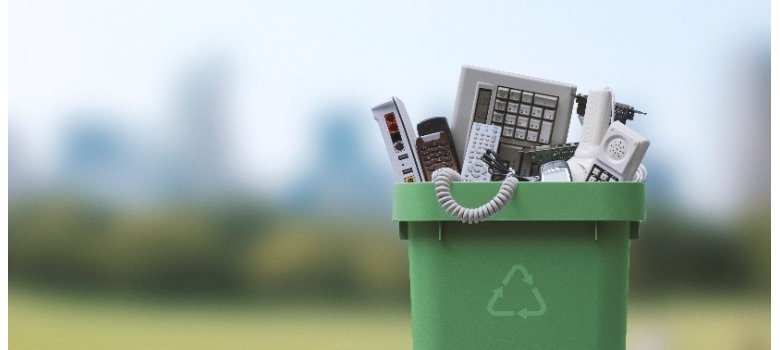
© Shutterstock_Stokkete
The European project E6 (Ecosystems for Extended Lifetime of End-of-Use Electrical and Electronic Equipment) is committed to extending the lifespan of electrical and electronic equipment and promoting its repair and reuse. Together with international partners, local repair and reuse ecosystems are being established at six pilot sites. In Aachen, the City of Aachen and Aachener Stadtbetrieb are responsible for on-site implementation.
The goal is to make better use of existing resources, prevent electronic waste, and create systems through which used devices can be repaired, refurbished, and reused or sold.
The project approach
E6 promotes the development of local structures that facilitate the repair, refurbishment, and reuse of electrical appliances. These include, among other things, Repair Cafés, appropriate collection and redistribution options, and new partnerships between municipalities, businesses, repair shops, repair initiatives, and other stakeholders.
Through international exchange, experiences and solutions from the six pilot sites are brought together. The project thus supports the development of a circular economy in which products and materials are used for as long as possible.
Avoiding electronic waste: Aachen's circular economy concept
Through the Circular Cities Declaration and the Climate City Pact, the city of Aachen has committed to advancing the development of a local, climate-friendly circular economy. E6 supports this goal by testing new ways to repair and reuse electronic devices and by better linking existing services.
The initiative is being implemented in collaboration with Aachen City Utilities and other local stakeholders. Citizens also have a role to play: By making conscious purchasing decisions, repairing items, passing on used devices, and disposing of them properly, they can help conserve resources and reduce electronic waste.
Project data
Projektname: E6 – Ecosystems for Extended Lifetime of End-of-Use Electrical and Electronic Equipment
Funding Program: Interreg North-West Europe 2021–2027
Total Budget: €8
,154,017.46 EU Funding (INTERREG): €4
,892,410.42 Project Start Date: January 2024
Planned project end: March 2027
Visit the project websiteThe project partners
- Hogeschool Saxion, Netherlands (Lead Partner)
- Stadt Aachen, Deutschland
- Aachener Stadtbetrieb, Deutschland
- Circulus, Niederlande
- Comhairle Ceantar na nOileán CTR, Irland
- European Regions Network for the Application of Communications Technology, International
- Foenix Kringloop en Re-integratie, Netherlands
- Gemeente Apeldoorn, Niederlande
- Gemeente Den Haag, Niederlande
- Maakbaar Leuven VZW, Belgien
- Nevers Agglomération, Frankreich
- Repair&Share VZW, Belgien
- Syndicat Mixte Ouvert Nièvre numérique, Frankreich
- Thomas More Mechelen-Antwerp vzw, Belgium
- Údarás na Gaeltachta, Irland
- Vlaams Instituut voor technologisch Onderzoek, Belgium
- Economic Institute for Small and Medium-Sized Enterprises and the Skilled Trades at the University of Göttingen, e. V., Germany
- vzw ViTeS, Belgien
- DAVI, Frankreich