City Archaeology Completes Excavation at Münsterplatz
- After a good half a year, the sensational archaeological excavations in the shadow of the cathedral have come to an end.
- Most recently, a previously unknown medieval well was discovered. This well is located on a Roman road that may have led directly to the Roman thermal baths.
- Two new linden trees will be planted soon, which will enhance the square.
It all began at the end of February 2026 on Münsterplatz with a large shovel. But soon, paintbrushes and other fine tools took center stage. From then on, the shovels were mostly left on the edges of the two pits in the heart of Aachen’s city center. “During the approximately six-month investigation, we were able to gain detailed insights into the old Münster churchyard for the first time,” said city archaeologist Andreas Schaub during a press conference on Tuesday (September 22), offering an overall positive assessment following the intensive excavation period.
A Rare Opportunity for Archaeological Excavation on Münsterplatz
For a good half a year, city archaeologist Andreas Schaub and volunteer assistants from the Archaeological Working Group (AAA) worked their way through two tree pits layer by layer, all by hand. The two linden trees previously planted there had been felled by a storm in 2023. Now that the archaeological work has been completed, two new linden trees will be planted in the tree pits. Since the tree pits first had to be prepared, the past few months presented a rare opportunity for the archaeologists: Construction—especially excavation—is rarely carried out on Münsterplatz. Any excavation at this historic site is therefore supervised by archaeologists and often yields interesting finds.
Main entrance to the Roman thermal baths?
In the second pit, which has been intensively excavated over the past few weeks, the boundary wall separating the Marienstift’s exempt territory from the city limits was uncovered, among other things. A surprising discovery was a large, previously unknown well built at the same time as the wall. “This allowed us to solve a little mystery,” explained Andreas Schaub. “In fact, 16th- and 17th-century maps showed a previously unidentified structure at this location, which we can now identify. Surprisingly, the well—which had already been abandoned by the 16th century—is built on top of a Roman road. Given the circumstances, this may have been the main entrance to the Roman thermal baths, known as the ‘Münsterthermen,’” the city archaeologist continued.
Thanks to the active support of volunteers, the City Archaeology Department was also able to document approximately 60 graves dating from the 12th to the 18th centuries. “Particularly moving was an elaborately furnished double burial of two infants, which was properly excavated and recovered with the help of conservators and anthropologists from the LVR State Museum and the University of Bonn,” Schaub explained. Research has since begun into the baptismal and death records of the parish of St. Foillan to determine the exact identities of the presumed twin infants.
Artifacts from the Roman, Merovingian, and Carolingian
periods. All skeletal remains are currently being analyzed. As part of a dissertation at RWTH Aachen University, they are intended to provide further insights into Aachen’s population during the Middle Ages and early modern period and to clarify whether some of the deceased were in fact victims of a 16th-century epidemic.
Among the numerous artifacts recovered, glass mosaic tiles covered with gold leaf stand out; they are believed to have come from the Roman baths. Ceramic finds from the Merovingian and Carolingian periods, medieval pilgrim shells, and fragments of broken pilgrim horns—which were presumably used during pilgrimages to sacred sites and broke along the way—round out the rich array of finds.
The findings from the first tree ring already provided insight into times long past: First and foremost, extensive remains of the medieval cemetery, the Münsterkirchhof, were discovered. It has been documented since the 13th century. However, the oldest graves found by the archaeological team date back at least to the 12th century. The cemetery remained in use until the Napoleonic era, when cemeteries were relocated from city centers for sanitary reasons.
The excavations at this prominent location have drawn the attention of countless passersby in recent months. The archaeologists answered questions from young and old alike with great patience, more thoroughly than ever before. To ensure the work was not unduly disrupted, the city’s Department of Communications and City Marketing designed posters over the summer to explain the excavations.
New Linden Trees After Excavations
Are Complete Sarah Hartung from the Landscape Planning and Construction Division of the Climate and Environment Department is pleased that the two new linden trees will soon be planted. This marks the end of the archaeological adventure in the heart of the city, which was observed by many thousands of people over the summer. At the same time, however, new trees that provide shade will soon be growing on Münsterplatz, bringing just as much joy to people in the future. “This will restore the linden tree ensemble on Münsterplatz,” says Hartung.
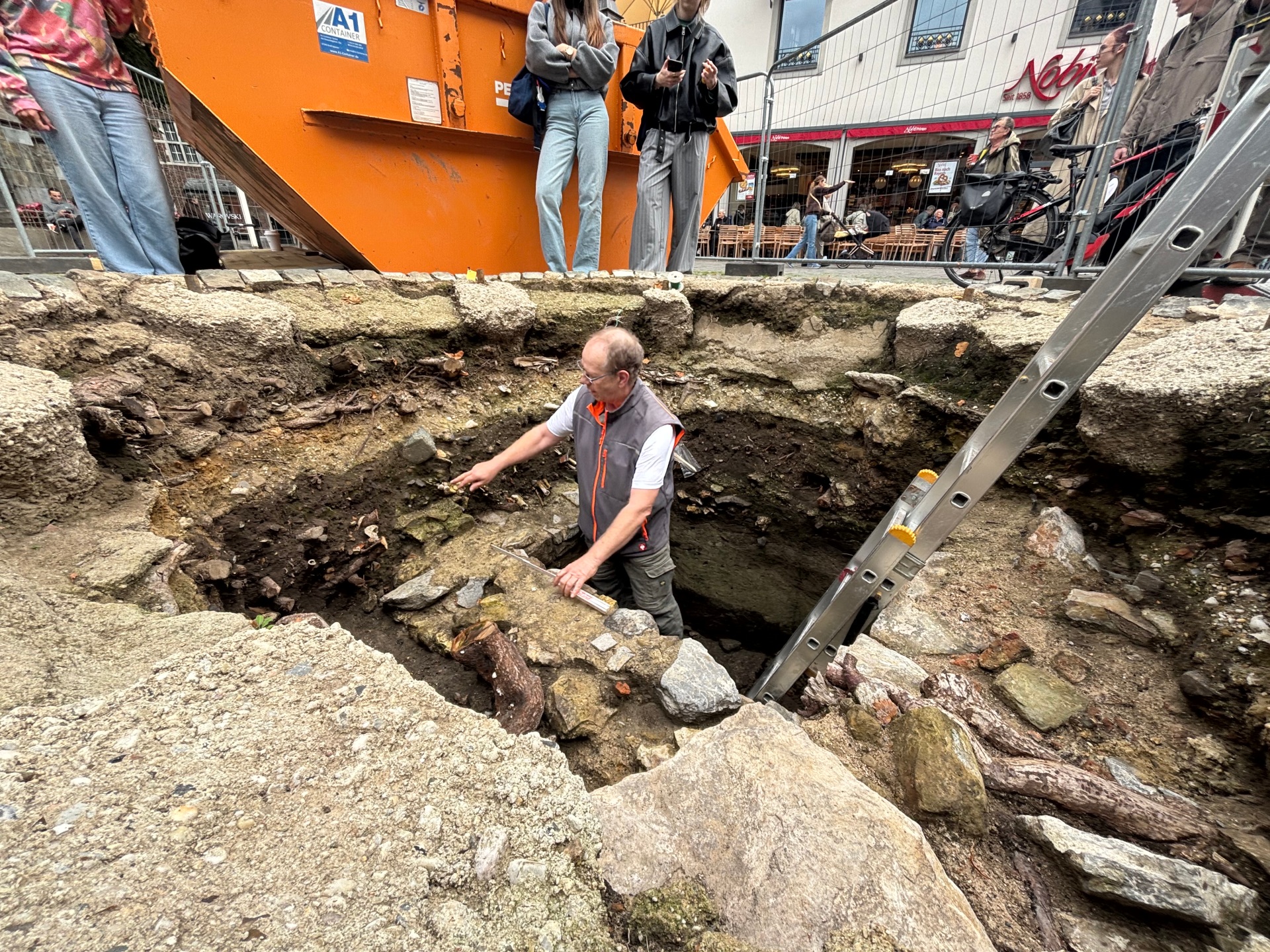
A Roman road leading to the Roman thermal baths was discovered at a depth of two meters: City archaeologist Andreas Schaub takes stock of the excavation at Münsterplatz.
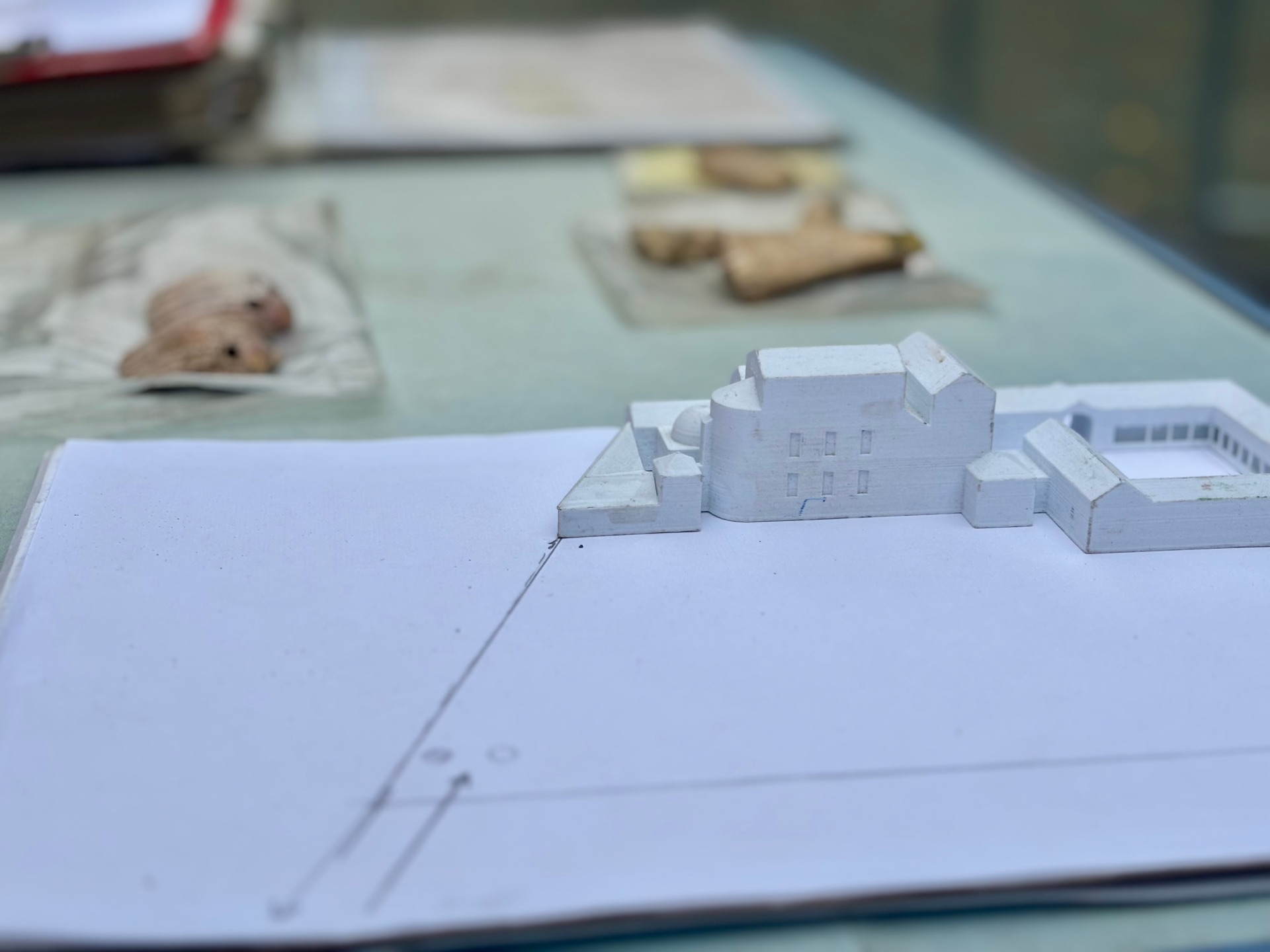
Sketch: Although no direct remains of the Roman thermal baths were found during the excavation, experts nevertheless discovered a Roman road at the deepest point and made numerous medieval finds above it.
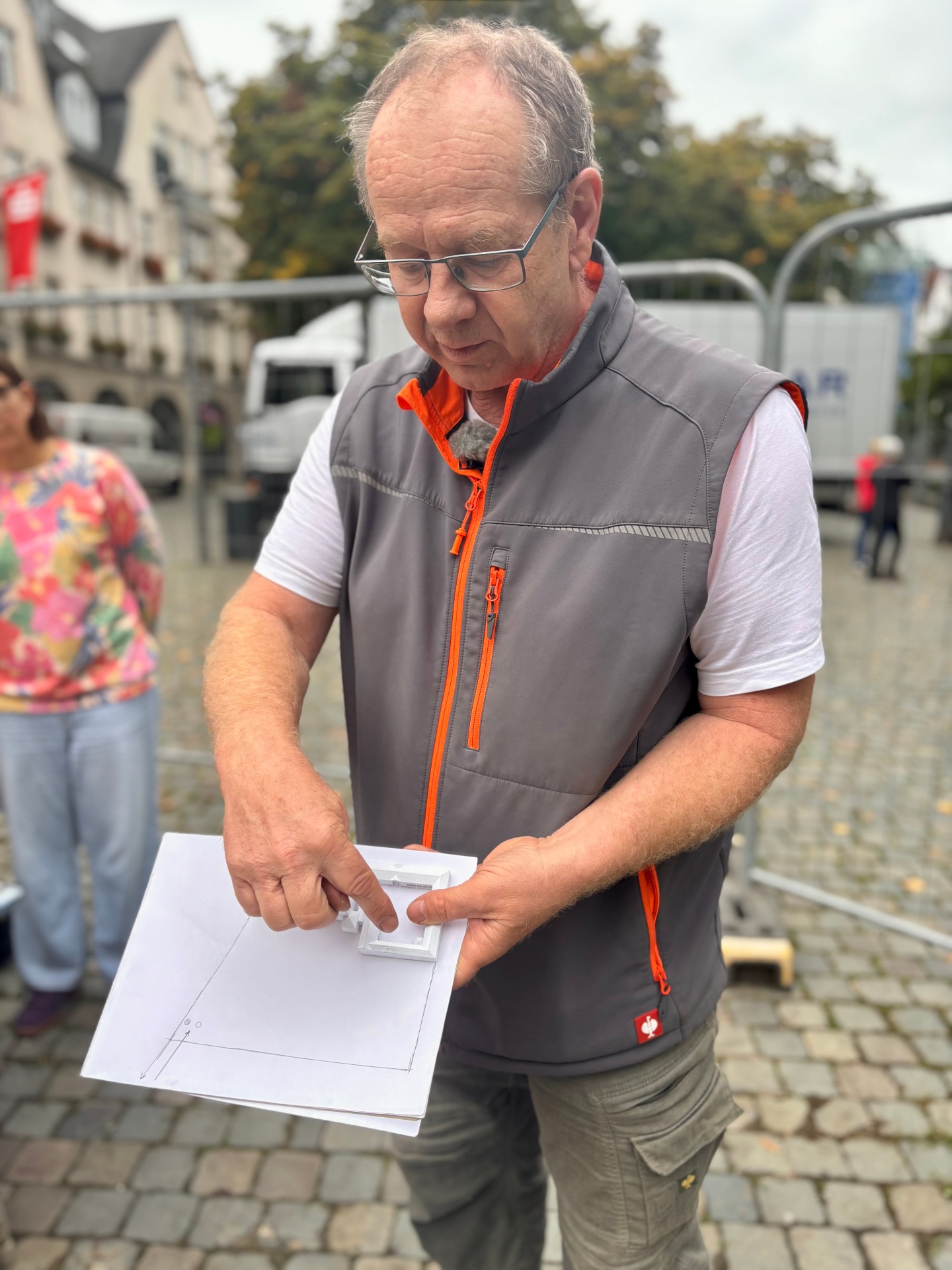
In-Depth Analysis: The findings and insights from the Münsterplatz excavation will be analyzed in the coming months by city archaeologist Andreas Schaub and other experts.
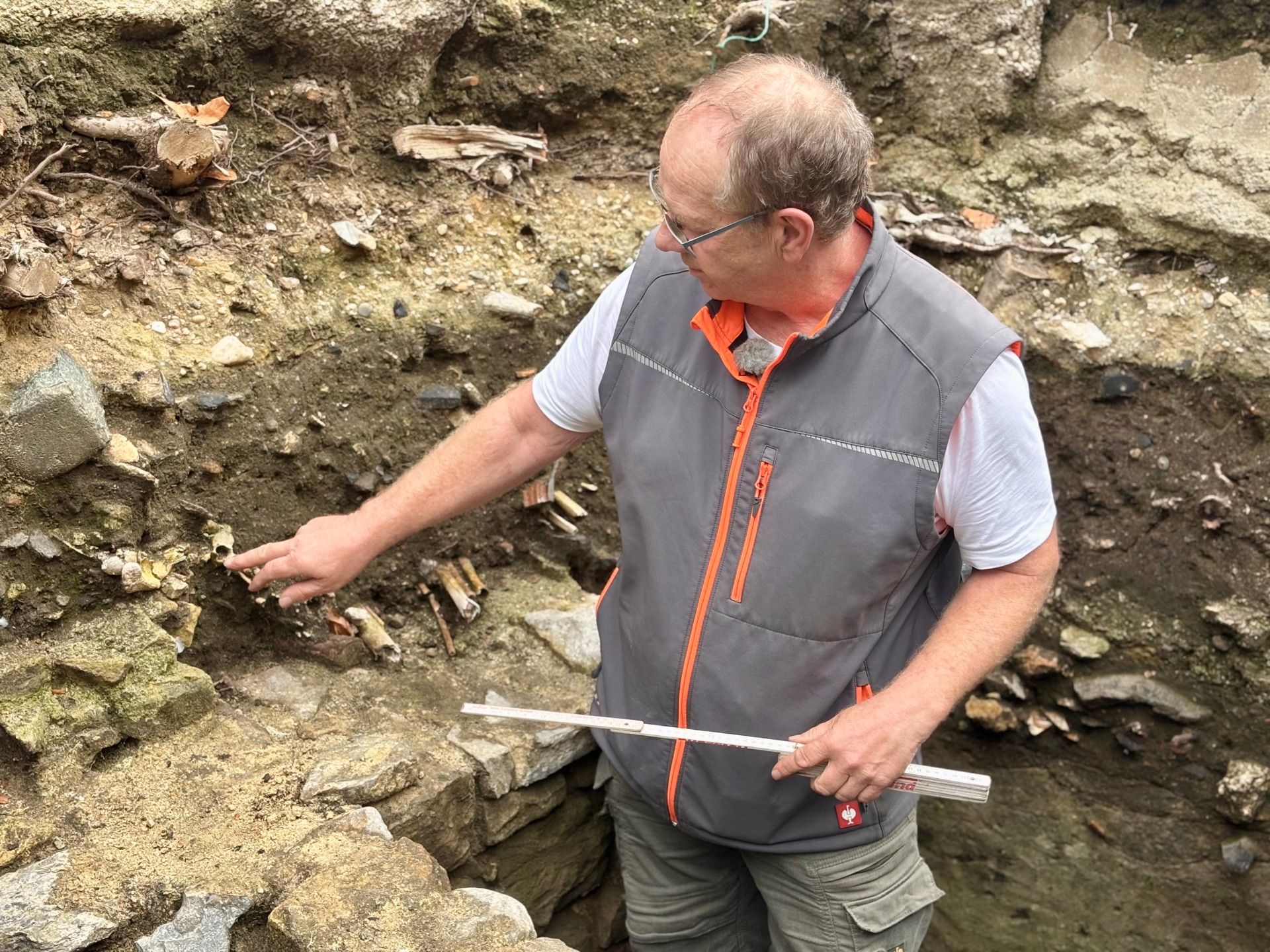
Meticulous Work: Over the past few months, city archaeologist Andreas Schaub and his team of volunteers have worked their way through the two pits on Münsterplatz, centimeter by centimeter. In the process, the experts made some fascinating discoveries.
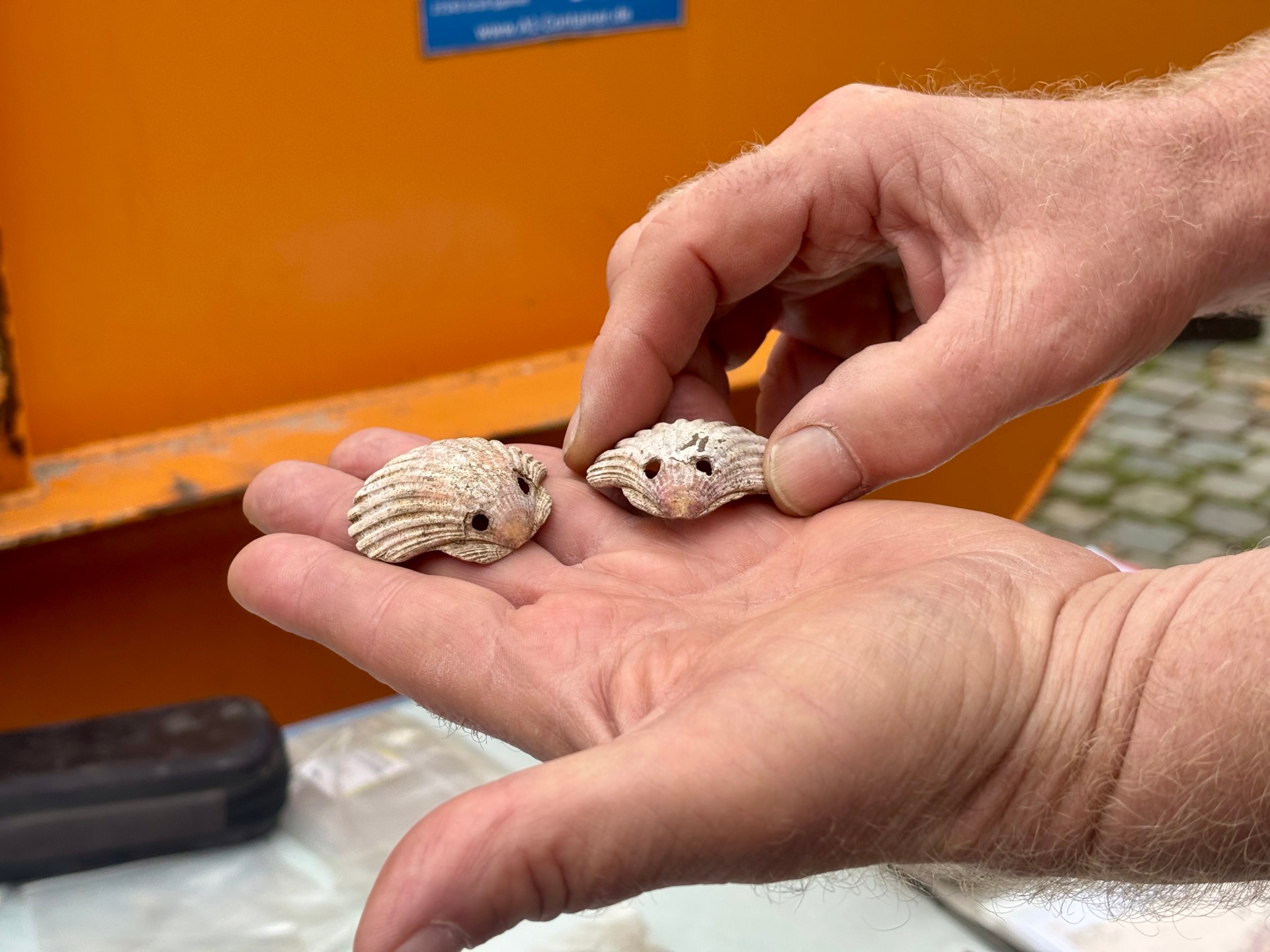
A medieval pilgrimage destination: People flocked to Aachen from near and far as early as the Middle Ages. This is evidenced by the scallop shells discovered during the excavation at Münsterplatz.
You can subscribe to our RSS feed for our press releases here https://www.aachen.de/rss-feed-pressemitteilungen/rss.xml