125 Years of Statistics for Aachen: Changes in Causes of Death in Aachen Since the Beginning of the 20th Century
Since 1900, the city of Aachen has undergone a profound shift in its disease profile, moving from acute infectious diseases and high infant mortality to chronic degenerative diseases in a rapidly aging population. This epidemiological transition is closely linked to the model of demographic transition—that is, the evolution of a population with high fertility and mortality rates toward modern societies characterized by low to very low rates, rising life expectancy, and an aging population. The epidemiological transition in Aachen is also influenced by the city’s specific structure as an industrial city, its location on the front lines during the world wars, and its subsequent transformation into a university city. It can be roughly divided into three phases and has been well documented since the establishment of the Office of Statistics in 1901 through the recording of causes of death.
Living Conditions in an Industrial City in the Early 20th Century
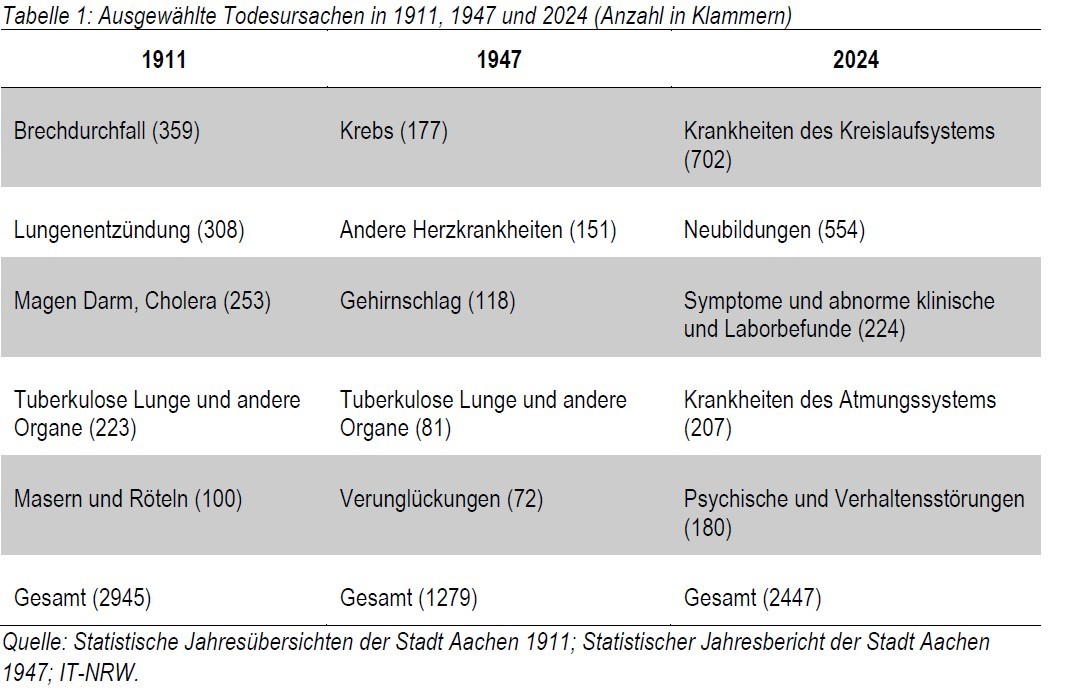
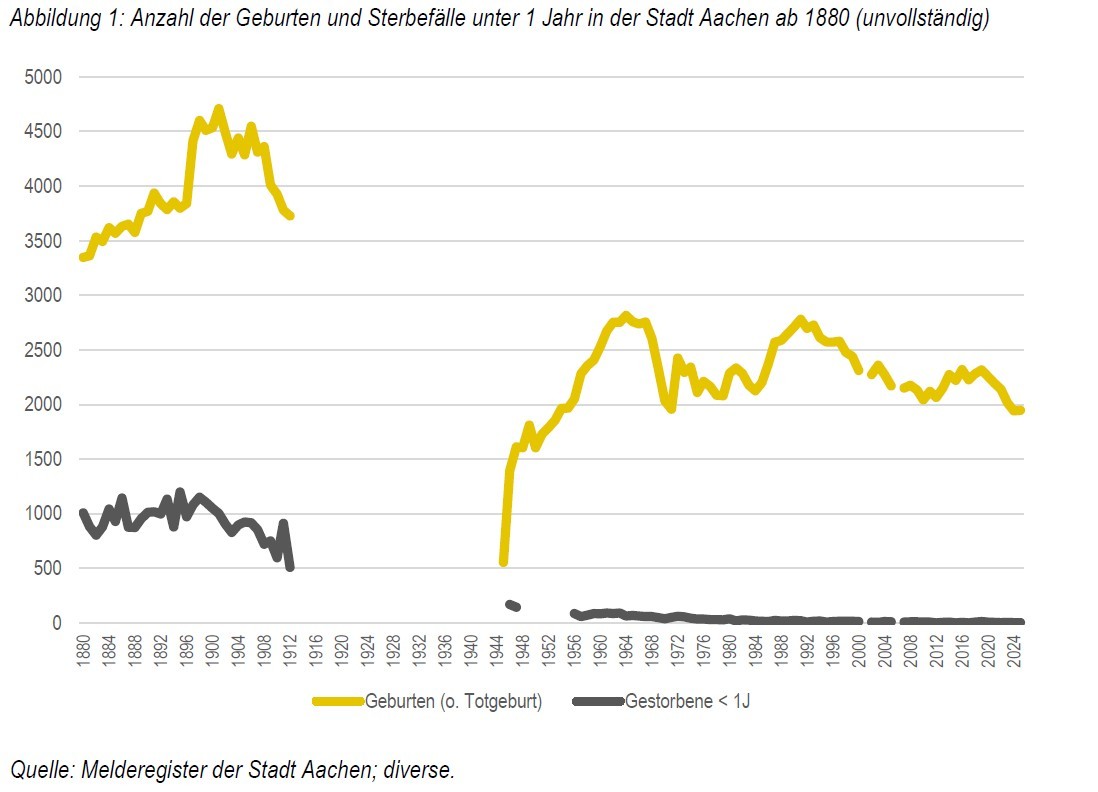
The first phase of classic infectious diseases can be traced back to approximately the 1940s. At the beginning of the 20th century, Aachen was a typical, rapidly growing industrial city. The often precarious and cramped living conditions in the workers’ housing estates, as well as inadequate urban sanitation infrastructure, contributed to the outbreak of epidemics and infectious diseases. Combined with high fertility rates, this phase was also characterized by high infant mortality. In 1911, for example, nearly one in four newborns died before reaching their first birthday. The typical causes of death during this period were vomiting and diarrhea, pneumonia, tuberculosis, gastrointestinal diseases, as well as a high incidence of diseases such as measles and rubella (Figure 2).
The Development of Modern Medicine and Declining Infant Mortality
On the one hand, the two world wars led to setbacks in the development of public health, such as the outbreak of the Spanish flu in 1918–19 or the general state of hardship during the years of reconstruction. At the same time, with the development of modern medicine (antibiotics and penicillin) and further improvements—particularly in urban infrastructure and overall living conditions—the era of modern affluence and chronic lifestyle-related diseases began in the 1950s. At the outset, this phase was still characterized by a relatively high, though rapidly declining, infant mortality rate (Figure 3). In 1947, approximately one in nine newborns died within the first year of life. Although typical infectious diseases had not yet completely disappeared at the beginning of this phase, they were in sharp decline. Cancer and cardiovascular diseases became the leading causes of death (Figure 2).
Challenges of Demographic Change
Beginning in the 1990s, this phase has been compounded by the challenges of demographic change in the form of a rapidly aging population with a growing number of very elderly people. Due to sharply declining fertility rates and, in particular, advances in modern prenatal and postnatal medicine, infant mortality is now virtually negligible (Figure 3). The leading causes of death remain cardiovascular diseases and malignant neoplasms (Figure 2). As society continues to age, these are now joined by an increase in so-called age-related diseases such as dementia. The COVID-19 pandemic of the 2020s made it clear that infectious disease risks can continue to have serious impacts on the health and quality of life of a society.
125 Years – A Journey Through the Statistics
: The Statistics Office team is celebrating this anniversary year—in keeping with its mission—with a journey through many interesting and curious facts, figures, and data about the Imperial City. Topics range from population trends and changes in land area to attendance figures for Alemannia’s home games. Through August 2027, the City of Aachen will publish additional installments of this series at regular intervals on aachen.de/statistik.
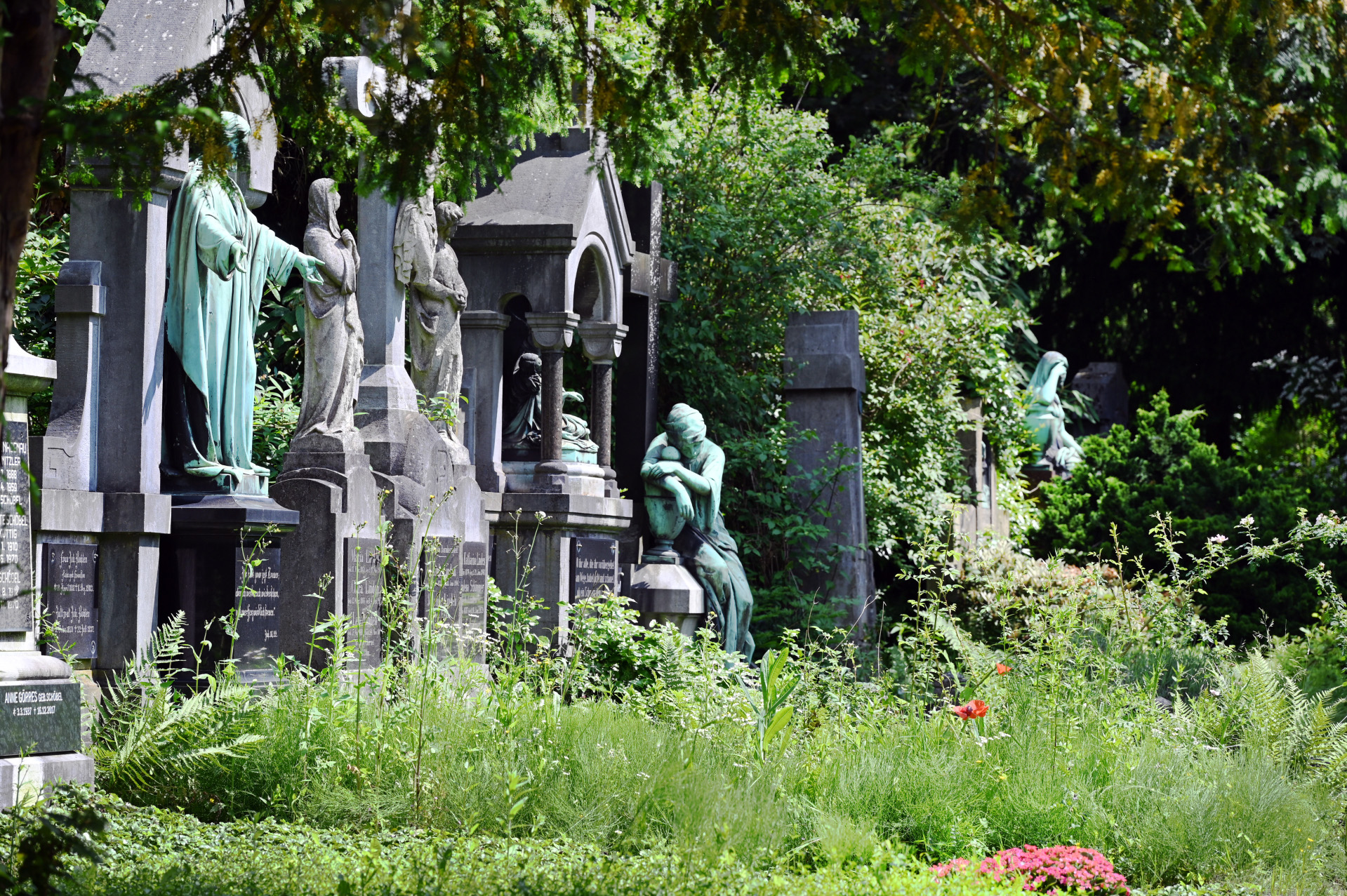
Cemeteries in Aachen, Ostfriedhof
You can subscribe to our RSS feed for our press releases here https://www.aachen.de/rss-feed-pressemitteilungen/rss.xml