Joint Declaration Seals a Deeper Partnership in the Meuse-Rhine Euregio
The government of the German-Speaking Community of Belgium and the Administrative Board of the City of Aachen met on Thursday, November 19, for a joint session in Aachen. The meeting focused on issues of cross-border cooperation in the areas of security, mobility, the economy, research, and European development. Both sides agreed to further expand their cooperation, advance joint projects, and maintain their political dialogue. The highlight of the meeting was the signing of a joint memorandum of understanding by Oliver Paasch, Minister-President of the German-Speaking Community, and Aachen’s Mayor Dr. Michael Ziemons.
With this joint declaration, the government of the German-Speaking Community and the City of Aachen are establishing, for the first time, a formal framework for their future cooperation. In it, both partners commit to further strengthening the Euregio Meuse-Rhine as a shared space for living, working, education, business, and culture. The goal is to systematically expand cooperation in areas of mutual interest, to promote exchange among citizens, institutions, and organizations, and to remove obstacles arising from differing jurisdictions and legal systems.
Specifically, both sides have agreed to work more closely together in the areas of cross-border mobility, economic development and innovation, research and scientific cooperation, security and crisis prevention, as well as culture, education, and people-to-people exchanges. In the future, joint projects will be developed in a targeted manner, funding opportunities at the regional, national, and European levels will be better utilized, and best practices will be systematically shared. In addition, a regular political dialogue will be established to monitor ongoing projects and identify new areas of cooperation.
“For the first time, the government of the German-Speaking Community and the Administrative Board of the City of Aachen met for a joint discussion. It became clear just how important it is to keep the lines of communication open: Many issues directly affect people on both sides of the border—from border controls and tolls to housing, the economy, and everyday life in our region. We share many common goals and are able to work well together. That is why we intend to continue these discussions on a regular basis,” said the mayor of Aachen.
“The German-Speaking Community and Aachen are strong neighbors in the Euregio, bound together for decades by more than just a shared border. Our region thrives on the daily exchange among its people, businesses, and institutions. With today’s declaration, we are establishing a framework to expand this cooperation in an even more targeted manner and to create tangible benefits for the citizens and institutions of our regions. In this way, we are giving our cooperation a new quality and perspective,” explained Pasch.
One focus of the discussions was cross-border security and crisis preparedness. Both partners welcomed the ongoing efforts to establish a trinational EMRIC working group on “Civil Defense.” The goal is to further develop the proven cooperation among emergency and security services in the Euregio and to better prepare them for new security challenges.
In addition, the participants discussed the current border controls between Germany and Belgium. They emphasized the importance of striking a balance between internal security requirements and maintaining the free movement of people and goods within the European single market. Citing a statement issued by the European Commission on June 2, 2026, regarding the necessity and proportionality of temporary internal border controls in nine countries—in which the Commission recommended that the affected countries work toward a gradual lifting of such controls— both the Aachen and East Belgian sides doubt that the current measures offer any tangible added value and recommend returning to the Schengen Area agreements as quickly as possible.
On the topic of mobility, discussions included, among other things, the planned introduction of a road vignette on the Belgian side—in light of which Aachen and East Belgium may seek exemptions for the border regions and intend to collaborate specifically with members of the European Parliament on this issue —as well as the prospects for expanding cross-border rail connections, particularly with regard to the reactivation of the Stolberg-Eupen rail line and other rail projects in the Aachen area. Both sides emphasized the importance of efficient transportation connections for economic development and quality of life in the border region.
In the area of business and innovation, the focus was on the potential development of a Euregio Meuse-Rhine Innovation District in the Kelmis area. The partners agreed to further explore the potential of closer networking among businesses, research institutions, and public stakeholders and to intensify cooperation in this area.
The joint efforts to establish the Einstein Telescope in the Euregio Meuse-Rhine were also a major focus of the discussions. Both partners reaffirmed their support for the project, which is considered a significant driver of research, technological development, and employment throughout the region. Also discussed was a planned OECD study on the economic development of the cross-border economic area, from which both sides hope to derive concrete recommendations for action regarding the region’s future.
Finally, the idea of a cross-border EuroRun marathon in 2028—which would run through Germany, Belgium, and the Netherlands and highlight the European solidarity of the Euregio—was welcomed.
By signing the joint declaration, the government of the German-Speaking Community and the city of Aachen finally sealed their commitment to deepening cross-border cooperation in the long term and to jointly further developing the Euregio Meuse-Rhine as a successful European region of the future.
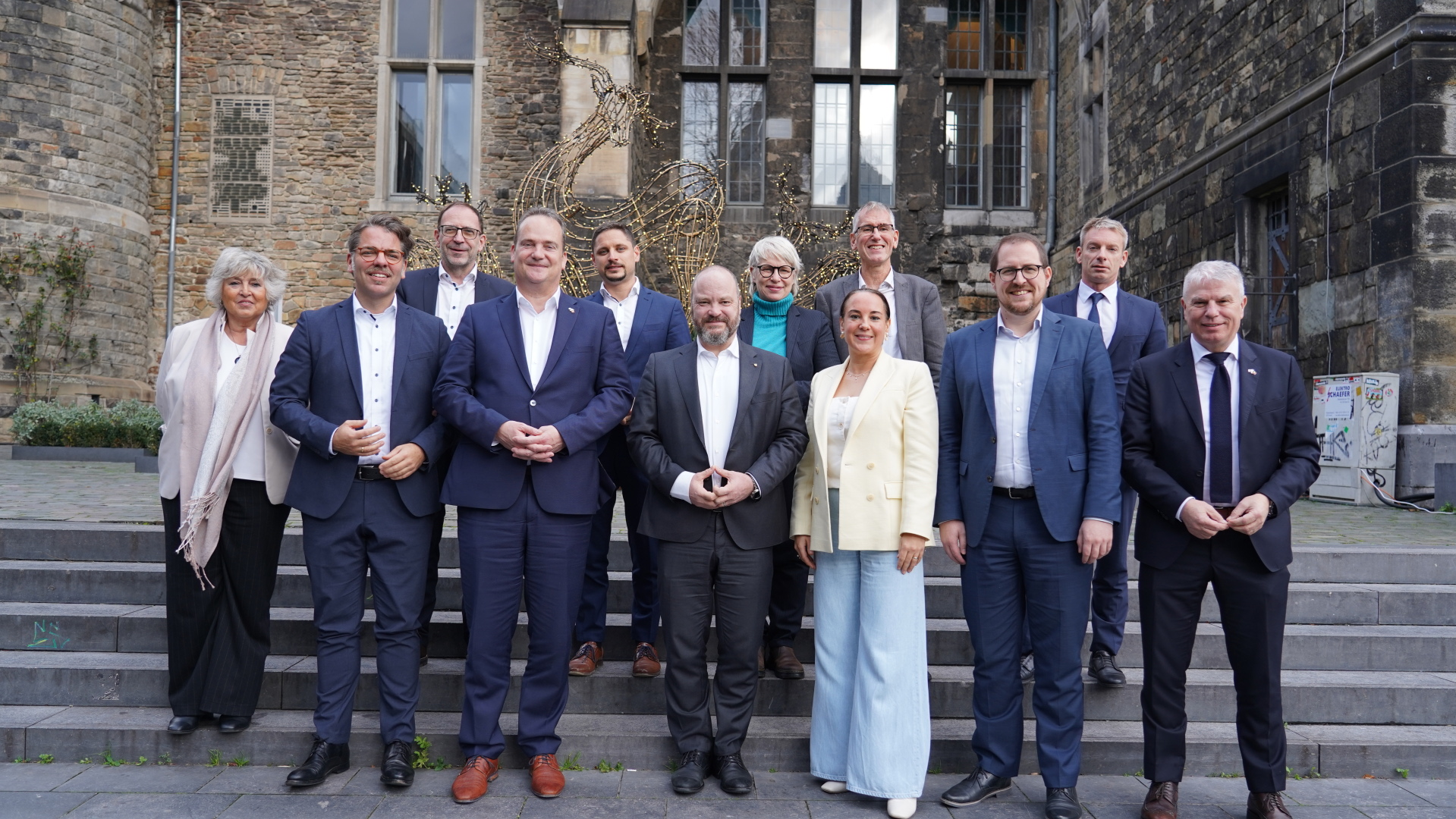
The government of the German-Speaking Community and the administrative board of the city of Aachen met for a joint session in Aachen.
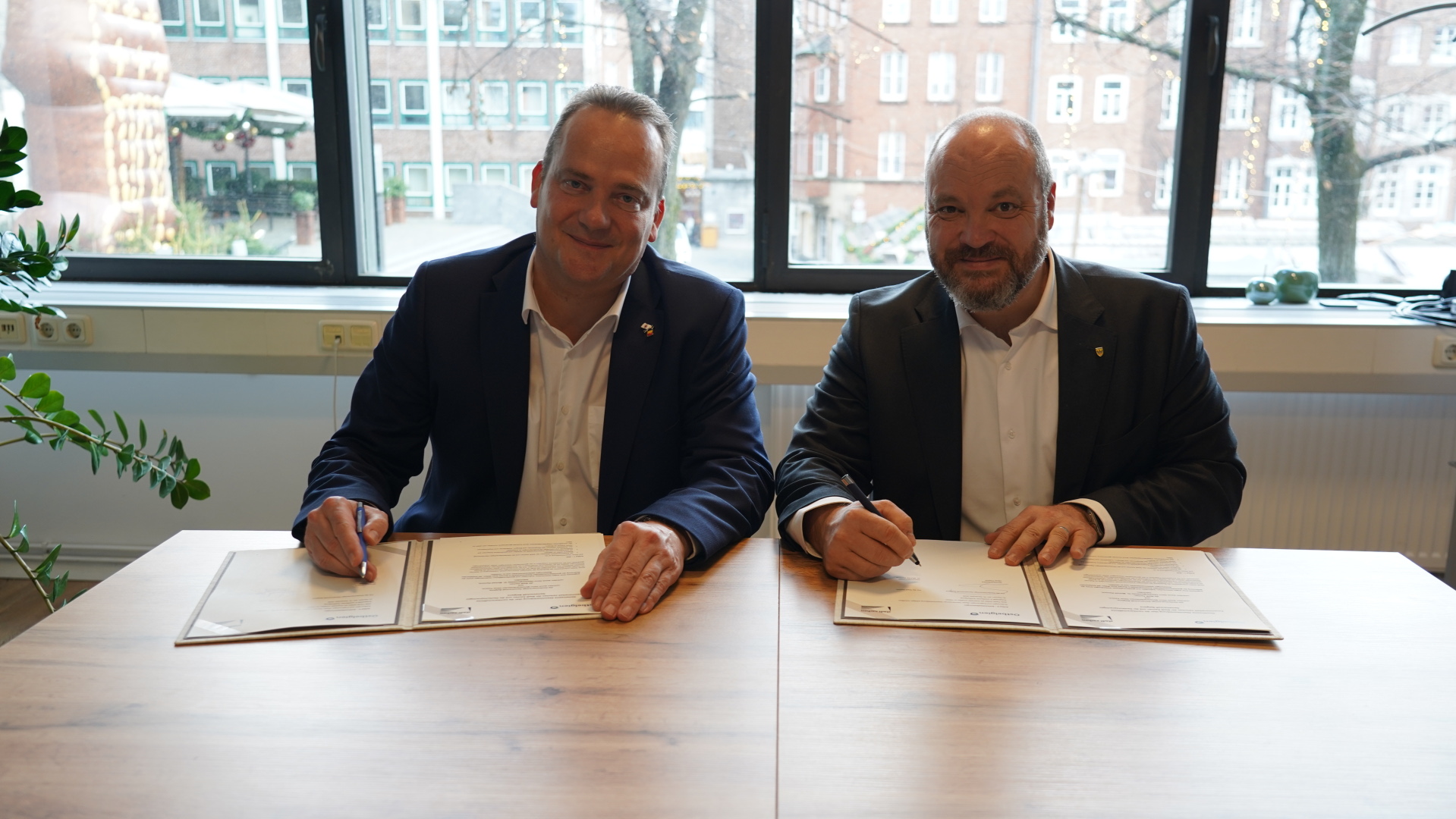
By signing the joint declaration, the government of the German-Speaking Community and the city of Aachen reaffirmed their commitment to deepening cross-border cooperation over the long term and to jointly further developing the Euregio Meuse-Rhine as a successful European region of the future.
You can subscribe to our RSS feed for our press releases here https://www.aachen.de/rss-feed-pressemitteilungen/rss.xml