Trees Dying Due to Prolonged Drought
- This phenomenon can be observed in isolated trees scattered throughout the city.
- There has been an increase in unpredictable tree branch breakages in urban areas and in the forest.
- A team from the municipal public works department waters 2,400 young trees each week; residents are being asked to help with the watering.
The ongoing drought is taking a heavy toll on the city’s trees. “Unfortunately, we’re seeing that older trees that have been established at their sites for years are suddenly drying out and dying,” explains Nino Polaczek-Keilhauer, team leader of tree care at Aachen’s municipal services department. This sporadic phenomenon is evident throughout the city, affecting both street trees and those in parks and green spaces. The affected trees have died, are no longer safe for traffic, and must be gradually removed.
During so-called drought stress—a phase that trees enter during prolonged dry spells—trees develop strategies to protect themselves. Some tree species let their leaves droop or curl up. Others shed their leaves entirely or stop supplying nutrients to individual branches, causing them to gradually die off. The affected trees in Aachen have already passed through this drought stress phase.
Fine roots die off and are not regenerated
This is because the drought, which has persisted for weeks, has caused the top layer of soil—thirty to fifty centimeters deep—to dry out. This is the layer where tree roots are most concentrated, and which provides water and nutrients. “This topsoil layer is only thoroughly saturated after it has rained 15 liters per square meter several times. That has only happened twice in our region over the past four months,” explains Nino Polaczek-Keilhauer. The soil can store 150 to 200 liters of water per cubic meter; these reservoirs are now empty.
Trees constantly draw water through their fine roots. If this is no longer possible, the tree survives in the short term by drawing on its water reserves stored in its taproot and trunk. The tree fills this reserve even before it begins to sprout in the spring. During the growing season, it needs water available in the soil to sustain itself and continue growing, before it begins to draw water from its reserves in the fall and enters dormancy in the winter.
If a tree is no longer watered in the summer, it may die. Visually, this is first noticeable to people when the leaves begin to curl or fall off; however, the cells inside the tree are equally affected. In addition, fine roots—which, depending on the tree species, live for only a few weeks and are continuously regenerated—cannot continue to develop. “This means that even if water were to become available again later, there might not be enough fine roots left on the tree to supply it adequately,” explains Nino Polaczek-Keilhauer.
Damage becomes apparent in subsequent years
“It becomes particularly problematic when several dry spells occur in succession within a single year. In this case, the tree lacks the time to regenerate, which significantly weakens its resilience in the long term,” emphasizes Andreas Schulz, head of tree care at Aachen’s municipal services department. “There will also be trees that can still regulate themselves this year using water reserves in the soil, but will enter the fall and winter in a weakened state. But then they won’t sprout again next year because they’ve suffered too much root loss and were unable to store enough assimilates,” explains Andreas Schulz. It’s also possible that the tree bark will crack due to the lack of water or flake off later on, making it easier for pathogens and fungi to penetrate and damage the tree.
The effects of prolonged dry spells are also evident at some locations. The recent, recurring hot summers have affected the trees, preventing them from regulating themselves over several years. As a result, the trees are entering the new period of heat and drought under poor conditions; drought stress sets in earlier and lasts longer. The affected trees are now showing delayed symptoms, are completely dried out, or are infested with pests.
The factors explaining why certain trees are more severely affected by drought than others remain unclear at this time. “We have rows of trees with the same site conditions and the same tree species, and yet only one or two trees in those rows have died, while the rest are thriving,” explains Schulz. There could be numerous explanations: varying levels of soil compaction, buried utility lines, damage inside or to the tree—“but that’s just speculation at this point.” The city’s tree care team will evaluate reports of affected trees in the coming months and try to identify which factors were decisive so that they can be addressed, if possible. To counteract situations like the ones currently emerging, “we’ve been making a point for years of selecting species for new plantings that can better cope with heat,” says Andreas Schulz.
Green shoot breakage during periods of extreme drought
The phenomenon of so-called “green branch breakage” is also currently occurring with increasing frequency in urban areas. These breaks are unpredictable events that can occur even when there is absolutely no wind. They occur when the water supply in the branches becomes insufficient due to extreme drought. “In principle, the tree can still supply itself with water entirely on its own, but overall, there is too little water available to it,” explains Nino Polaczek-Keilhauer. “In some cases, the insufficient water supply is not enough to continue nourishing all the branches. The cell pressure and tension in the wood decrease, leading to the sudden breakage of even fully leafed branches that appear healthy and well-nourished.” The likelihood of green branch breakage depends on the tree species, its current vitality, and its location. To prevent potential damage, residents should be particularly vigilant to avoid unnecessary risks. This applies to street trees as well as to forests, as Dr. Gerd Krämer, head of the City of Aachen’s Municipal Forestry Office, explains. “These phenomena can also be observed in the forest; the trees here are suffering just as much from the prolonged drought.”
Flower and Perennial Beds in Urban Green Spaces
The perennial beds are coping with the current drought much better than the areas planted with annuals. The city’s landscaping crews are currently watering the flower beds up to three times a week. “We’ve found that we don’t need to visit the perennial beds as often,” explains Michael Blankenheim, division manager for urban green spaces and districts at Aachen City Services. “Perennial beds require less water because perennials develop deep roots and can therefore access larger reserves of water in the soil. In addition, perennials are more resistant to drought. Because they grow densely, they provide shade over a larger area of the ground and protect it from drying out. And, of course, perennials require far less water than trees.”
We need the support of our citizens
To support the young trees, the tree maintenance team is currently watering about 2,400 street trees each week, including all new plantings from the past three years as well as those planted in the past five years that appear to be struggling. “We appreciate any support,” says Andreas Schulz. “Residents can help by watering the trees on their own streets. Tap water and rainwater are equally suitable. The rule is: You can never give too much, and every bucket or watering can counts.”
If you notice any withered or dead trees in the city, you can report them to the city administration using the defect reporting system.
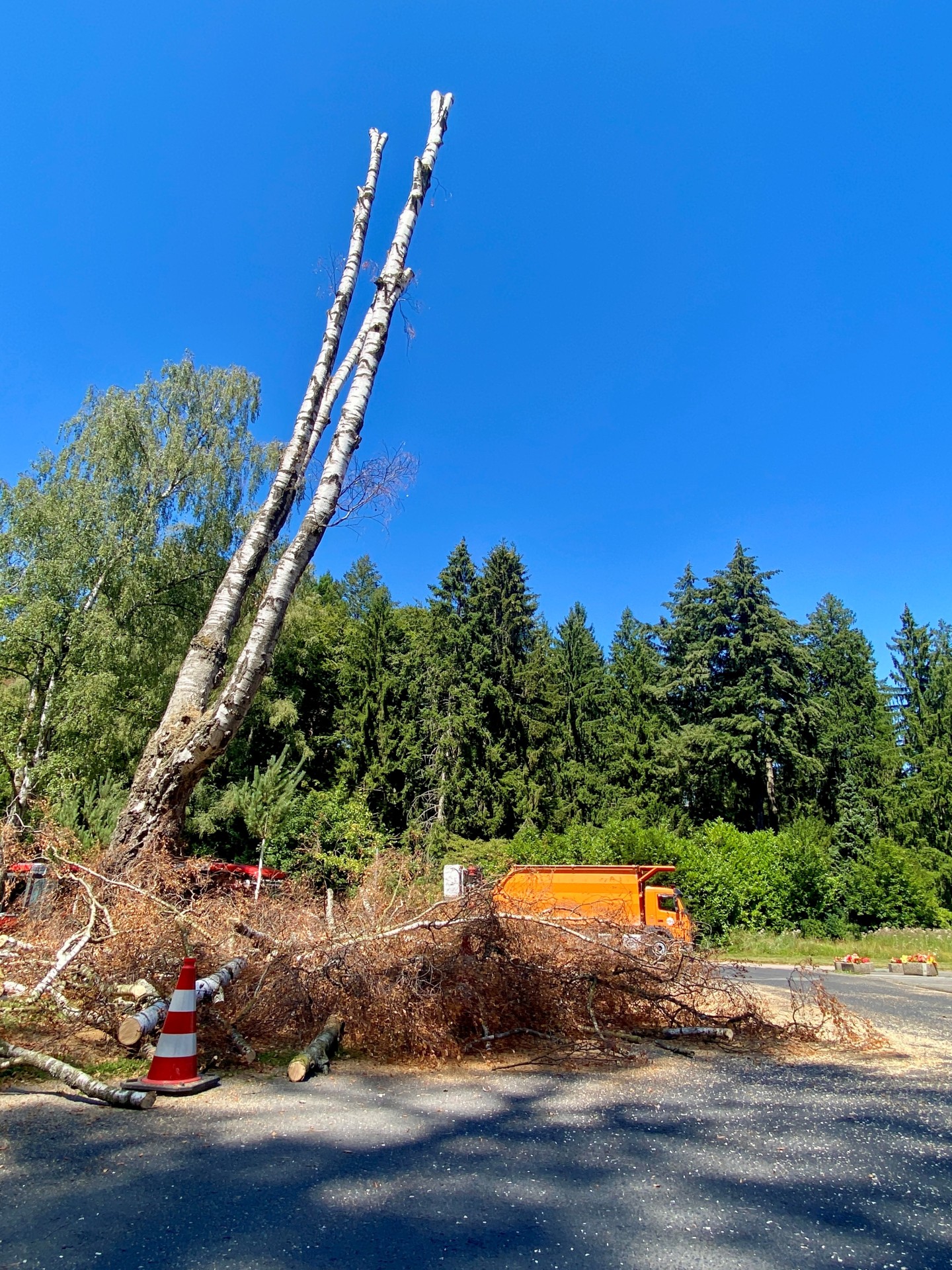
A dead birch tree at the forest cemetery
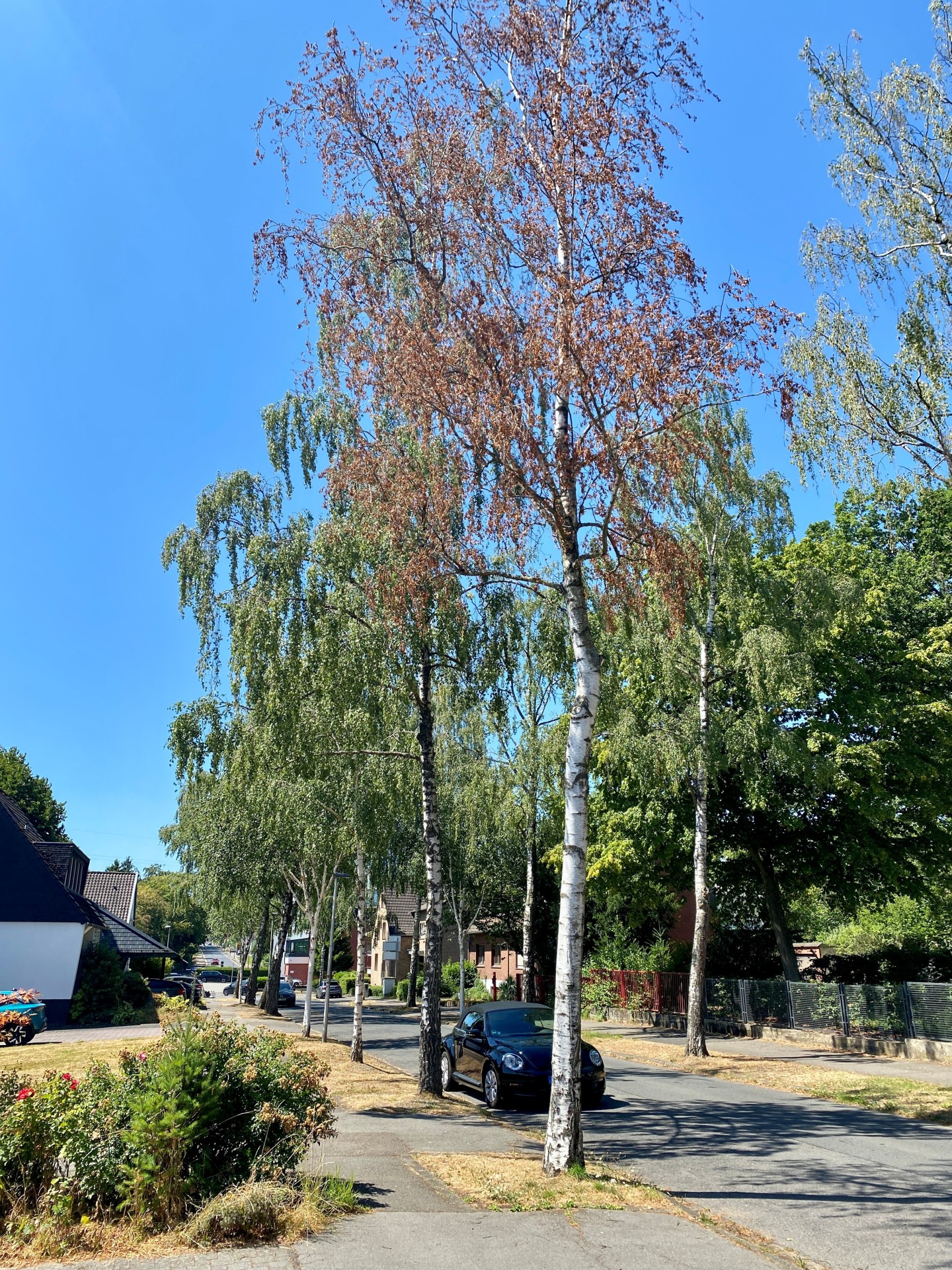
Dead birch tree on Birkenstraße in Aachen
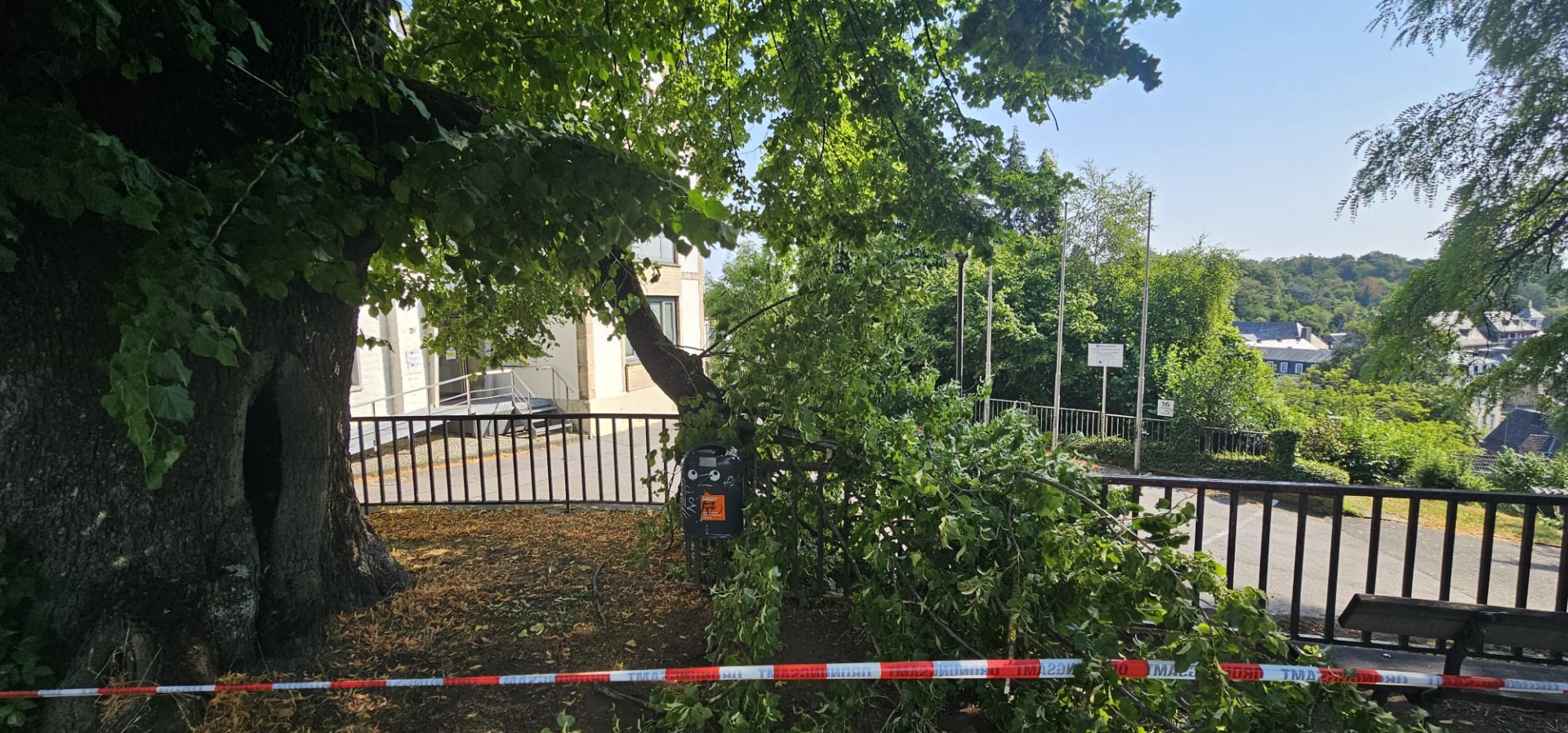
During dry spells, broken green branches are also not uncommon.
You can subscribe to our RSS feed for our press releases here https://www.aachen.de/rss-feed-pressemitteilungen/rss.xml