Soers Sports Park: Demolition of the old police headquarters begins
- The site of the former police headquarters is the key property for the development of the future Soers Sports Park into a “Sports Park for Everyone.”
- Aachen's mayor, Dr. Michael Ziemons, gave the go-ahead for the demolition with the first symbolic strike of the hammer.
- Ziemons emphasizes the good cooperation within the city and with the project’s external partners throughout what has been a “laborious process” so far.
Mayor Dr. Michael Ziemons delivered the symbolic first blow: He literally swung the sledgehammer at the old police headquarters in Soers. After a loud “clang” and a few chunks of concrete falling to the ground, his joy was evident as the next step toward the Soers Sports Park was finally set in motion: “The time has finally come—we’ve had to wait long enough! Only by demolishing the old police headquarters can we create the open space we absolutely need for the further development of the Soers Sports Park,” said the mayor.
The site, on which the old police headquarters still stands, is the key property for the development of the future Soers Sports Park into a “Sports Park for Everyone.” “The Soers Sports Park will make two things possible: First, it will secure the future of elite sports here in the city by hosting Germany’s largest sporting events. At the same time, however, it will also serve as a ‘sports venue’ for all Aachen residents, and we are exploring the construction of a modern multifunctional sports arena, including a mobility hub,” says Ziemons, describing the significance of this project.
“Complex and challenging planning.” Dr. Markus Kremer, the
city councilor for Human Resources, Fire Department, and Sports, who is responsible for the overall Soers Sports Park project, is also pleased with the progress: “I’m delighted that, after complex and challenging planning, things are finally getting underway and people can see for themselves on site that something big is happening here.” Kremer is convinced that local residents need to see concrete progress in order to believe that things are truly moving forward. He also reiterated the importance of the sports park for Aachen, a city known for its sports culture.
The road to demolition has at times been rocky, paved with numerous consultations, motions, and agreements. The mayor agrees and expressly praises the cooperation and dedication within the city administration and with external partners: “It has certainly been a complex process so far—a long road. But all the better that we are now, in the truest sense of the word, ‘rolling up our sleeves’ together,” he emphasized, referring to city employees from building management, contract, procurement, and grant management, as well as the representative of the partner organization Aachen-Laurensberger Rennverein e.V. (ALRV), which will benefit from the sports park.
Philip Erbers, member of the ALRV Executive Board: “We at the ALRV are pleased that the demolition of the police headquarters finally marks the beginning of a new chapter. This creates space for something new—space for forward-looking projects.” He, too, is focused on the big picture: “The big winner in this endeavor is sports, because not only we, but the entire neighborhood at Sportpark Soers will benefit from this construction project. For us, today marks the beginning of continued youth development and further promotion of para-sports.”
The Next
Steps Frank Schneiderwind, head of the “Structural Building Management, New Construction, Renovation, and Expansion” department within the city’s building management division, is confident: “The first steps have already been taken. The biggest challenge will initially be the removal of hazardous materials. We have a large site, nearly 100,000 square meters of built-up space, that needs to be demolished. The demolition will initially proceed in a very controlled manner—that is, inside the buildings and on the facade, the hazardous materials will first be removed, sorted, and dismantled separately. According to our calculations, this will likely take up the majority of the time.” So large, heavy excavators won’t be seen in the coming months, at least not initially.
Demolition has already begun with site preparation, which included disconnecting the utility and waste disposal lines. The setup of the construction site—including container and storage areas—as well as securing the site will follow shortly. The site is secured by a fence, which will remain in place for the time being, both during and after demolition. This will be followed by the clearing out of the buildings, as well as the removal and proper disposal of technical equipment and furnishings.
The next step is to gut the building. During this process, all building components and materials are sorted by type and recycled. Materials containing hazardous substances, such as asbestos or synthetic mineral fibers, will be removed under the supervision of expert consultants and properly disposed of. Internal and external experts estimate that this process will take about five to six months.
Demolition
Planned for Mid-2027. Then the excavators will arrive: Once the hazardous material remediation is complete, the structural shell will be demolished using heavy machinery. The mineral demolition materials will be sorted and sent for recycling. The existing pile foundation of the main building will remain underground. Temporary groundwater control is expected to be necessary for the demolition of the basement. Finally, the basement and foundation areas will be exposed and demolished, the excavation pit will be backfilled, and the site will be prepared in accordance with the planned subsequent use. The specific requirements for soil and groundwater protection will also be taken into account during this process.
These steps are expected to take about four months. In addition, breaks have been scheduled to accommodate major sporting events. Specifically, this means that by the summer of 2027, the old police headquarters will be a thing of the past.
Facts, Figures, and Data at a Glance
- Client: City of Aachen
- Project Leadership: Building Management Department of the City of Aachen, Project Management for General Building Construction, represented by Bernd Keiser, Dipl.-Ing., Architect, and Kilian Schumacher, Dipl.-Ing., Architect
- Designer: Altenbockum & Blomquist GmbH & Co. KG
- Demolition Decision: September 2024
- Start of contaminant remediation and demolition: August 2026
- Project budget: 9,600,000 euros
- Funding: Rhineland Mining Region
- Funding percentage: 90 percent
Basic Data / General Characteristics
- Total area of the construction site / lot area: 33,350 square meters
- Sealed area: approximately 25,700 square meters
- Built-up area: approx. 7,800 square meters
- Demolition of seven buildings: Main building (five to seven stories), Technical Services building (three stories), workshop with gas station, two garages, and a shooting range (all one story)
- In addition to the buildings, the fuel storage systems—including underground tanks—and the separator system in the workshop area must also be removed.
- Total enclosed space: approximately 95,000 square meters, of which 62,000 square meters are in the main building
- Maximum building height of 24 meters for the main building and 5 to 15 meters for the outbuildings
- Total construction time: approximately nine to ten months, achieved by carrying out the remediation of hazardous construction materials and the structural demolition of individual building sections in parallel, in phases, from after the 2026 World Equestrian Games (early August) through approximately May 2027
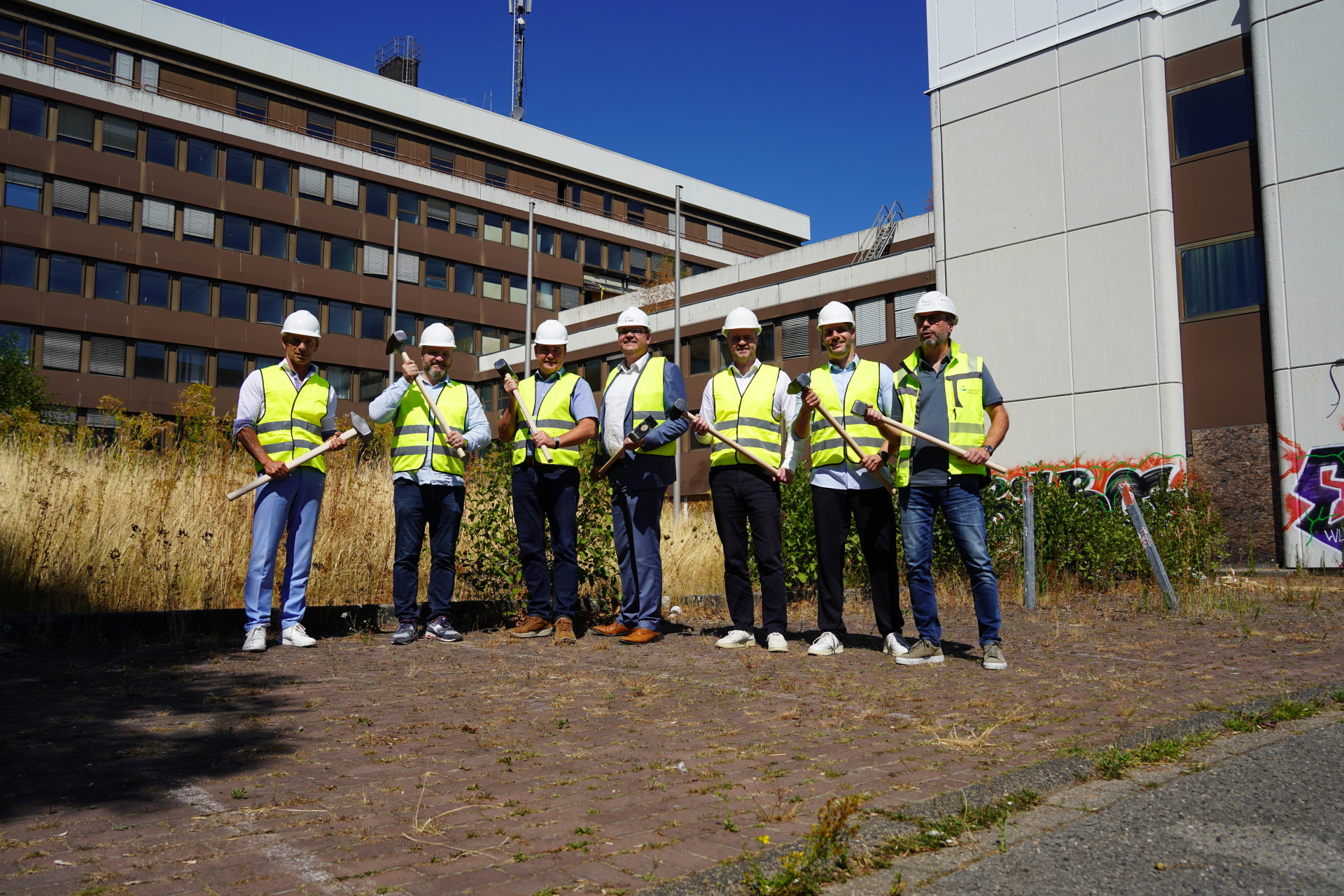
Looking forward to the demolition of the old police headquarters: Dr. Markus Kremer, Director of Sports; Dr. Michael Ziemons, Mayor; Frank Schneiderwind and Jens Hauschild (both from the City of Aachen’s Building Management Department); ALRV Board Member Philip Erbers, Benedikt Schüler (Overall Project Manager for Sportpark Soers), and Klaus Blomquist (Altenbockum & Blomquist GmbH & Co. KG) (from left).
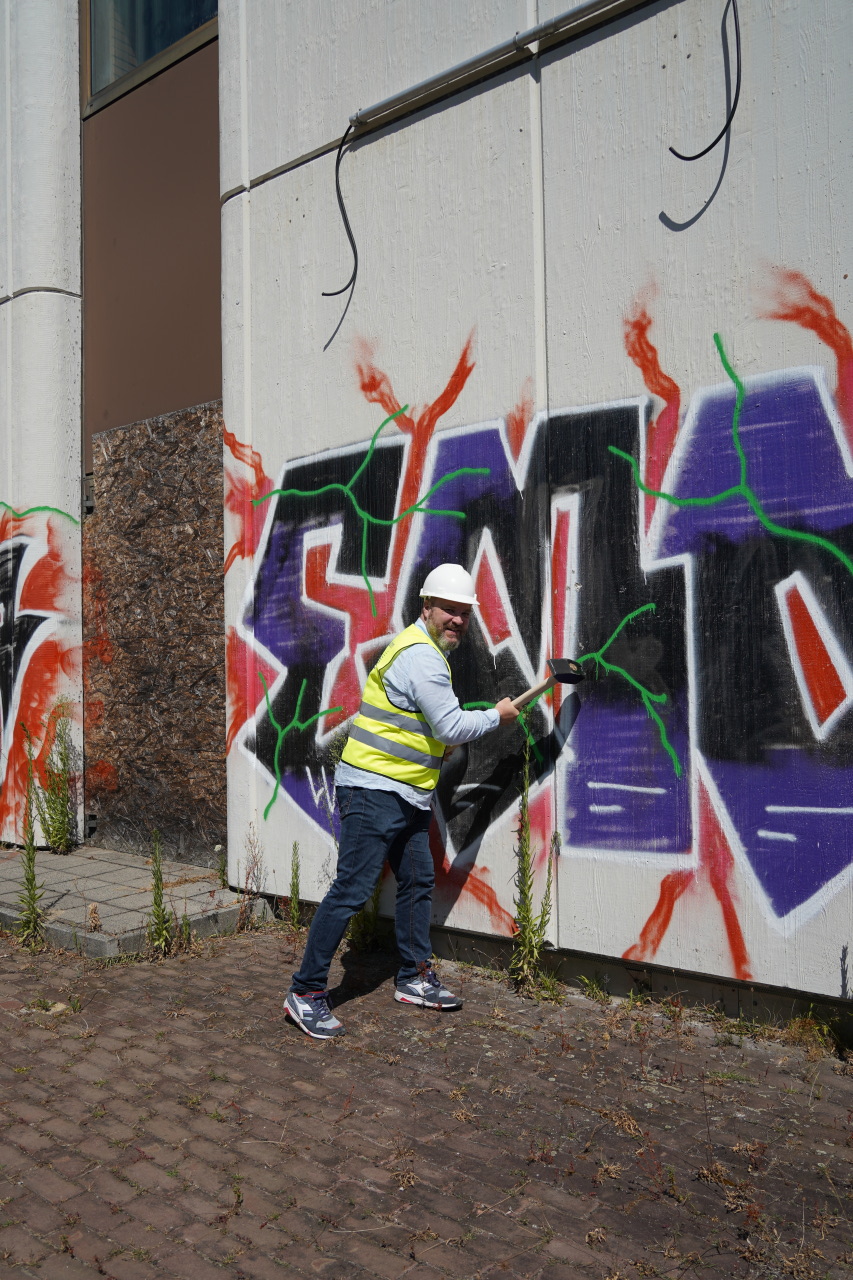
The first step has been taken: Mayor Dr. Michael Ziemons kicks off the demolition of the old police headquarters with a symbolic first swing of the hammer.
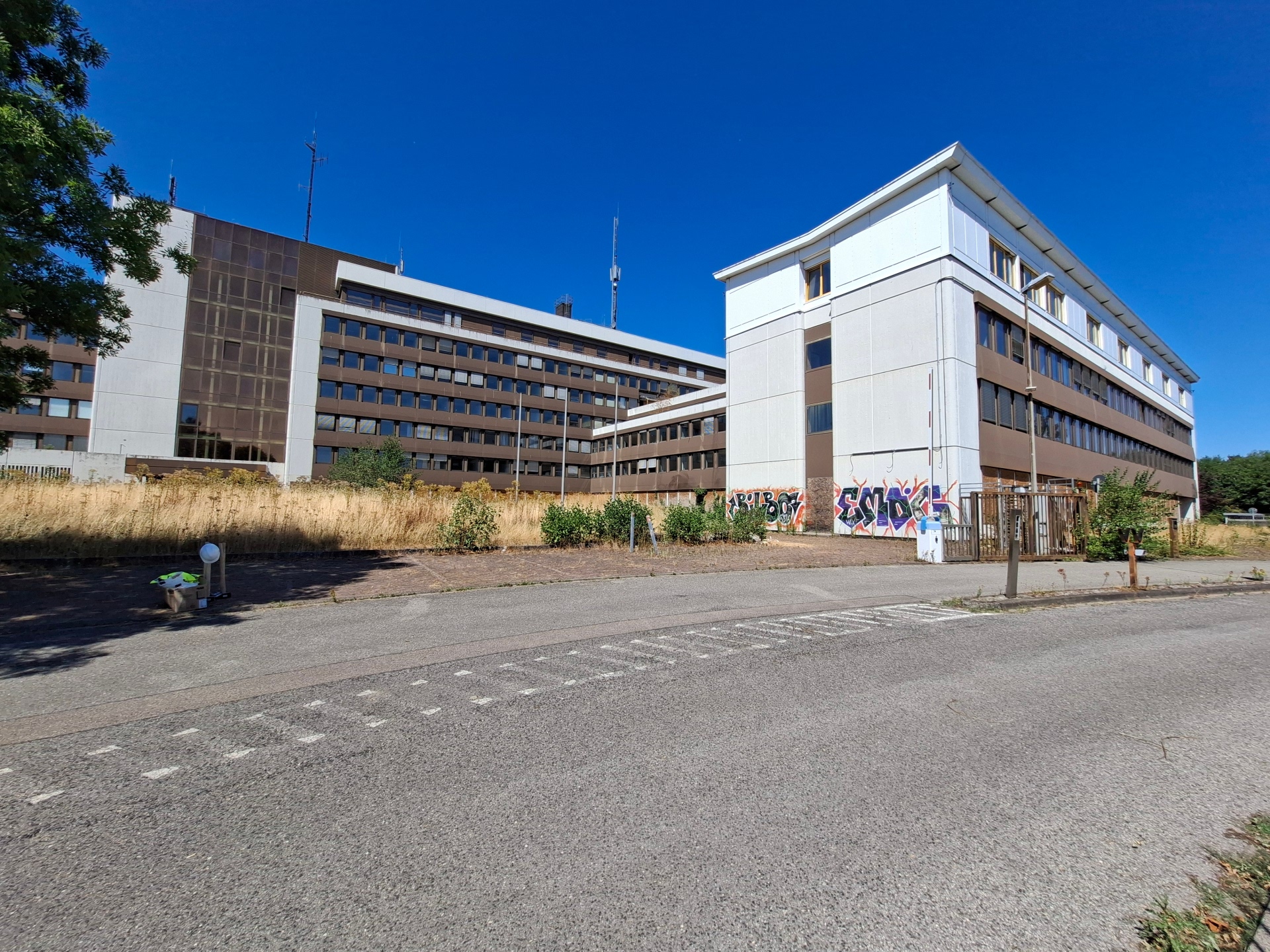
It’s set to become history as early as next summer: The old police headquarters is making way for the “Sportpark Soers.”
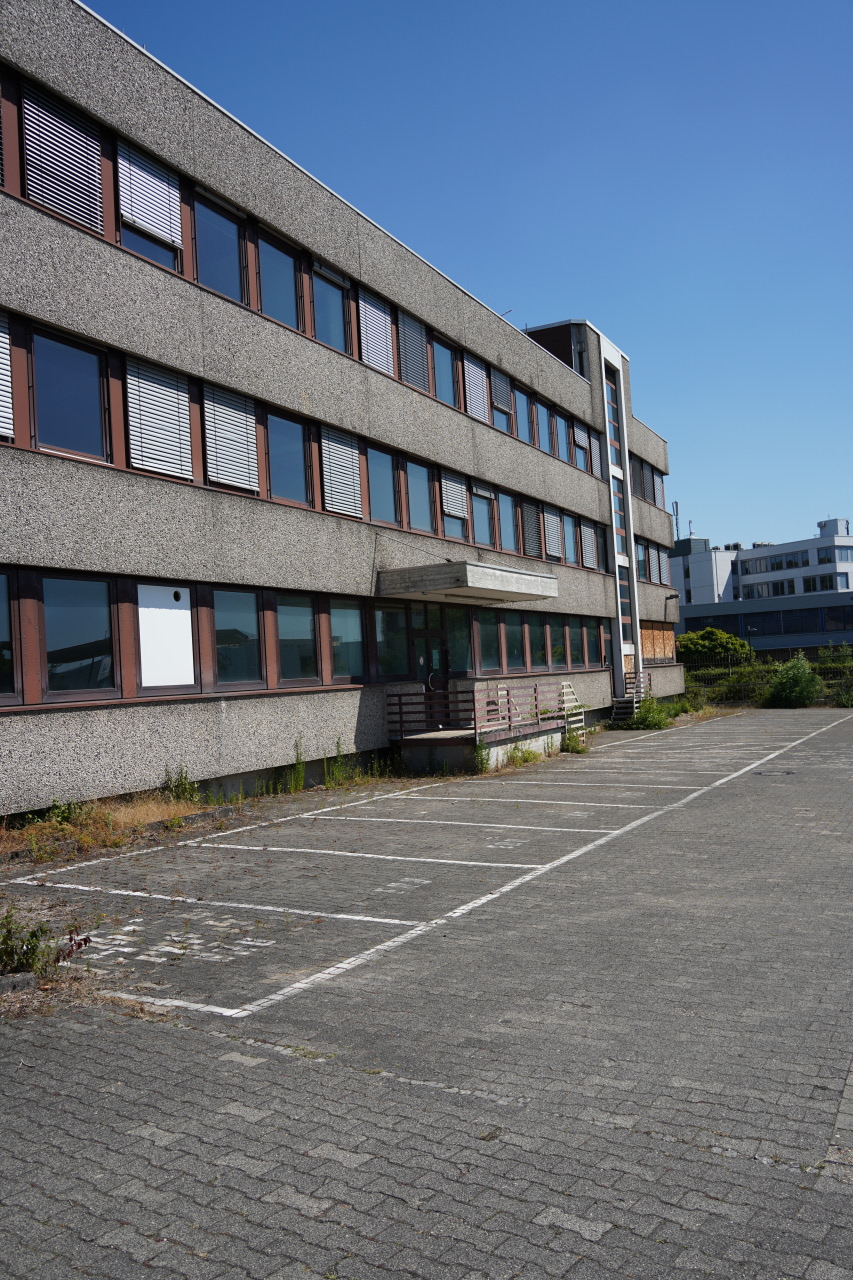
These must also go: In addition to the main building of the old police headquarters, several other buildings and facilities—such as the Technical Services building shown here—must also be demolished.
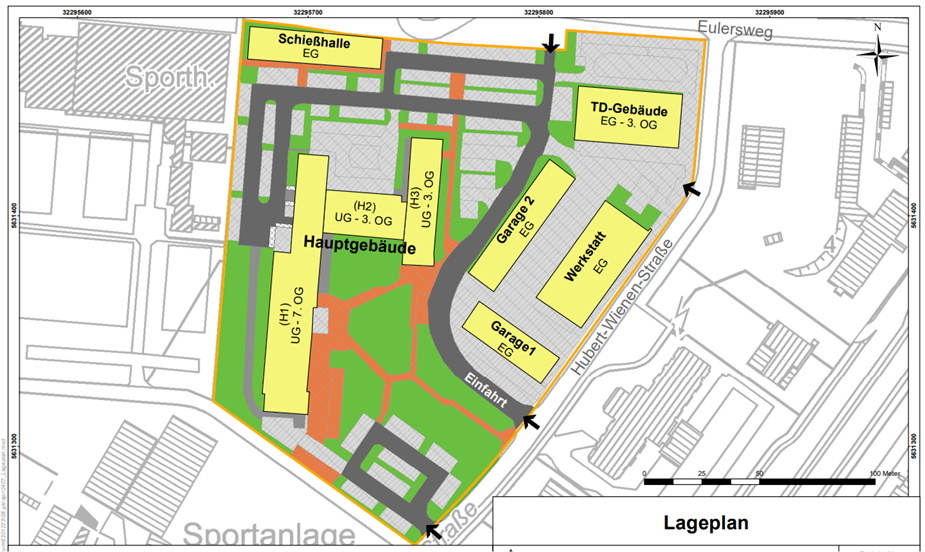
Site plan
You can subscribe to our RSS feed for our press releases here https://www.aachen.de/rss-feed-pressemitteilungen/rss.xml