Historical treasures: Archaeological excavations on Münsterplatz
"It's like open-heart surgery," is how city archaeologist Andreas Schaub summed up the work on Münsterplatz, right next to Aachen Cathedral, at a press event on Wednesday, February 25. Over the next few weeks, he and volunteers from the Aachen Archaeological Working Group (AAA) will be digging by hand with small shovels and tools to a depth of around 1.50 meters and documenting finds from the Baroque, Middle Ages and Roman periods layer by layer. The work will take place in two tree grids, which will be replanted with two lime trees afterwards.
A rare archaeological insight
After a storm, the two lime trees had to be removed in 2023. "This year, the tree ensemble on Münsterplatz is to be restored with two new lime trees as it was before the storm," explains Sven Rachau from the Climate and Environment Department. As the tree slices have to be prepared first, there is a rare opportunity for the archaeologists: Münsterplatz is located within Aachen's largest former Roman thermal baths, the Münsterthermen, in a section that is largely undeveloped archaeologically. Construction is rarely carried out there. Every excavation at this historic site is archaeologically monitored and offers interesting finds.
After just two days of excavation, the first results are already available: The experts have so far discovered a tooth, painted ceramics and two baroque tobacco pipes made of pipe clay. Andreas Schaub and his team are hoping for more in-depth information on previously unknown rooms within the baths and on the period of use of the entire complex. In post-Roman times, the area was part of the narrower Palatinate district. A recently discovered ditch from the Carolingian period in Krämerstraße could have served as the eastern boundary of the Palatinate. Its course may also have touched the planting pits. In addition, the Münsterkirchhof was also a cemetery in earlier centuries, which is why graves can be expected.
Elaborate manual work for complete documentation
Due to the extraordinary historical significance of the site in the shadow of the UNESCO World Heritage Aachen Cathedral, the planting pits have to be completely removed by hand in order to find and document all the historical finds. "Archaeologists sometimes act like forensic scientists at a crime scene: we remove layer after layer until we reach a depth of 1.50 meters. There we can already discover the transition to Roman times," explains Andreas Schaub. The elaborate documentation follows the established guidelines of the LVR Office for the Preservation of Archaeological Monuments.
How long the excavation will now take depends on the density of finds and the weather. "We archaeologists can't work when it's raining heavily," explains Schaub. The city archaeologist currently assumes that the excavation will take three months. The new lime trees will then either be planted immediately afterwards in late spring - or at the latest in the next planting period from September. To ensure that the trees can beautify Münsterplatz for as long as possible, the tree slices will be filled with tree substrate before planting. The aim is to allow the trees to stand for 60 to 80 years, which is a very long lifespan for urban trees.
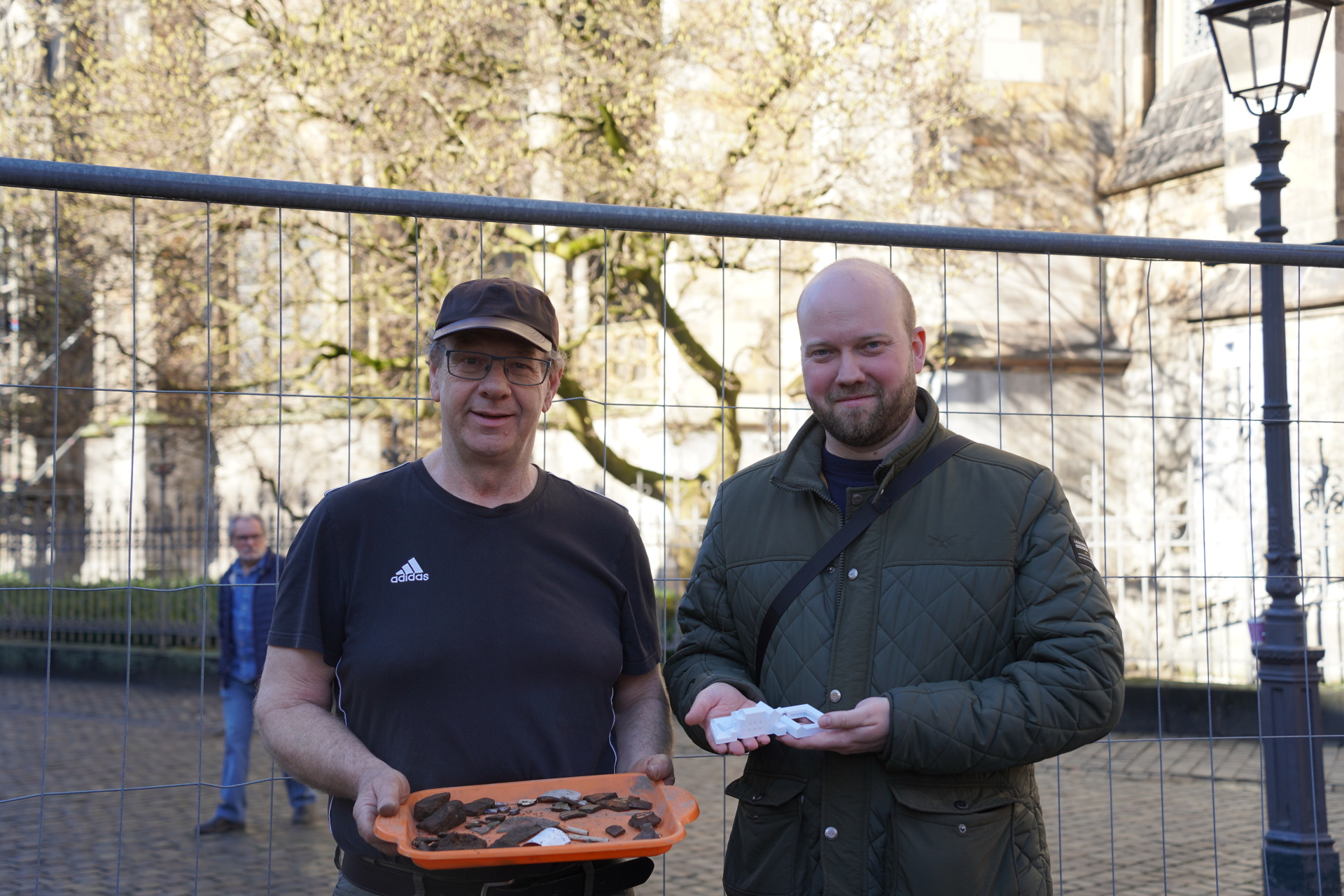
City archaeologist Andreas Schaub and Sven Rachau from the Department of Climate and Environment presented the first finds from the excavations on Münsterplatz.
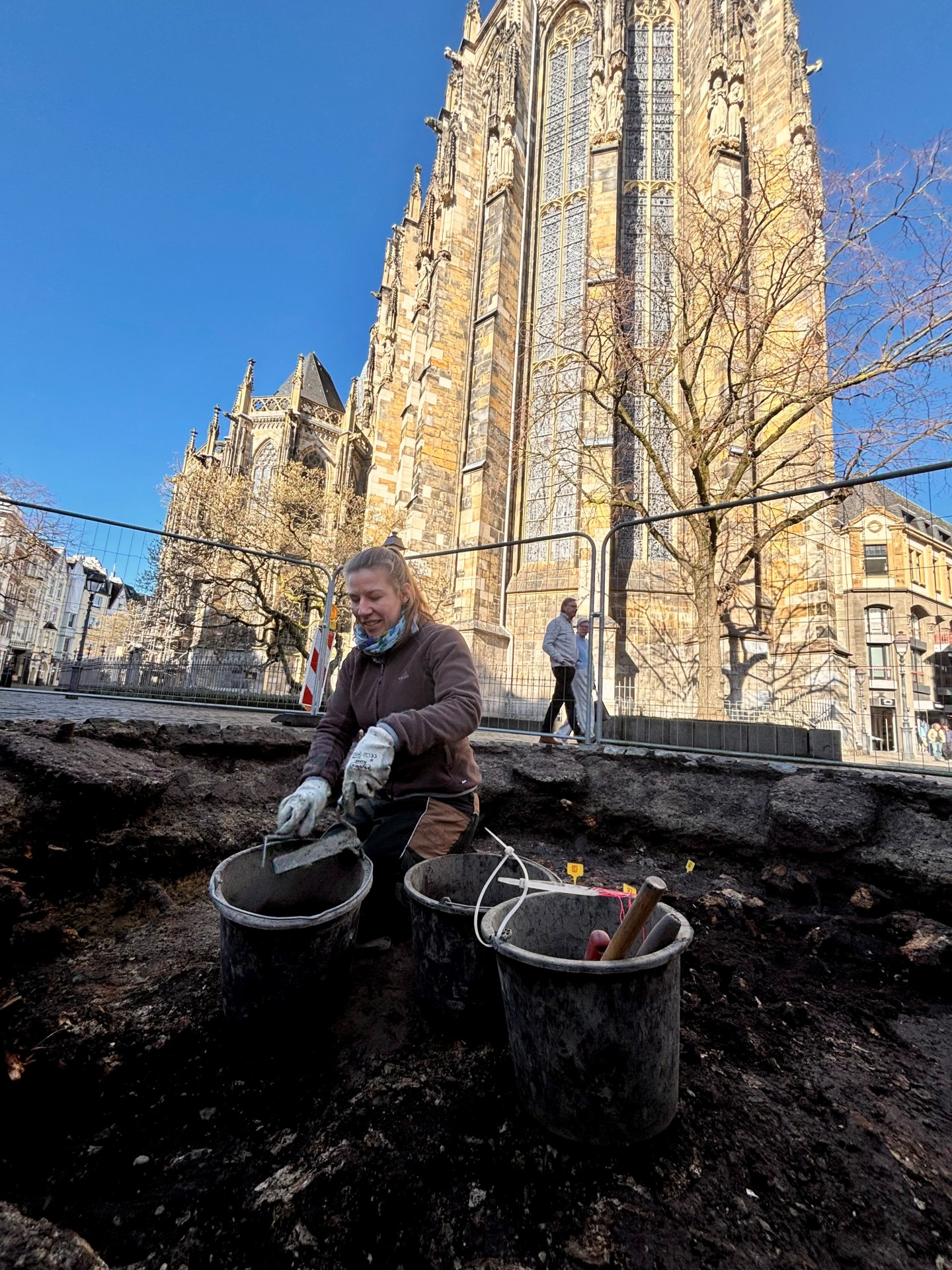
A special workplace: the mostly volunteer archaeologists work directly at the foot of the cathedral.
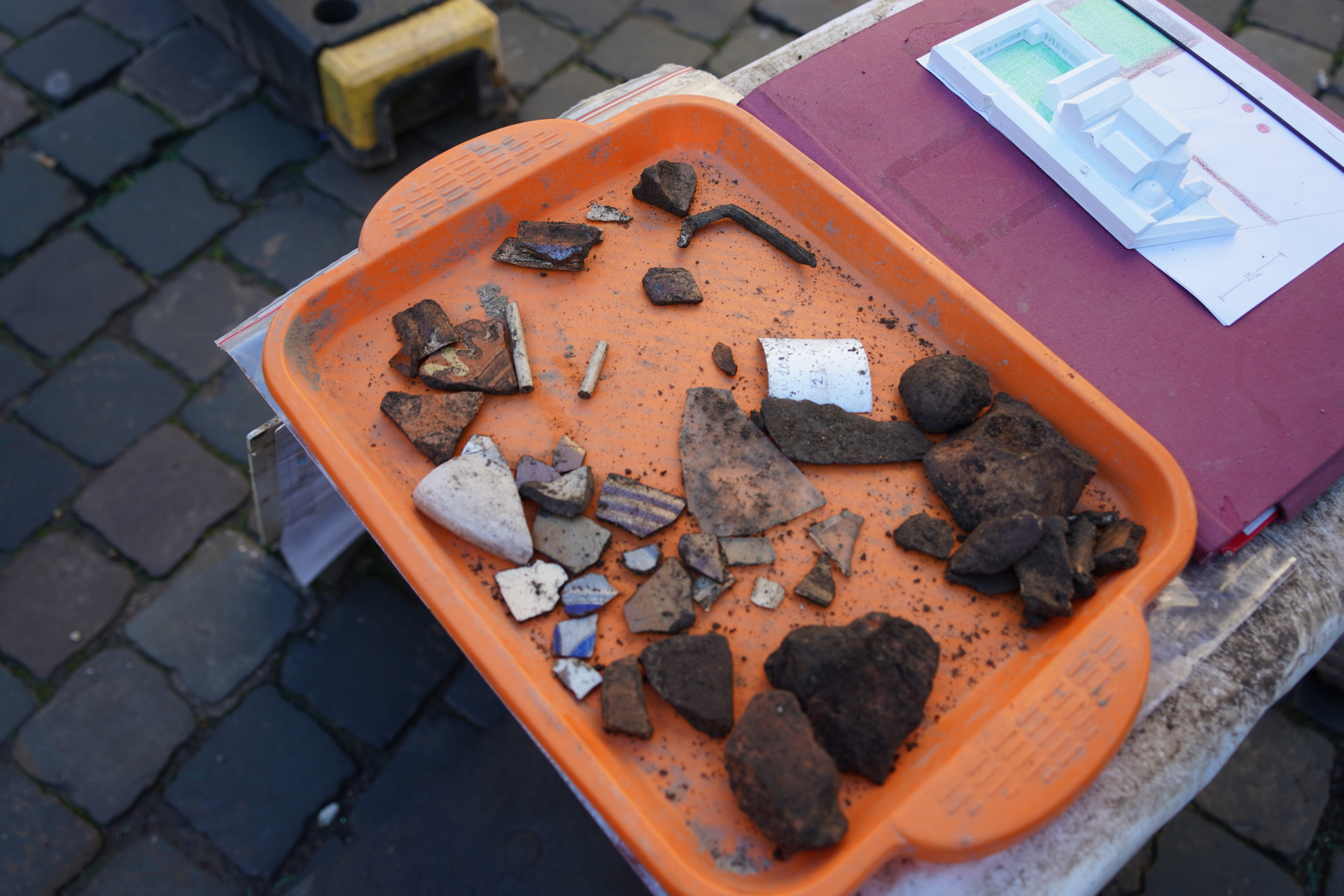
A historical smorgasbord: the archaeologists have already painstakingly uncovered colorfully painted pieces of pottery and two tobacco pipes made of pipe clay.
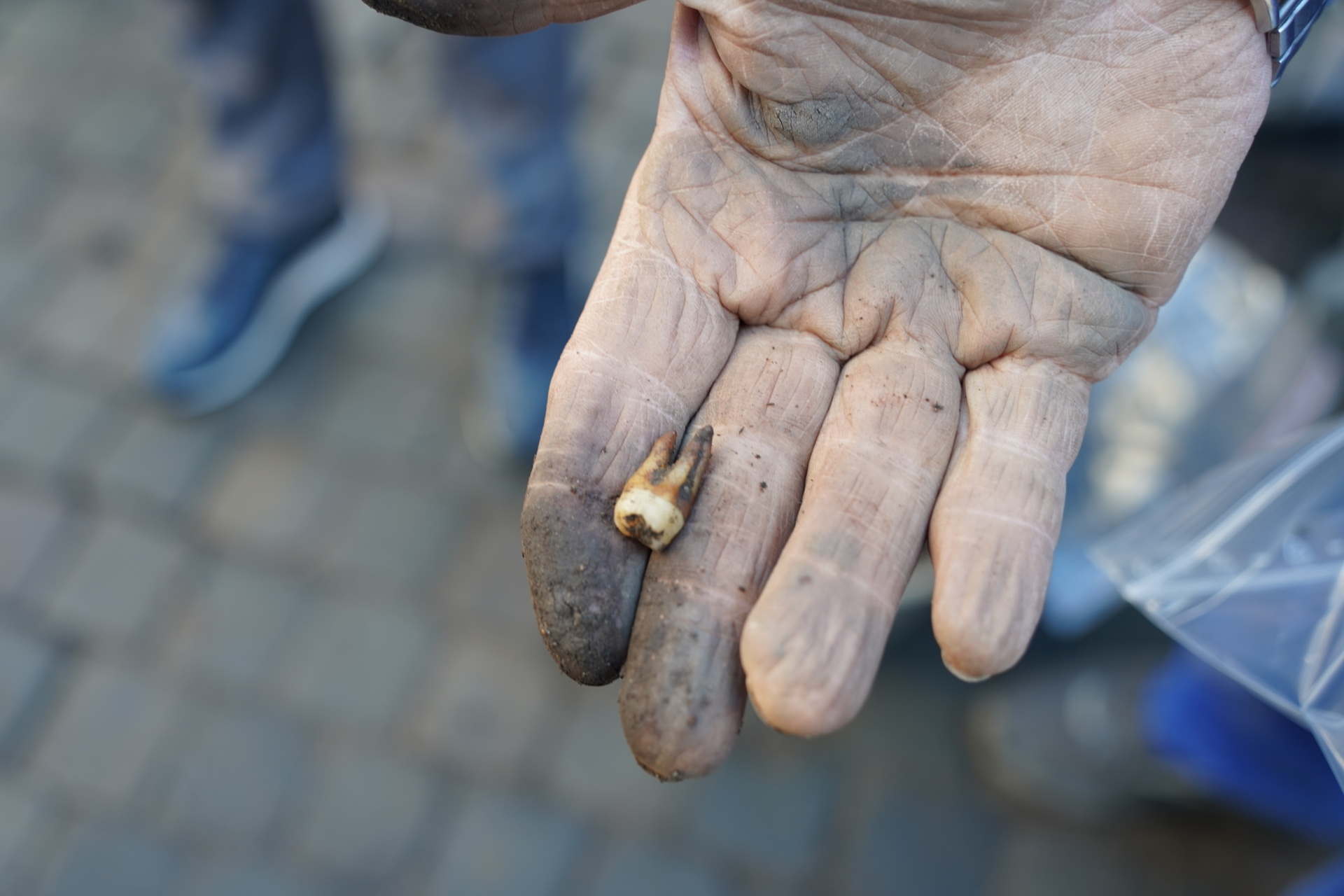
Human remains such as an old tooth can also be found under Münsterplatz.
You can subscribe to our RSS feed for our press releases here https://www.aachen.de/rss-feed-pressemitteilungen/rss.xml