Expedition Old Town: What's behind Aachen's historic facades
- A new campaign by the heritage authorities invites you to discover the hidden stories of the historic facades of Aachen's old town.
- The focus is on reconstruction after 1945 and the "Aachen model".
- A digital monument finder brings around 40 facades and their stories to life on site.
You can currently see posters and moving images of houses in the old town in many places around the city. The words "Expedition Altstadt" are emblazoned in black and yellow. But what is behind the campaign? To shed light on this question, City Planning Councillor Frauke Burgdorff, City Conservator Monika Krücken and her colleague Dr. Andreas Priesters from the city's monument preservation department met for a joint press event on Wednesday, April 15, in front of some of the most famous house facades in Aachen's old town.
"Aachen is a city of stories that has a lot to tell. After the Second World War, the city's society decided together in many small steps how the old town should be rebuilt. The 'Expedition Altstadt' shows Aachen's own path and illustrates what has emerged from it: a good city," explained Frauke Burgdorff.
An Architectural and Historical Discovery
TourThe “Old Town Expedition” is an architectural and historical discovery tour through the city center and the period of reconstruction following World War II. The project was developed by the City of Aachen’s Department of Historic Preservation and Archaeology in collaboration with the City Marketing Office and the City of Aachen’s online editorial team, RWTH Aachen University’s Department of Historic Preservation and Historical Building Research, and the agency yellapark. The Ministry of Home Affairs, Local Government, Building, and Digitalization of North Rhine-Westphalia supports the project as part of the “Starke Heimat” funding program.
Not only tourists are invited to learn a thing or two about the city's more recent history via the "Expedition Altstadt". It is particularly about the period after 1945: reconstruction, renewal, home, urban development concepts and the "Aachen Model".
The “Aachen Model”
Instead of opting for a radical reorganization and adaptation to modern transportation, Aachen sought to preserve the character of its historic old town as much as possible. The beloved, manageable layout was to be preserved, and the streetscapes—some of which had been partially eroded by the passage of time—were to be revitalized. To achieve this, the key figures of the time relied primarily on relocating historic facades and building components (so-called translozierungen), on reconstructions, or they dug deep into their bag of tricks to reconcile urban planning modernization with the preservation of the cityscape. Out of economic necessity, they recycled old facade elements and materials from destroyed houses. This often resulted in modern buildings clad in a historical guise, which today are naturally part of our Old Town. City Conservator Monika Krücken explained at a press conference: “On the one hand, the goal back then was to preserve the old architecture and the original city layout; on the other hand, however, they also wanted to incorporate new, modern construction methods.”
A New Building with Old Roots
: An impressive example of this type of reconstruction is the house at Hof 9. In the 1960s, Dr. Leo Hugot, who later became the city’s conservator, chose the vacant lot here as the site for his future home and architectural office, using elements such as bluestone and cornices from a former house on Eilfschornsteinstraße for the façade. Out of consideration for the surrounding buildings on the courtyard, Hugot omitted an entire floor. And anyone who descends into the basement today will still encounter the rubble-stone walls of the medieval Blasius Hospital. A house, then, in which history is not merely recounted, but lives on within its walls to this day.
An online portal for Aachen’s historic facades
. Part of the campaign is the “Monument Finder,” which showcases nearly 40 buildings and facades online, tells their stories, and highlights architectural details and features that might be overlooked at first glance. The building profiles can be accessed via smartphone using QR codes on the respective facades or directly via map and website at www.aachen.de/denkmalfinder. In addition, there is background information on the planning at the time, the key figures involved, and also on contemporary discourses and citizen protests. The Department of Historic Preservation hopes this will encourage people to explore a topic that is less prominent but has shaped our city. Especially given that—brace yourself for a superlative!—Aachen has the highest density of relocated buildings in all of Germany.
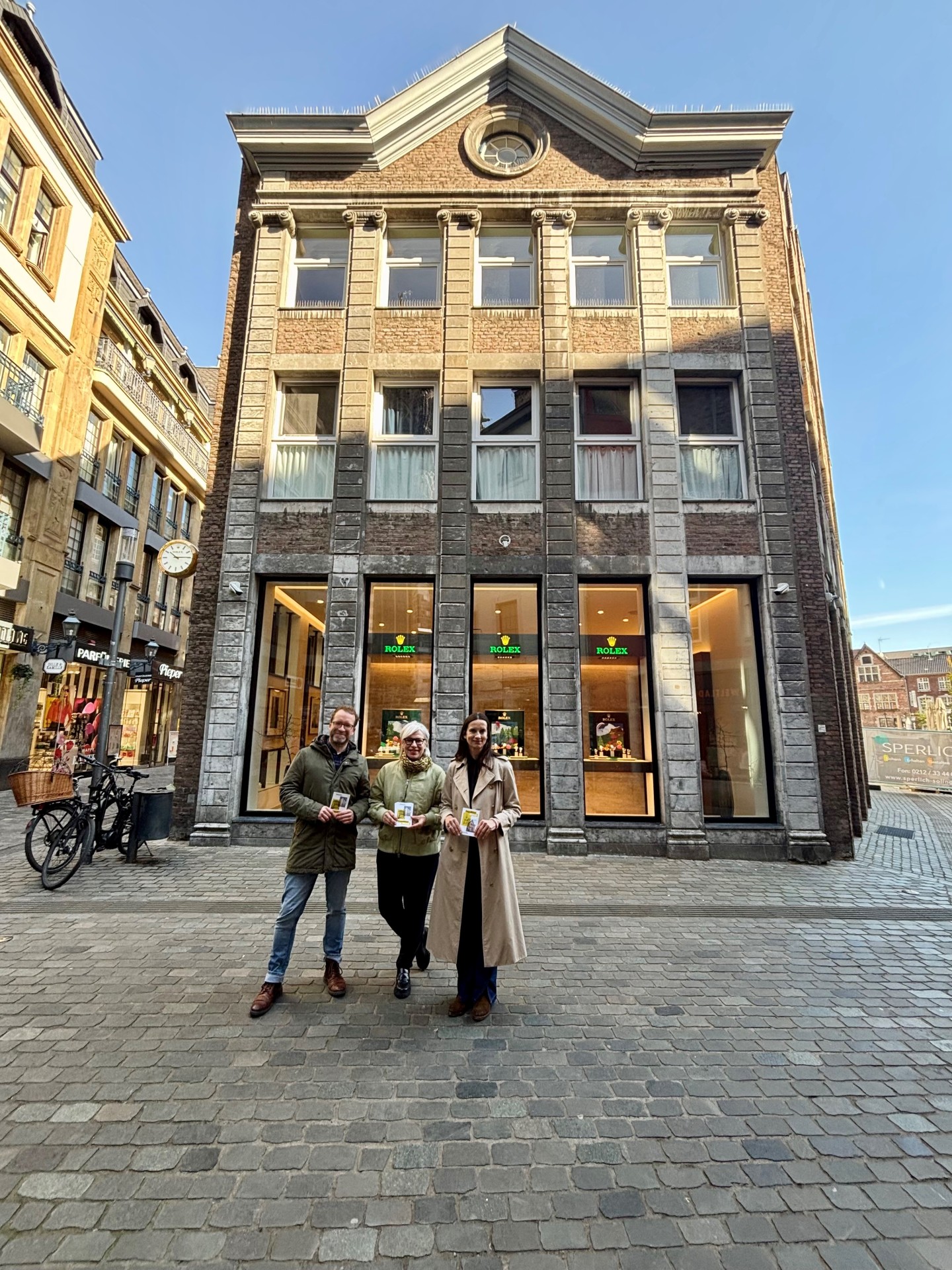
Inviting everyone to the "Expedition Old Town": (from left) Dr. Andreas Priesters from the Department for the Preservation of Historical Monuments, City Planning Councillor Frauke Burgdorff and City Conservator Monika Krücken.
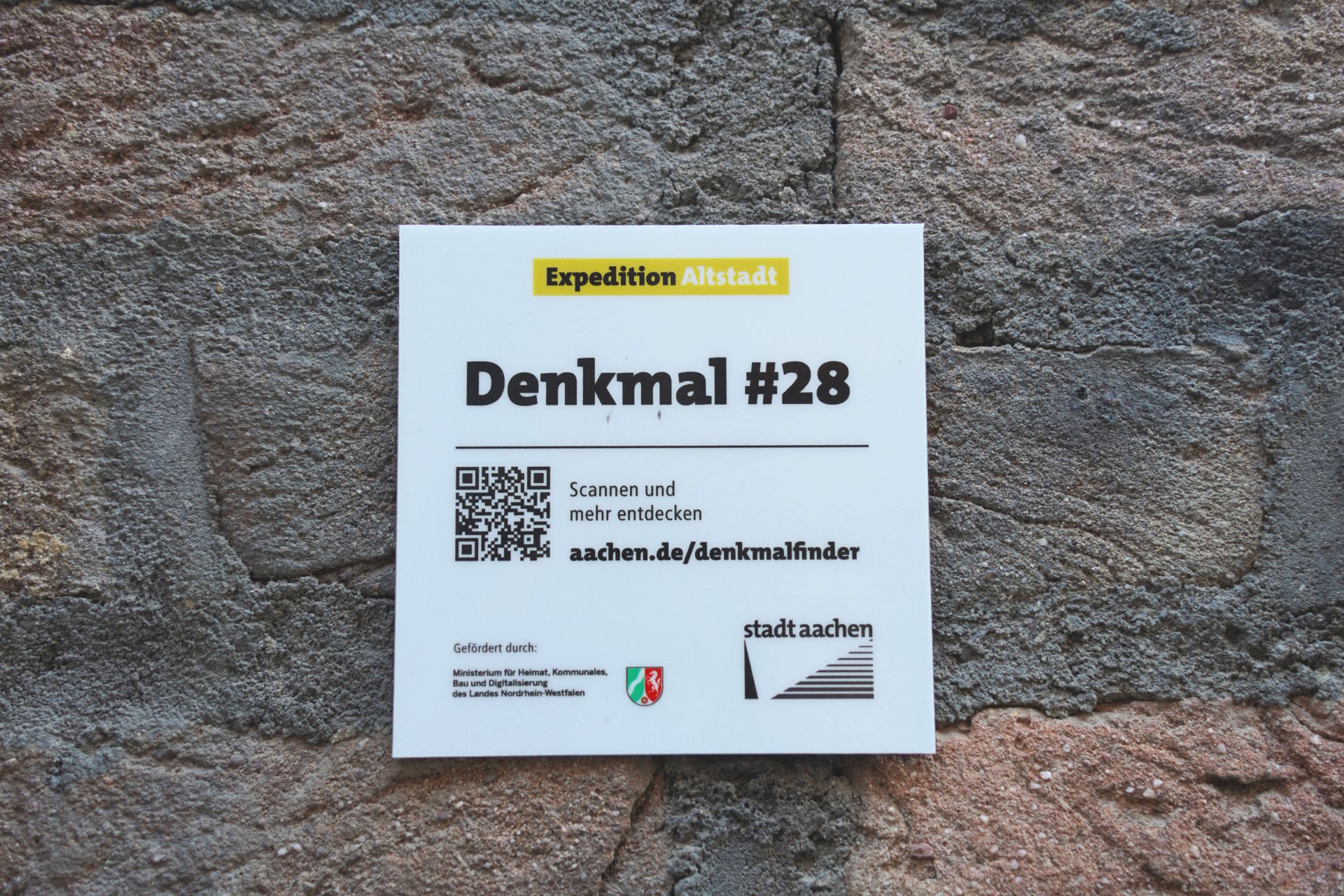
Scan the QR code, access the digital monument finder and find out everything about the historic façade: These plaques now adorn almost 40 house facades in Aachen's old town.
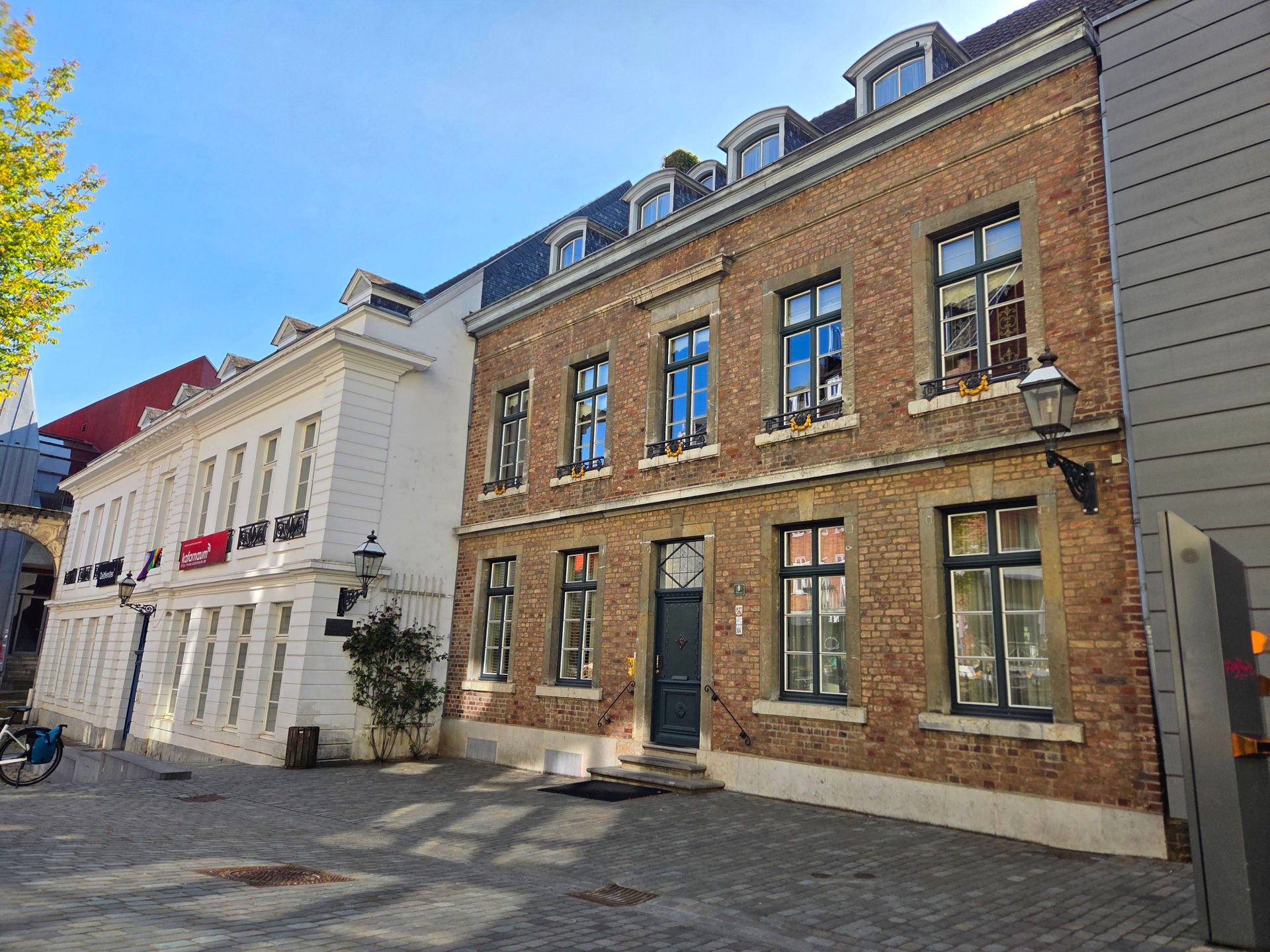
Haus am Hof 9 combines new construction with historical roots.
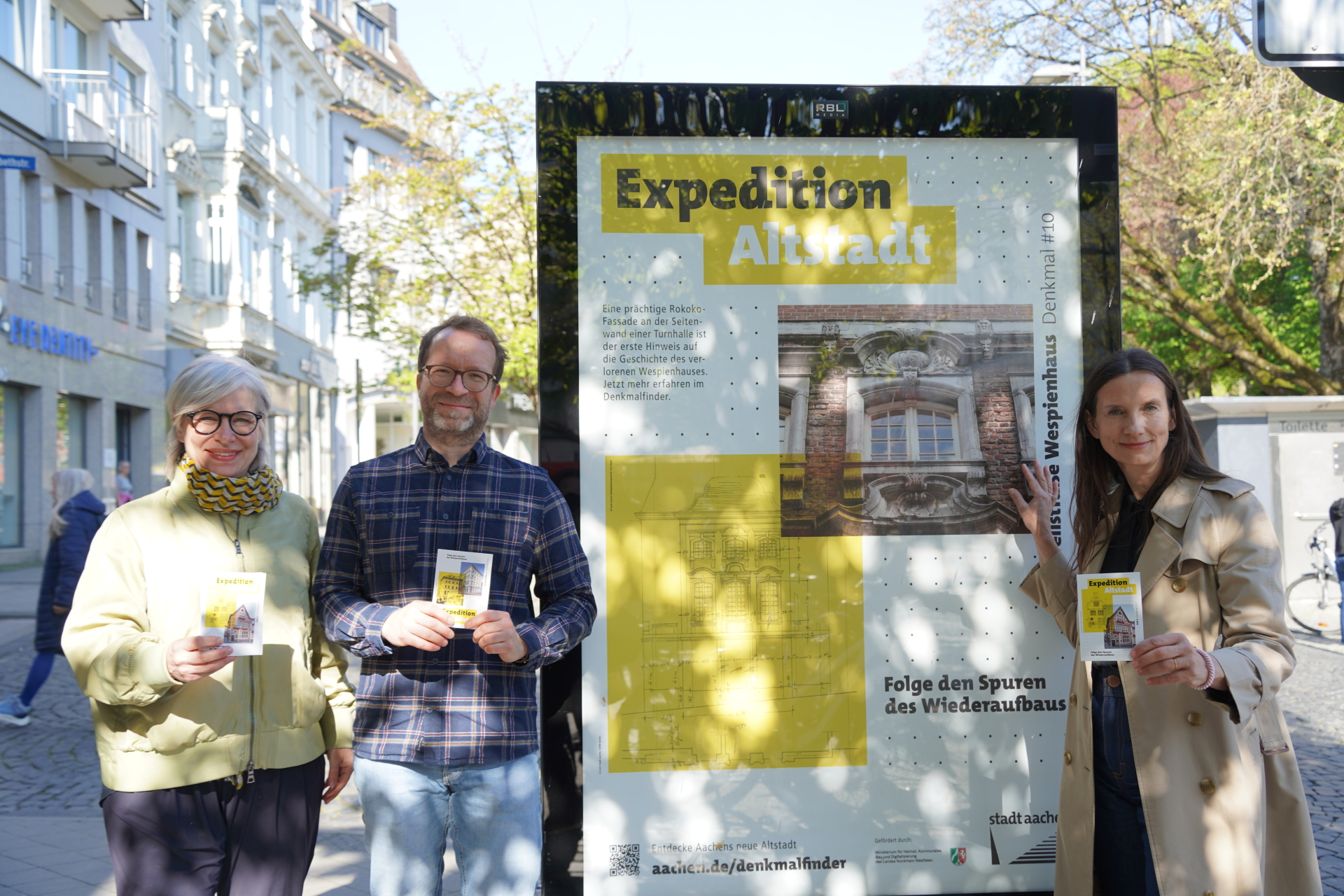
A broad-based campaign is informing all interested parties about the city of Aachen's new monument finder with flyers and posters, among other things.
You can subscribe to our RSS feed for our press releases here https://www.aachen.de/rss-feed-pressemitteilungen/rss.xml