Suermondt-Ludwig-Museum Aachen acquires two important works by Barthel Gilles
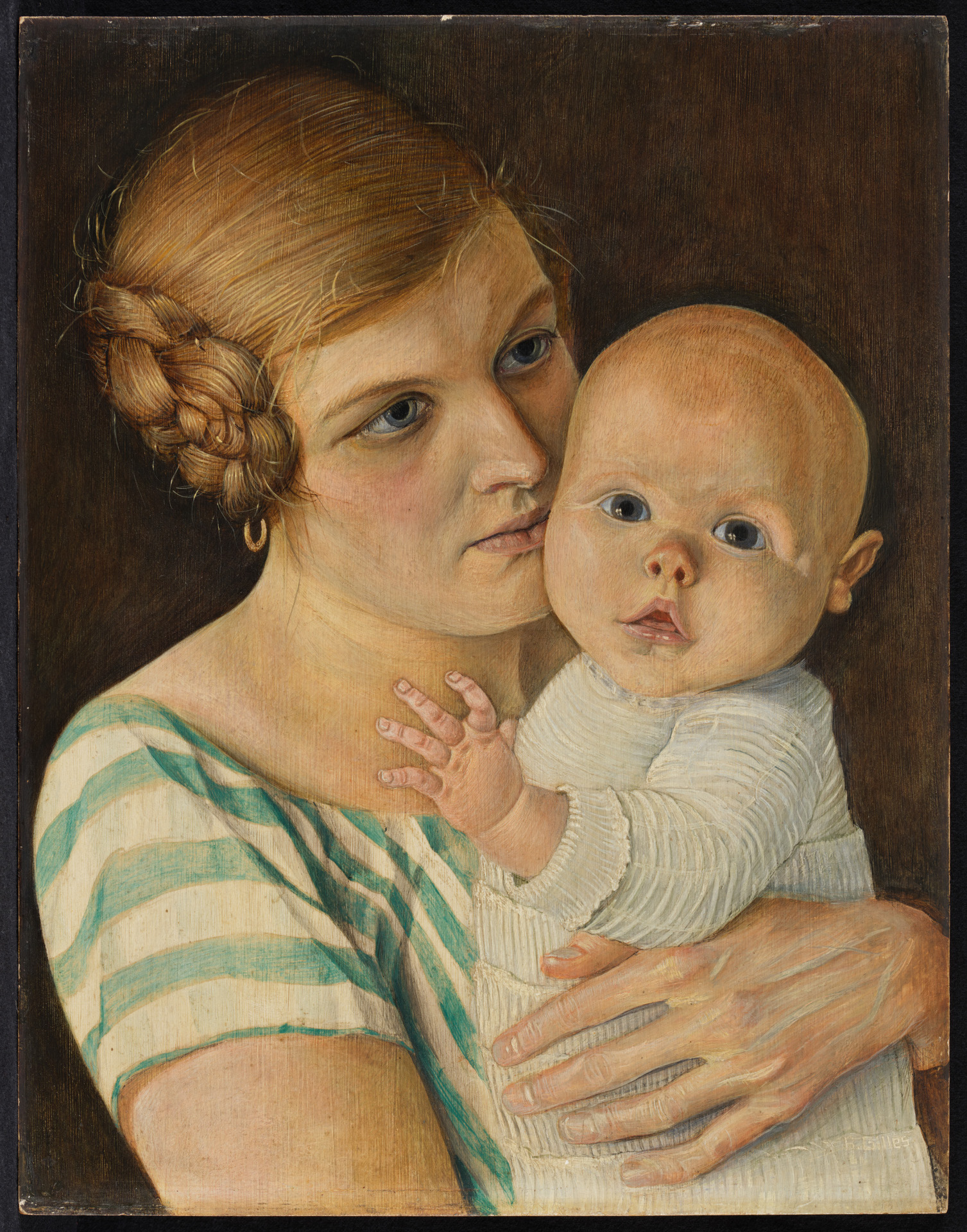
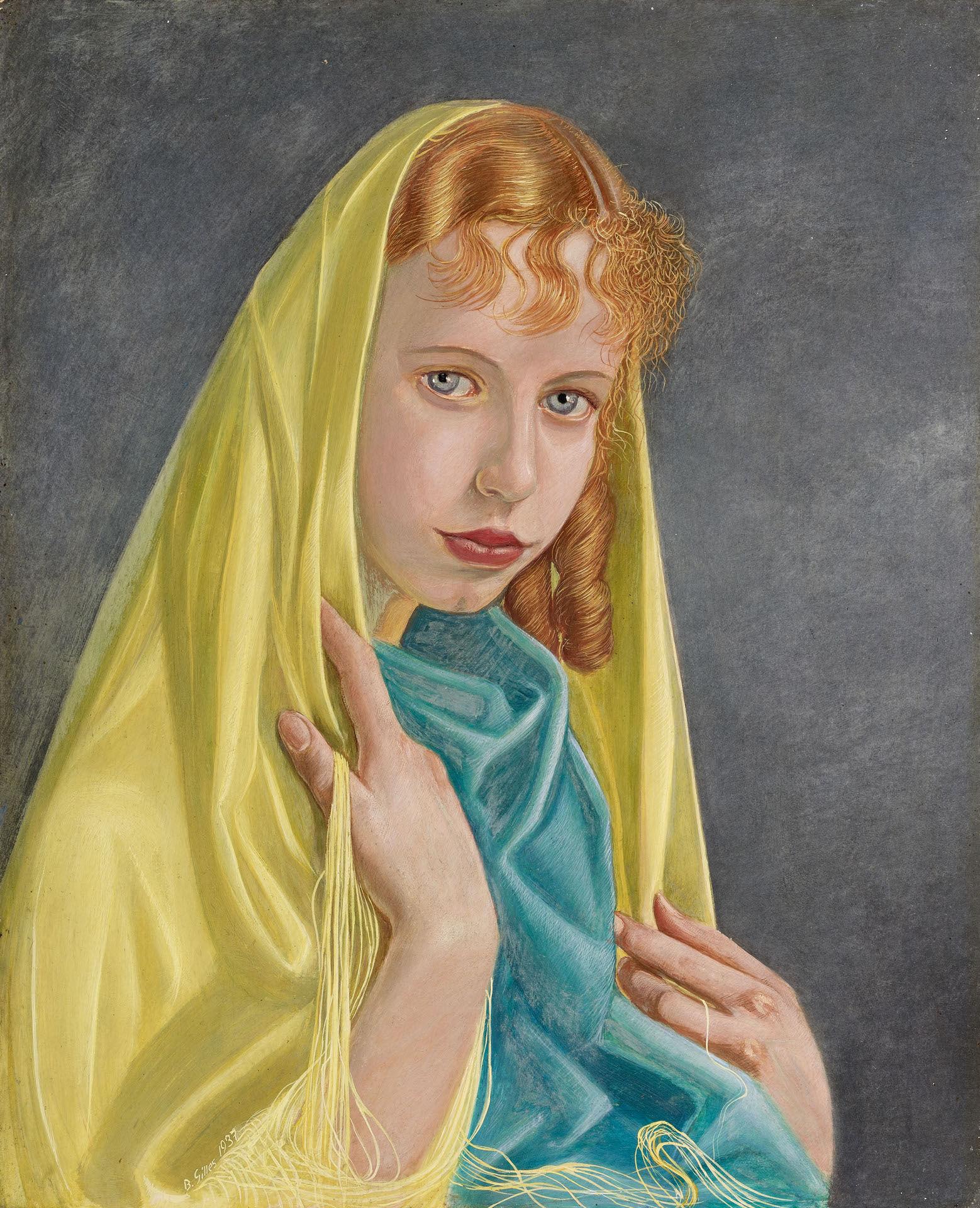
Thanks to funding from the Ministry of Culture and Science of the State of North Rhine-Westphalia in the funding year 2024, the Suermondt-Ludwig-Museum Aachen was able to acquire two outstanding paintings by the Cologne artist Barthel Gilles (*1891 - †1971): Mother with Child (1930) and Girl with a Veil (1937). The privately owned works are now accessible to the public for the first time.
The two paintings were created during Barthel Gilles' central creative phase and represent a significant addition to the Suermondt-Ludwig-Museum's collection in the field of New Objectivity. They exemplify Gilles' technical virtuosity in egg tempera and glazing techniques and, through their thematic and stylistic divergence, provide a multi-layered insight into his artistic work and his engagement with the social and political trends of the 1930s.
Mother with child (1930, oil tempera on wood)
Gilles portrays his wife Louise Drath with their newborn daughter Sibylle in a New Objectivity style inspired by medieval painting. The detailed physiognomic depiction transforms a traditional Madonna motif into a modern, intimate mother-child scene. The quiet depth of the moment is impressively intensified by the pensive gaze of the mother and the direct, inquiring gaze of the child.
The work became more widely known in 1931 when Gilles was awarded the Dürer Prize for this painting together with his Self-Portrait with Gas Mask. Two years later, it was shown as part of National Socialist propaganda in the exhibition Gesunde Frau - Gesundes Volk (Cologne, 1933). The originally private motif was thus politically appropriated and placed in the service of ideological objectives.
Girl with veil (1937, egg tempera on hardboard)
In contrast to this is the Girl with a Veil, which shows a modern, self-confident young woman - and subtly reveals breaks with Nazi ideology. In a classic bust portrait against a neutral background, formally based on portraits of the Virgin Mary, Gilles shows a young woman with red hair, painted lips and an emphatically expressive triad of colors (yellow, green-blue, orange). These elements deliberately contradict the National Socialist ideal of women. Despite its formal austerity, the painting retains its individual vitality and refuses to be idealized.
Both works impressively demonstrate the development of Gilles' New Objectivity visual language in the 1930s - between critical distance, technical sophistication and political appropriation.
Significant addition to the collection
The acquisition of these two paintings not only significantly enriches the existing collection of New Objectivity art in the Suermondt-Ludwig-Museum, but also decisively expands the public collection of works by Barthel Gilles. In addition to important works such as Self-Portrait with Gas Mask (1930) and Ruhrkampf (1930), the two new acquisitions enable an in-depth examination of Gilles' work in the field of tension between contemporary history, artistic positioning and biographical experience.
An artist with a local connection
Barthel Gilles had maintained close ties with the city of Aachen since the 1920s and exhibited several times at the Suermondt Museum. His brother-in-law, the Aachen dancer Peter Drath, encouraged this connection. There are also local references in his work, such as the depiction of the Brauer umbrella factory (now the Ludwig Forum) in the painting Ruhrkampf or a woodcut on the Aachen separatist riots of 1923. The two new acquisitions thus not only pay tribute to the artist's art-historical significance, but also to his regional roots.
Impulses for collection, research and mediation
With this acquisition, the Suermondt-Ludwig-Museum under the direction of Till-Holger Borchert is sending out a clear signal: The examination of the art of the 1930s and the role of artists during the National Socialist era is a central concern of the collection policy. Barthel Gilles, whose work has been significantly rehabilitated through the museum's research - in particular through Adam Oellers' dissertation and a major retrospective in 1987 - is exemplary of a differentiated view of this era.
The two works will be permanently integrated into the collection and presented in future in the context of neo-objective and expressionist works (including those by H. M. Davringhausen, Adam Evarist Weber, Rudolf Levy, Hans Purrmann).
The purchase not only strengthens the museum's profile in North Rhine-Westphalia, but also opens up new perspectives for cultural education in the Euregio. Topics such as the image of women under National Socialism, artistic strategies between adaptation and resistance and the role of women at the beginning of the 20th century can be vividly conveyed using the two works. The acquisitions thus make an important contribution to historical enlightenment and cultural education across national borders.
The Suermondt-Ludwig-Museum would like to thank the Ministry of Culture and Science of the State of North Rhine-Westphalia for its generous support and is delighted to be able to present this important addition to the collection to the public.
You can subscribe to our RSS feed for our press releases here https://www.aachen.de/rss-feed-pressemitteilungen/rss.xml