Façade renovation Inda-Gymnasium 2025
Energetic envelope renovation

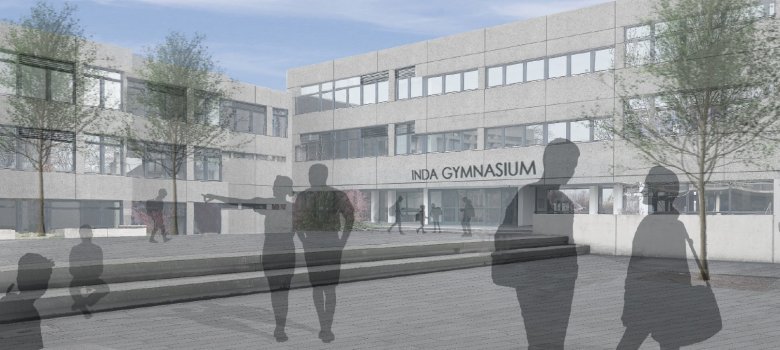
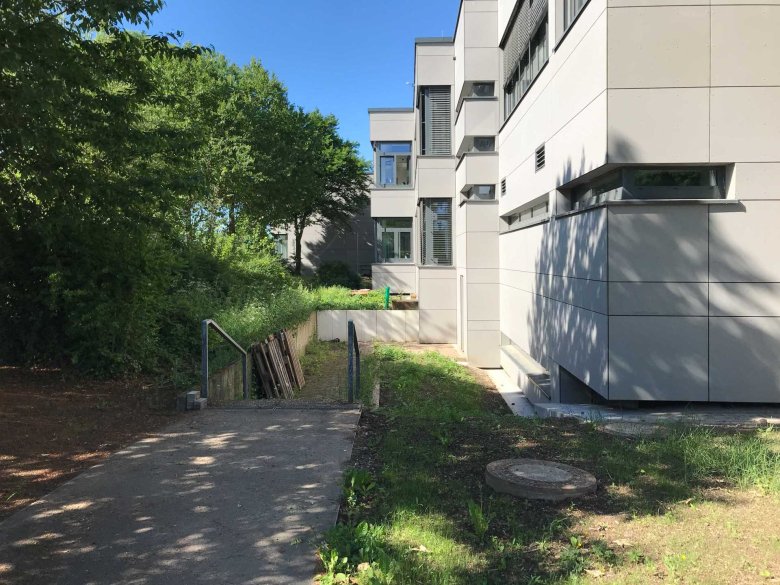
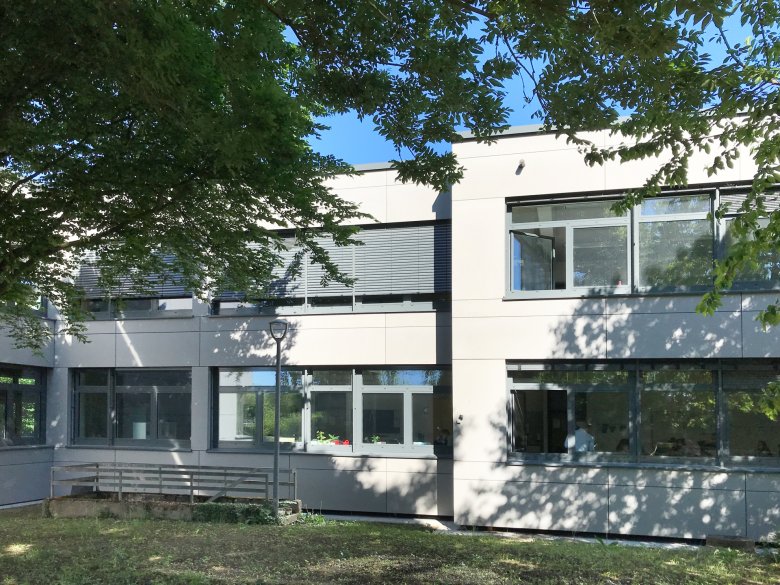
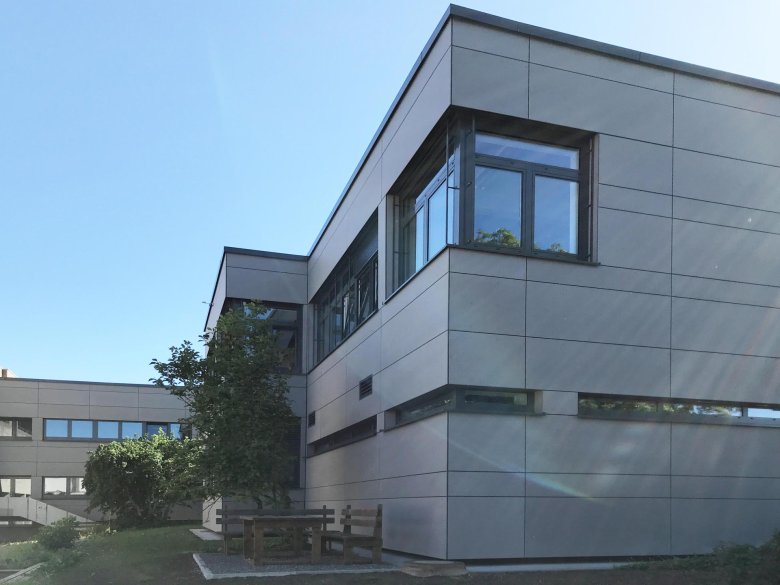
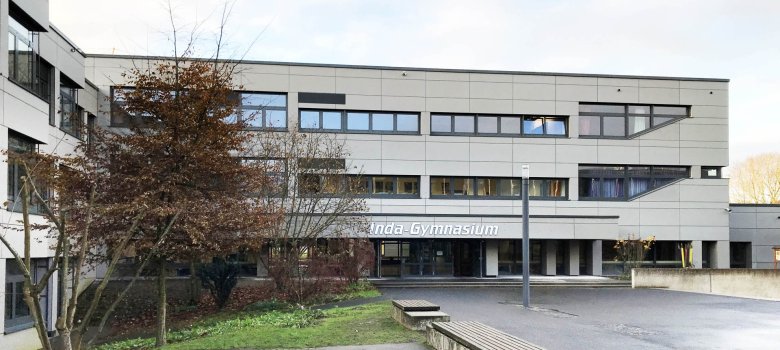
The building was showing signs of age-related damage and no longer met today's energy requirements. An energy-efficient refurbishment was carried out while preserving the existing architectural quality.
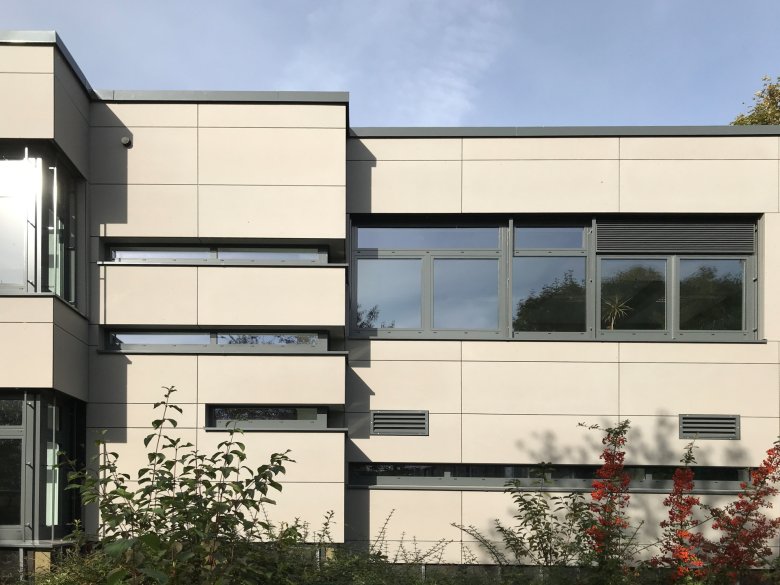
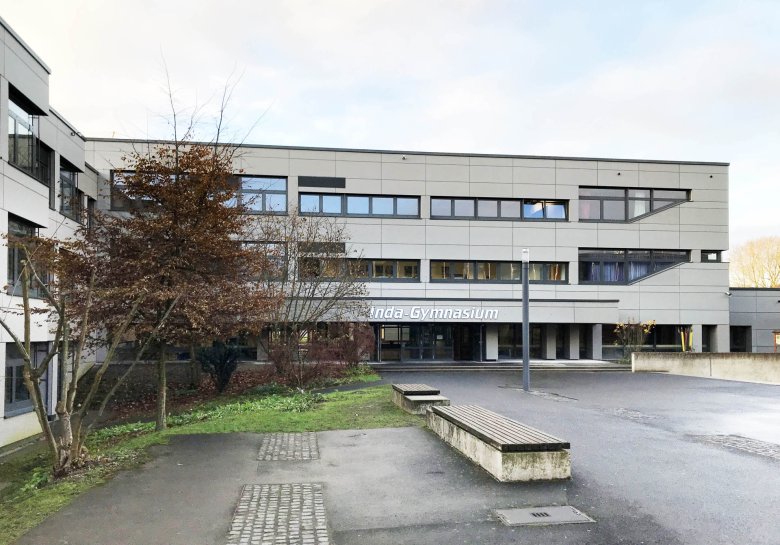
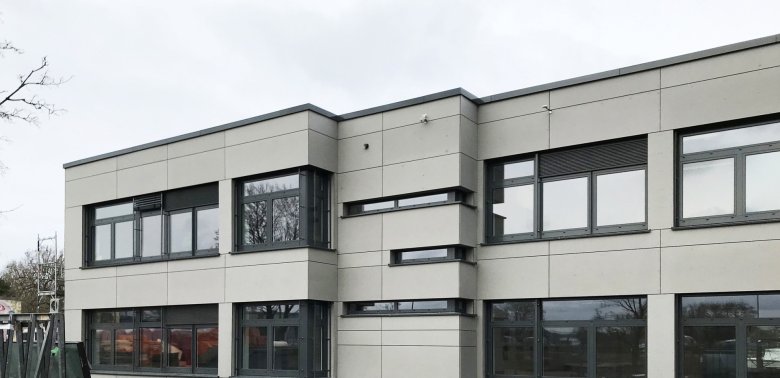
Principle
: In developing the renovation plan, equal consideration was given to energy efficiency improvements and the design elements of the existing architectural style.
Sustainability
: In accordance with the guidelines of the “Aachen Planning Modules,” both economic and ecological factors were taken into account with regard to sustainability and resource conservation in relation to material use.
Insulation, Ventilation, WindowsThe
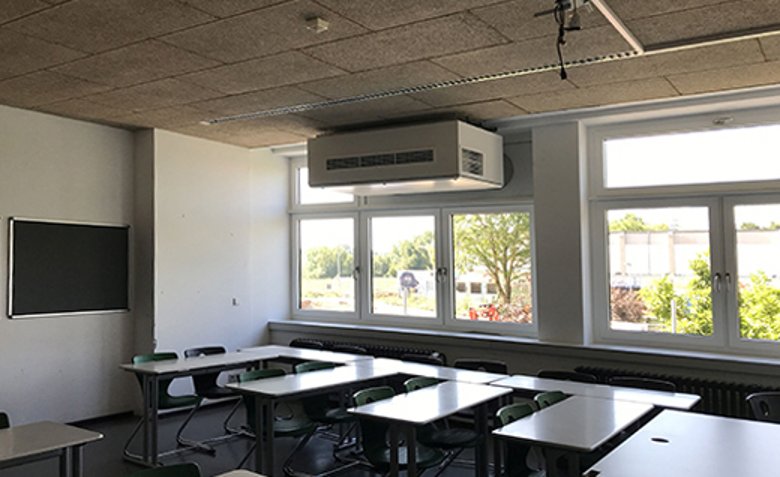
goal of energy-efficient building envelope renovation is to create an insulation system that is as seamless as possible across all building components. In addition to insulating the exterior components (facade and roof) and replacing all windows and doors, this also includes a user-friendly ventilation concept to minimize heat loss from uncontrolled window ventilation while simultaneously preventing poor indoor air quality.
Existing
StructureIn addition, the measures described are evaluated with regard to the existing building structure and architectural style. The design and choice of materials are based on the original façade structure and the existing architectural style.
The refurbishment of the interiors is not part of the measure.
Existing Conditions
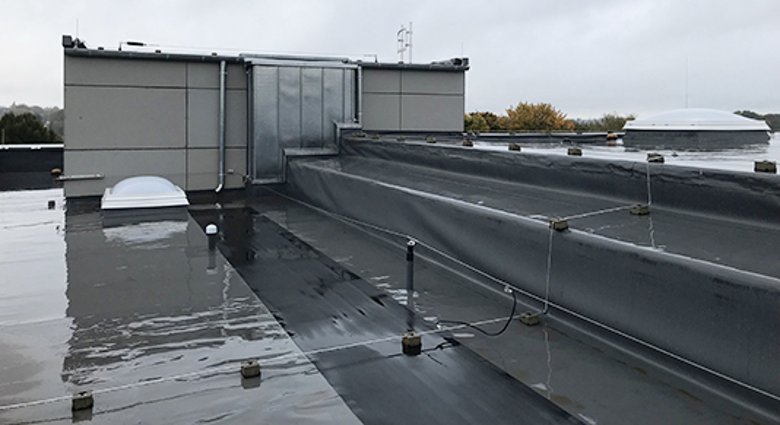
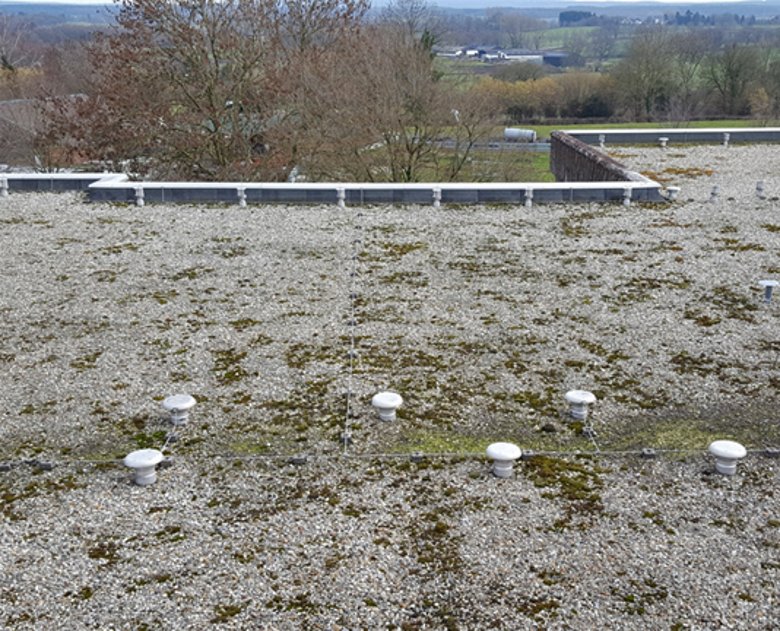
: The roof surfaces consist of solid reinforced concrete slabs. On top of these was a so-called cold roof made of sloped concrete slabs covered with gravel. The roof waterproofing was in a condition commensurate with its age, and the thermal insulation of the roof surfaces was inadequate. Rainwater drainage was provided by internal downspouts dating from the building’s original construction, which were also in need of renovation.
Concept
: The cool roof, including the gravel bed and all ventilation hoods, was removed. The concrete slabs were rebuilt with thermal insulation in accordance with the “Aachen Standard” and a new waterproofing membrane. The drainage concept involved a new slope design and, consequently, relocating the drainage outlets to the exterior. The interior drainage system was decommissioned. All skylights and roof access hatches were replaced.
Condition
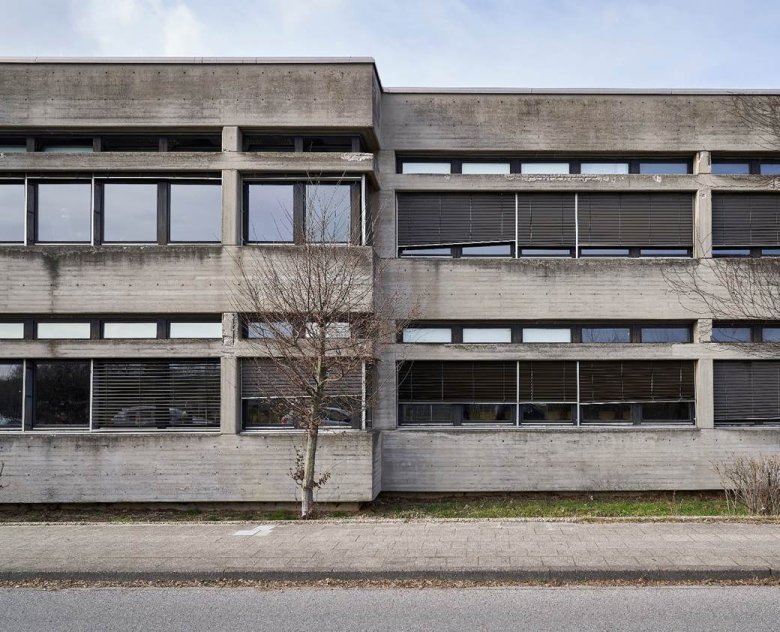
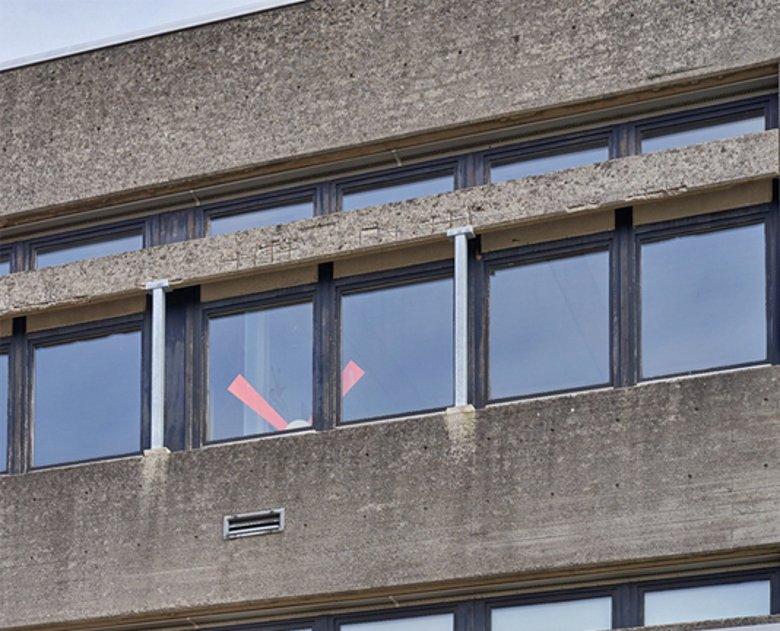
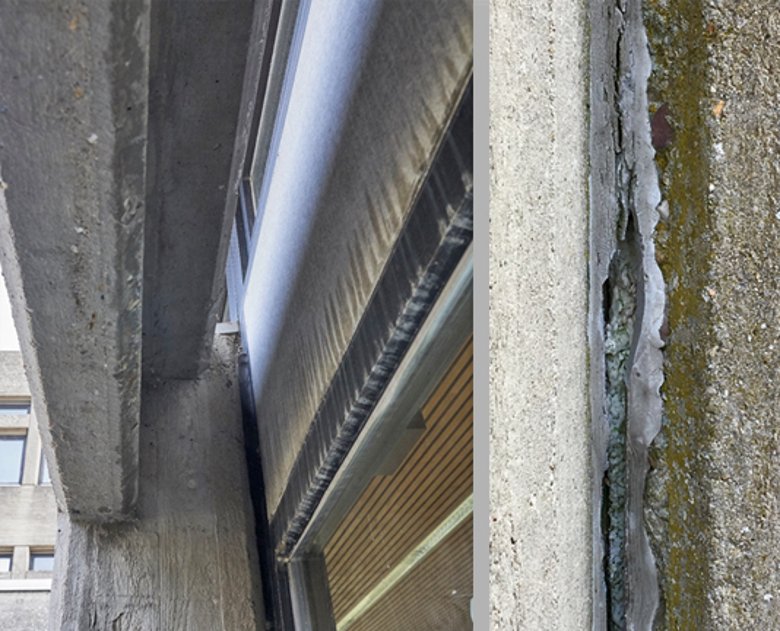
: The exposed concrete facade showed severe weather damage on all sides. The concrete was deteriorated over large areas, and in many places there were already significant spalls with exposed reinforcing bars. The most severe damage was located on the horizontal beams in front of the windows, due to the thin concrete cover. In recent years, isolated safety measures had already been taken in this regard as part of regular inspections.
Concept
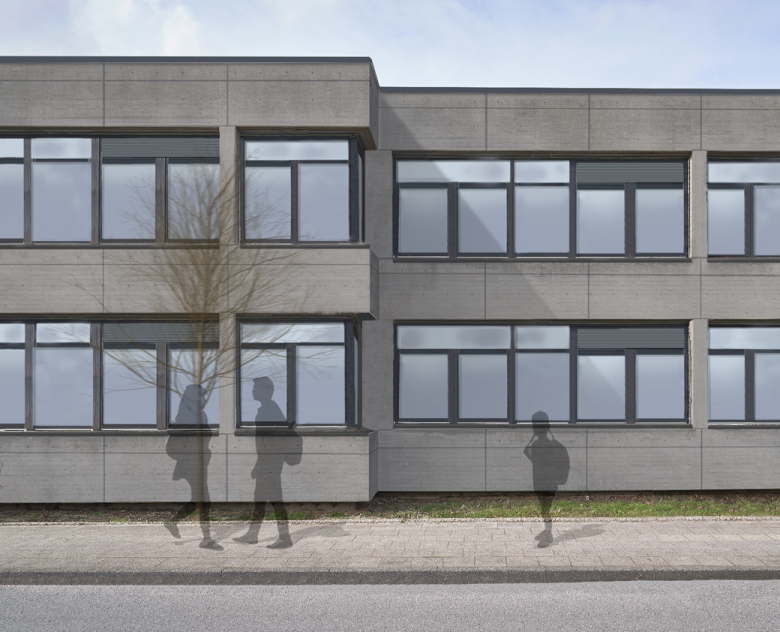
: Based on a comprehensive expert-approved concept, concrete repair work was carried out on the facades. All structurally necessary concrete damage was repaired. The severely damaged beams in front of the window bands were removed, as the technical and financial costs of preserving them were disproportionate. The solid panels behind them were eliminated to allow for larger glass areas in the windows.
Existing
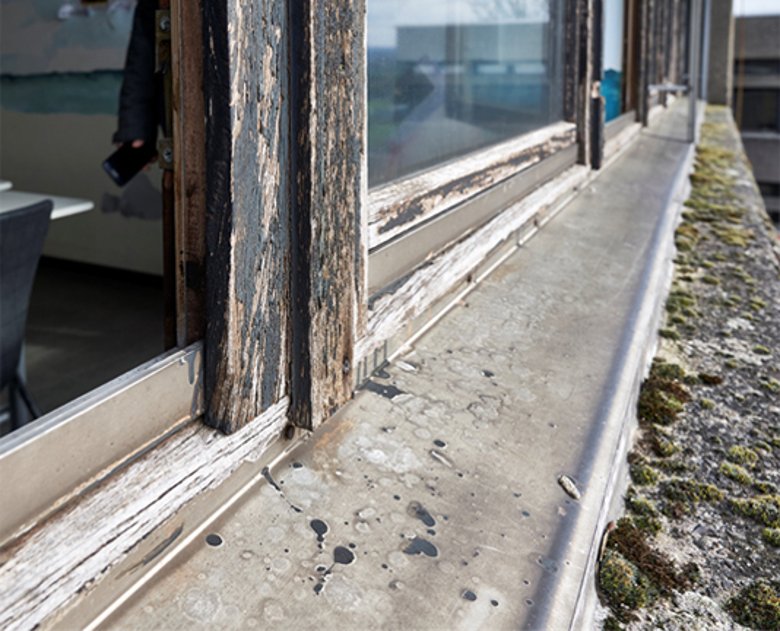
Conditions: The wooden windows dated back to the building’s original construction in 1973. All windows and doors were in need of replacement, not least due to stricter energy efficiency requirements. Many rooms also suffered from a lack of comfort due to drafts caused by air leaks.
Concept
: The new windows and doors were constructed of aluminum and designed in accordance with the “Aachen Standard,” which sets higher thermal insulation requirements than those mandated by building codes. High-traffic doors were constructed of steel. The layout of the window systems follows the existing design. By eliminating the closed panels, the proportion of glass in the windows has increased. This has improved the natural lighting in the classrooms. The skylights in front of the ventilation units were closed off and fitted with aluminum weather protection grilles. In addition to the ventilation system, every classroom now has windows that can be opened.
Existing Conditions
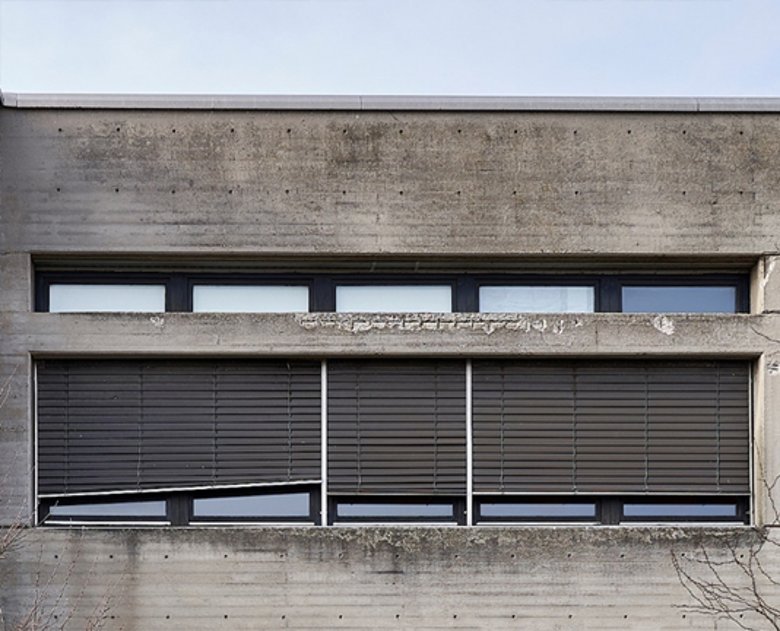
: Most of the existing sunshades were no longer functional and therefore not worth preserving. Furthermore, because they were mounted on the concrete beams, they did not provide shade for the skylights, meaning the classrooms could not be completely darkened.
Concept
: All classrooms and administrative offices were equipped with new external sunshades in the form of aluminum external venetian blinds. The sunshades provide full-height shading for the windows. The system operates automatically outside of user hours, protecting the rooms from excessive heat buildup in the summer—for example, in the mornings before classes begin. During class hours, the sunshades can also be operated manually. Individually adjustable slat angles allow the amount of light entering each room to be controlled as needed. When the slats are lowered, the classroom is sufficiently darkened for the use of projectors or smartboards.
Existing Structure
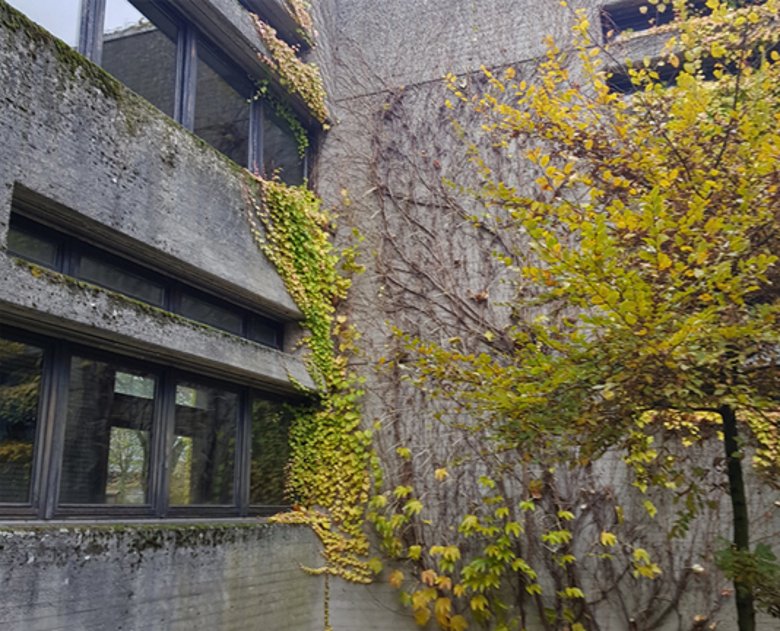
: The facade consisted of a 25-cm-thick reinforced concrete shell and an interior exposed masonry wall. Corrugated fiber cement panels were installed in the cavity to serve as spacers, along with insulation. The facade was partially covered with climbing plants and heavily moss-covered due to the absence of window sill covers.
Concept: Following the completion of
the concrete restoration, the exterior wall was insulated and clad with large-format facade panels. The character of the exposed concrete surface and the building’s exterior appearance—with its alternating bands of windows and large, continuous solid surfaces—were preserved as much as possible. Taking economic and ecological factors into account, the decision was made to install a curtain wall with a rear-ventilated façade clad in fiber cement panels.
Inventory
: All components and materials involved in the project were tested for potential contamination. No contamination was detected—with the exception of contaminants typical of the building’s era, such as corrugated sheets containing asbestos, synthetic mineral fiber insulation, and joint compounds containing PCBs (polychlorinated biphenyls).
Concept
: All materials contaminated with hazardous substances were professionally removed and disposed of in accordance with the Technical Rules for Hazardous Substances (TRGS) and under the supervision of experts. The only exception was the corrugated sheets containing asbestos in the cavity of the exterior wall, which could not be removed without causing damage. The areas exposed during the renovation work were properly sealed and marked.
Brutalist ArchitectureThe
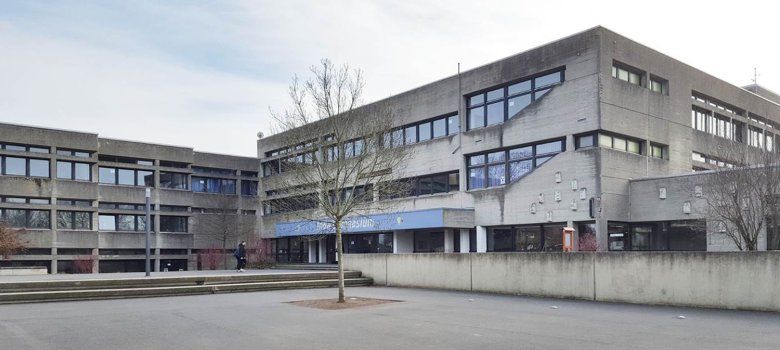
Inda High School was built in 1973 in the Brutalist style. The term originally comes from French (béton brut) and means “raw concrete.” The architecture is characterized by the use of exposed concrete, simple geometric forms, and an emphasis on the structure. The building features a reinforced concrete skeleton construction typical of the period.
Building
LayoutThe building layout consists of three nearly identical two-story classroom wings, a three-story special-purpose building that was formerly intended to house science classrooms, and a single-story administrative wing that also includes a caretaker’s apartment.
FacadeThe
dominant design element of the facade is the alternation between continuous bands of windows and large, solid exposed concrete surfaces. The bands of windows are divided, on the one hand, by the vertical elements of the structural framework (reinforced concrete columns) and, on the other hand, by non-load-bearing horizontal L-shaped concrete beams. The sunshades are currently installed within these beams.
Condition
: The building, which is now nearly 50 years old, shows typical age-related damage to its exterior envelope and no longer meets current energy efficiency standards.
The measures described were implemented during ongoing school operations.
Temporary Evacuation of Classrooms
: To accommodate various construction activities—such as window replacement or particularly noisy and messy work—the classrooms in the relevant construction phase were temporarily vacated. During this period, students were provided with temporary classrooms in a newly erected modular building.
Pathways and Open
SpacesThroughout all phases of construction, the schoolyards remained available for students to use during breaks. The construction schedule was organized so that the traffic routes for school activities and construction operations were separated in terms of both time and space.
The measure is subsidized in accordance with the Municipal Investment Act, among other things.