125 Years of Statistics for Aachen: Student Enrollment Trends as Reflected in the Statistics
The 2026–27 winter semester is getting underway—including at Aachen’s universities. It’s time to take a look back at the early days of Aachen as a student city and its development up to the present.
When the city of Aachen published its first statistical yearbooks at the beginning of the 20th century, the Technical University, founded in 1870, was a relatively small institution. In addition to the enrollment figures for schools and technical colleges, the yearbook also listed their members: In the winter semester of 1905–06, there were 636 students as well as just over 250 auditors and guests (Figure 1). Until World War I, the total remained below 1,000, a number that was hardly significant in this industrial city. Women were not permitted to enroll until 1909.
After World War II, the situation changed rapidly. Reconstruction and the demand for engineers during the economic miracle led to rapid growth at the university: In the winter semester of 1948–49, twice as many people were studying in Aachen as before World War I, and by 1955–56, that number had quadrupled. Engineering disciplines saw the strongest growth. The number of students in mechanical engineering increased tenfold; electrical engineering and metallurgy saw similarly strong growth, while architecture grew only moderately (Figure 2). Women remained the exception: in 1963–64, with 293 female students, they accounted for just three percent of the total.
The expansion of higher education in the 1960s and 1970s made Aachen’s higher education landscape not only larger but also more diverse. In 1971, the engineering schools for mechanical, civil, and textile engineering merged to form the Aachen University of Applied Sciences; in the same year, the Catholic University of Applied Sciences established its Aachen branch. The Academy of Education, founded in 1946, was absorbed into the RWTH in 1980. Within two decades, the number of students in Aachen rose to over 45,000.
This peak in the early 1990s was followed, as was the case nationwide, by a significant decline. With the Bologna Process and the new bachelor’s and master’s degree programs, lecture halls in Aachen began to fill up again around 2010. In the 2021–22 winter semester, the all-time record was set with over 61,000 students (Figure 3).
Today, it is hard to imagine Aachen without its students. In the 2025–26 winter semester, there were 217 students per 1,000 residents (Figure 4). Students are particularly visible around the Templergraben and the Pontviertel. The proportion of women has risen to just over one-third, though men still make up the majority. The student body’s international composition has changed even more dramatically: while in the early 1970s not even one in ten students came from abroad, today it is nearly one in three—significantly higher than the state and national averages. This also shapes the city’s social fabric: China and India are now among the top five countries of origin for Aachen’s population.
125 Years – A Journey Through the Statistics
: The Statistics Office team is celebrating this anniversary year—in keeping with its mission—with a journey through many interesting and curious facts, figures, and data about the Imperial City. Topics range from population trends and changes in land area to attendance figures for Alemannia’s home games. Through August 2027, the City of Aachen will publish additional installments of this series at regular intervals on aachen.de/statistik.
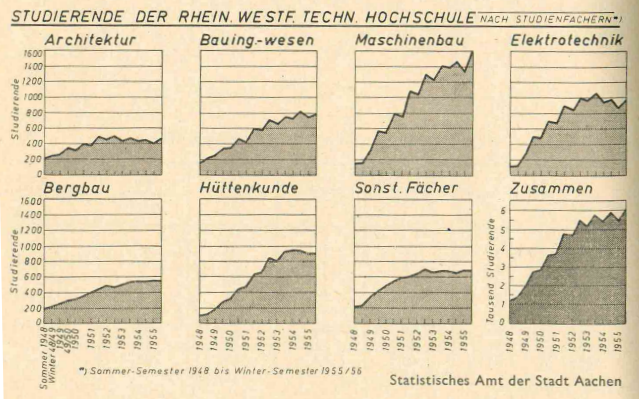
Students at the Rhein-Westf. Technical University by Field of Study, Summer Semester 1948 through Winter Semester 1955/56.
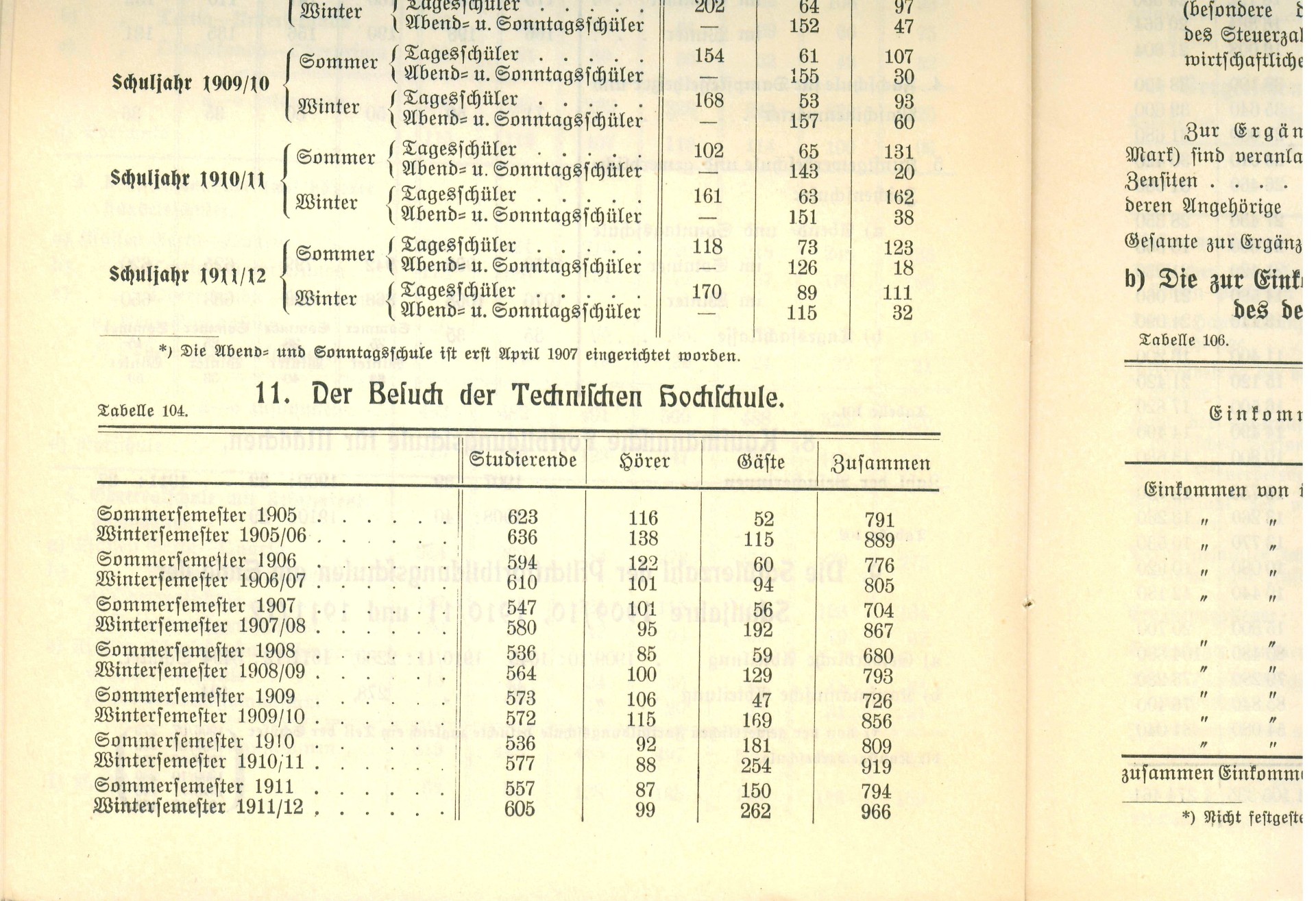
Attendance at the Technical University, from the summer semester of 1905 to the winter semester of 1911–12
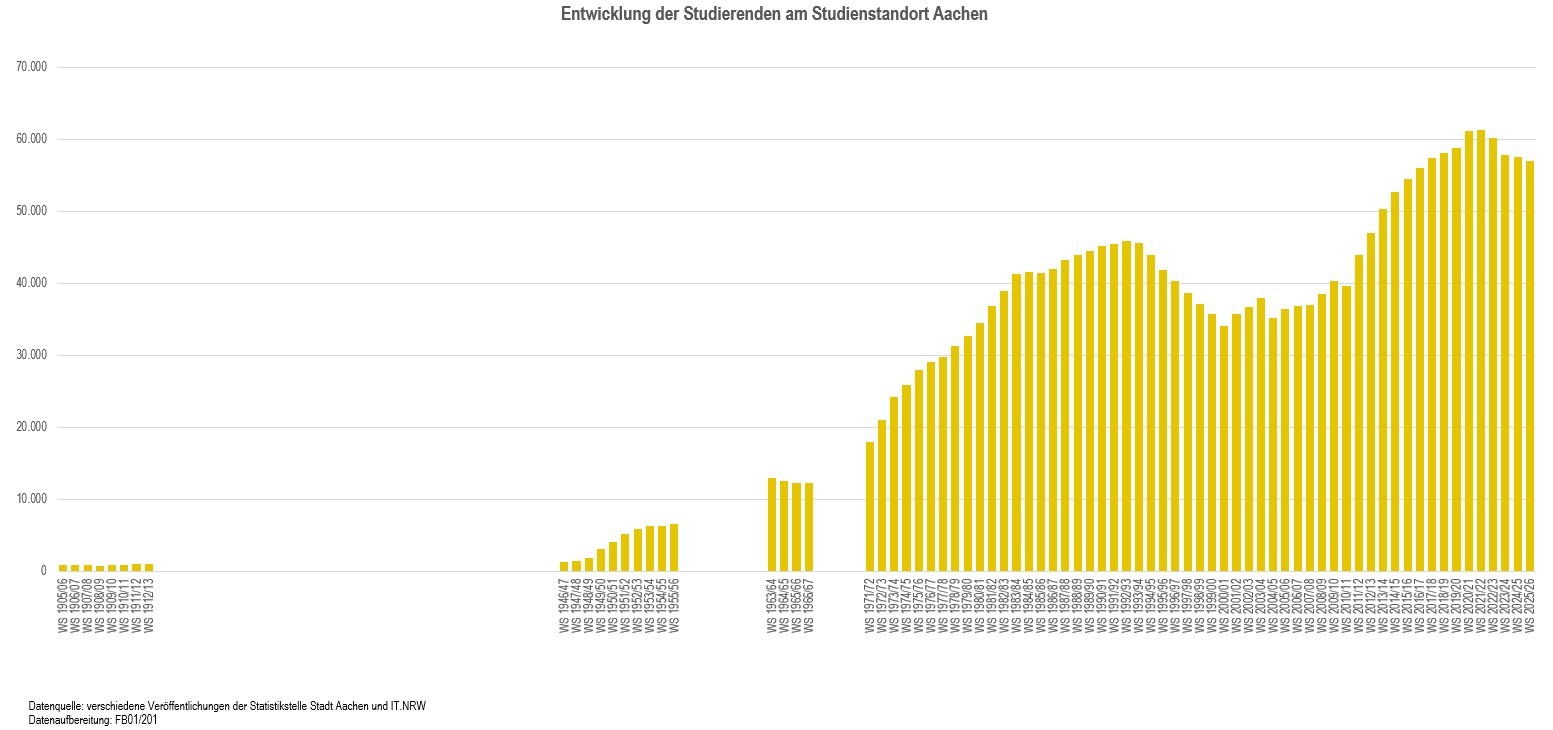
Students at Aachen's universities, winter semesters 1905/06 through 2025/26
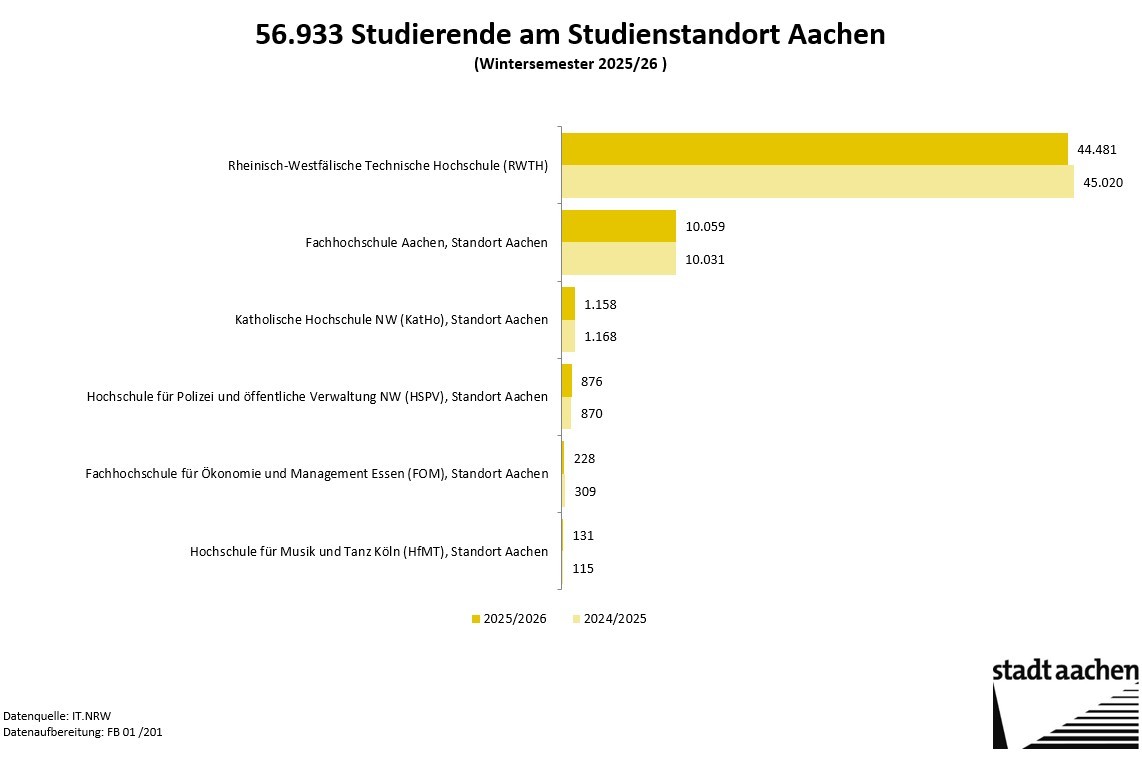
Students by University for the Aachen Campus, Winter Semester 2025/26
You can subscribe to our RSS feed for our press releases here https://www.aachen.de/rss-feed-pressemitteilungen/rss.xml