Funding project: AI and digital twin help with climate-proof urban planning
How do new buildings affect the urban climate? What effects do additional green spaces have on the supply of cold air? How can modern urban planning succeed in avoiding heat islands in the city? In future, artificial intelligence will be used to simulate and evaluate different planning variants - from entire districts to individual buildings. The City of Aachen is delighted to be part of the four-year funding project "MACspeeDZ - Planning Acceleration for Climate Adaptation with Urban Digital Twins" from the Federal Ministry of Research, Technology and Space (BMFTR). Together with the city of Mannheim and other partners from business and research - including regio iT, the IT partner of the city of Aachen - a digital tool for modern and sustainable urban development is to be developed. The aim is to use reliable data to support local authorities in making well-founded and faster decisions in urban and open space planning.
"MACspeeDZ" stands for "Mannheim Aachen Speeds-Up Digital Twin". The overall project costs just under 3.9 million euros, of which 486,000 euros are from the city of Aachen. 3.24 million euros are being funded, and the funding rate for the Aachen part is even 100 percent. The participating departments of Geoinformation and Land Planning (FB 62), Climate and Environment (FB 36), Urban Development and Planning (FB 61) and Digital Administration and IT Control (FB 15) will implement the project in close cooperation.
In order to feed the digital Aachen twin with additional data, 100 sensors for recording urban climate parameters are to be installed in the city over the course of the year. The tender for this is currently being launched. Thanks to the sensors, real-time maps, e.g. for temperature or wind, will be created on the new database in future (real-time tool) and, on the other hand, "what-if" scenarios can be considered (planning tool). With the help of artificial intelligence specially trained for this purpose, the climatic effects of urban development changes can then be displayed, analyzed and evaluated in three dimensions in a digital twin. This enables the municipality to identify and reduce heat islands, plan floor space management more efficiently or establish early warning systems in the event of extreme heat (particularly relevant for vulnerable groups).
All project partners:
- City of Mannheim
- City of Aachen
- MKB Mannheimer Kommunalbeteiligungen GmbH
- regio iT gesellschaft für informationstechnologie mbh
- GEO-NET Umweltconsulting GmbH
- E.ON Energy Research Center, RWTH Aachen
- Institute of Human Factors and Technology Management (IAT), University of Stuttgart
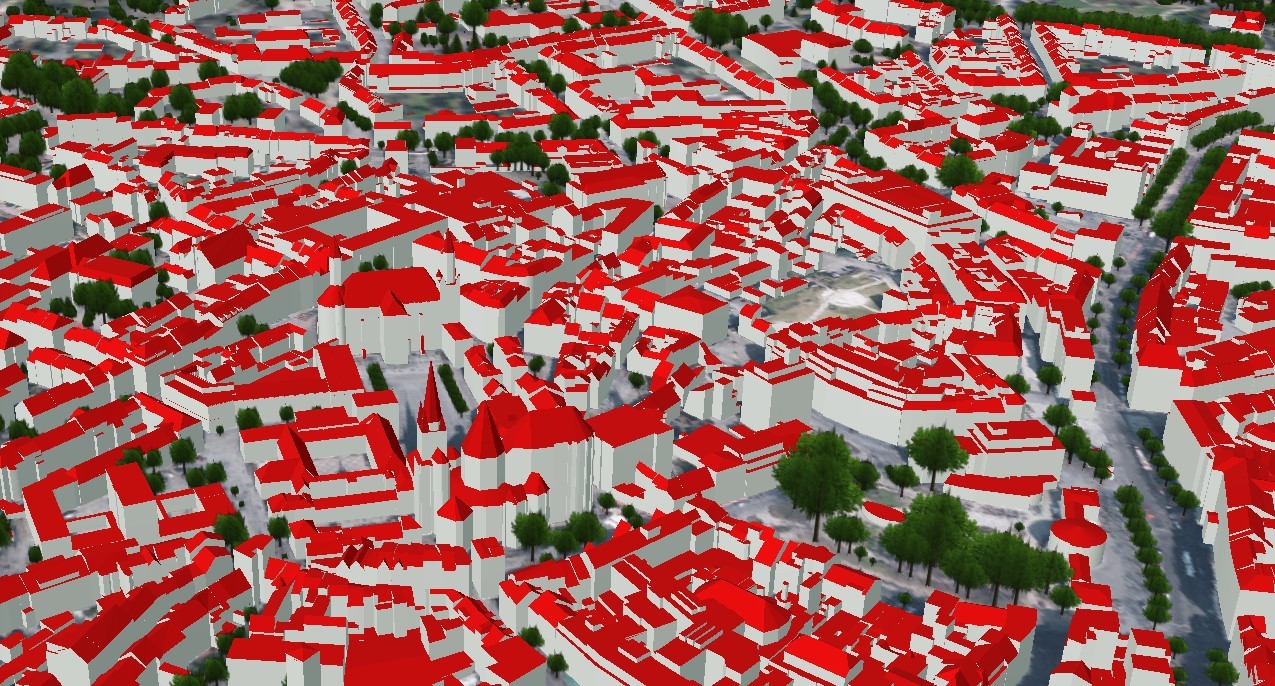
New data feed for the digital twin of Aachen: the city is part of the MACspeeDZ funding project. Thanks to modern measurement technology and AI, climate-friendly urban planning is to be further improved.
You can subscribe to our RSS feed for our press releases here https://www.aachen.de/rss-feed-pressemitteilungen/rss.xml