Euregio with Border Controls: What Will Remain of Europe? The State of Cross-Border Cooperation in 2026
Category: Europe
Euregio with Border Controls: What Will Remain of Europe? The State of Cross-Border Cooperation in 2026
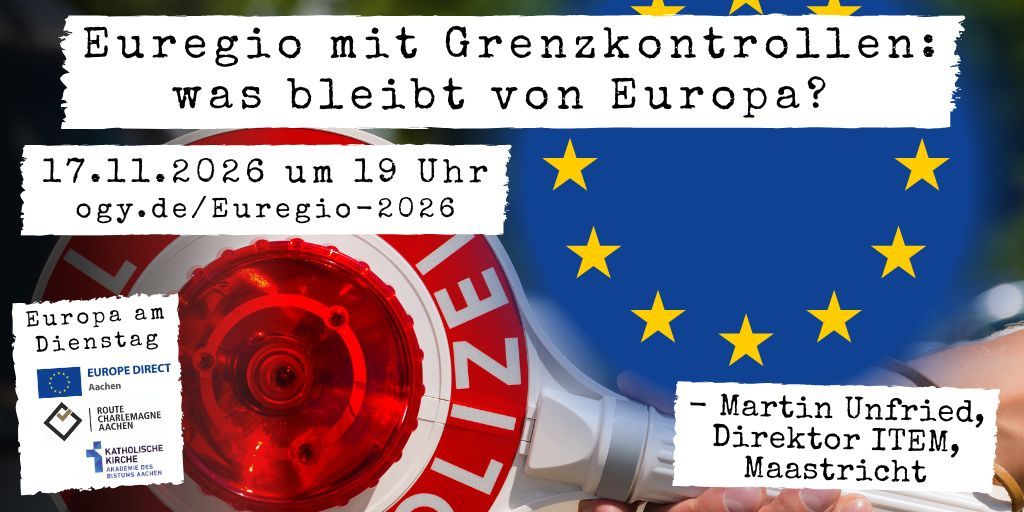
If you’re unlucky, you’ll be stuck in traffic at the border between Maastricht and Aachen, because the federal police are diverting traffic there and occasionally checking passports. Border controls are the new normal in the Euregio, even though we had actually hoped to live together without borders ever since Schengen. This
year, the Euregio Maas-Rhein turns 50. This is the organization based in Eupen that has coordinated many cross-border projects over the past decades. Has it been successful? Where do we stand after all these years of cooperation along the Belgian, Dutch, and German borders? What is the state of the cross-border labor market, cooperation among universities, or collaboration between fire departments? What about the sense of “Euregio” among people living between Liège, Maastricht, and Aachen?
Martin Unfried ITEM 200Martin Unfried is the director of ITEM, the Institute for Transnational and Euregional Cooperation and Mobility, at Maastricht University. For more than 10 years, he has been conducting research on issues of cross-border cooperation in the European Union. His starting point is this: Europe’s border regions serve as a test case for the European Union. It is particularly here that citizens should be able to see the added value the EU brings to their daily lives.
Recent projects have focused, among other things, on the consequences of border controls, cooperation in the medical sector, cross-border mobility, and the cross-border labor market. He grew up in Baden-Württemberg and has been living in Maastricht for 30 years.
Questions from the audience are welcome. Catharina Gottschalk will moderate the event. She is the coordinator for Euregional and International Development at the City of Aachen.