Urban renewal helps preserve established urban and local areas and develop them in a sustainable manner. The goal is to improve or eliminate structural, functional, and social problems and to strengthen local centers as vibrant and attractive areas. It is an important component of urban planning and is regulated by the Building Code. Cities and municipalities can use it to develop existing neighborhoods in a targeted manner in order to safeguard or improve their use, design, and quality of life in the public interest.
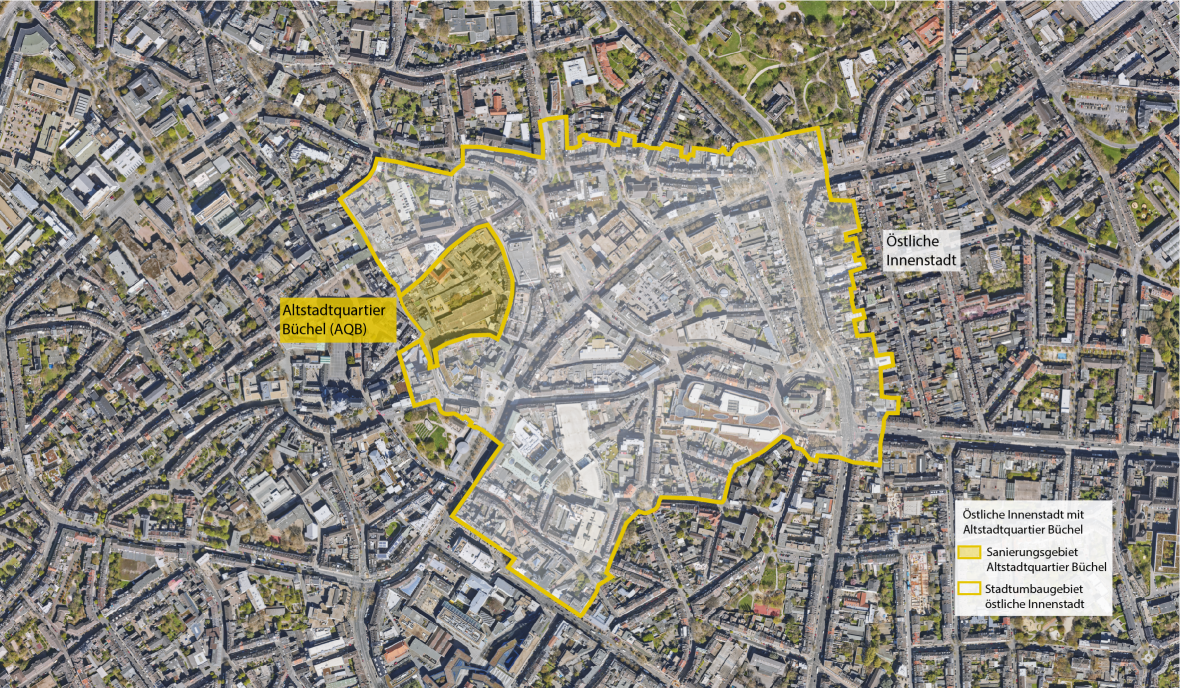
AGIS GmbH, © City of Aachen
Measures and preparation
Urban redevelopment measures and preparatory studies
Urban renewal measures help to sustainably improve urban and local neighborhoods facing structural, functional, or social problems and make them fit for the future. They always apply to a clearly defined area established by a redevelopment ordinance.
Before an area can be designated as a redevelopment area, so-called preliminary investigations (VU) must be conducted in accordance with Section 141 of the German Building Code (BauGB). These serve to determine whether urban planning deficiencies or development shortfalls actually exist in an area and whether a revitalization measure is appropriate and necessary.
During the preparatory investigations, the area is examined comprehensively.
Among other things,
- the structural condition of buildings and open spaces,
- the use of the area,
- the traffic and open space situation,
- the social and economic conditions, as well as
- the willingness of owners and other stakeholders to participate
examined.
Based on this, goals for the neighborhood’s development are established and appropriate measures are developed.
These include, for example,
- the modernization of buildings,
- the revitalization of public spaces,
- the improvements in the area of mobility,
- climate (impact) adaptation or
- Strengthening local supply.
All results are summarized in an action plan.
The preliminary studies are open-ended. This means that a decision on whether to designate a redevelopment area will not be made until the studies are complete. If a redevelopment area is designated, the planned measures will be finalized and implemented within a specified timeframe.
Remediation process
In principle, there are two approaches that can be considered for carrying out an urban renewal project:
Comprehensive Remediation Process
This is the standard procedure. It applies when specific redevelopment regulations are required. These include, among other things, requirements for prior approval of certain construction projects, real estate transactions, or other legal acts within the redevelopment area.
Simplified Restructuring Procedure
The simplified procedure is chosen when the specific legal provisions governing rehabilitation are not necessary to achieve the rehabilitation objectives.
In both types of redevelopment programs, cities and municipalities can use federal and state grants to finance the measures.
Regional Backdrops
© SEGA
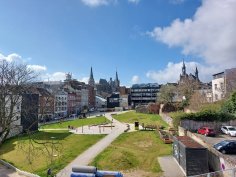
Büchel old town quarter
An urban redevelopment measure in the full procedure was approved for the Büchel old town district by council resolution on 22.04.2026. You can find out more about the redevelopment measure here.
More
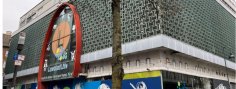
Eastern city center
An urban redevelopment area for the eastern part of downtown was designated by a City Council resolution dated July 15, 2026. You can find out more about the next steps here.
More
Overview
Redevelopment Areas Under the Simplified Redevelopment Procedure and Urban Renewal Areas
Due to the program areas that are coming to an end or have already been completed—the city center (City Center Concept 2022), Aachen North, Brand Beverau, and Haaren—the City of Aachen will not be applying for any further urban development grants for these areas.
City center concept 2022
The “Downtown” redevelopment area (simplified procedure), which includes the main train station and Burtscheid, together with the Integrated Urban Development Concept (ISEK) Downtown Concept 2022, provides the basis for applying for urban development grants from the state of North Rhine-Westphalia. Since 2015, the City of Aachen, with support from urban development funding, has been implementing a wide range of measures to enhance the area’s appeal.
Based on the action plan of the Downtown Concept 2022, numerous preliminary studies and concepts have been developed, and measures have been implemented within this framework since 2015: These include the “Premium Footpaths” as an attractive network of pedestrian paths, the restoration of visibility for Aachen’s streams, and the development of a vision for the spa town of Burtscheid. Projects such as the redevelopment of Krämerstraße and the Hof are among the projects from the 2022 Downtown Concept that have already been implemented with support from urban development funding.In 2024, the 10th and final funding phase, focused on the central “Theaterplatz” project, was approved. The ISEK Innenstadt funding framework will conclude with the completion of Theaterplatz. In this context, the goal is to repeal the ordinance.
Aachen North
The “Social City Aachen-Nord” funding program ended in 2021. The final projects under this program are currently being implemented, including the redesign of Europaplatz and Tal- and Scheibenstraße.
MoreFire
As part of the Brand Master Plan, key projects that enhanced the neighborhood’s appeal were implemented, including the redesign of the market square in Aachen-Brand, the construction of the new gymnasium at Marktschule, and the widening of the Vennbahn railway right-of-way. The Brand area development plan is now complete. The final project, the “Pocket Park” on Rombachstraße along the Vennbahn route, was completed in June 2025.
Beverau
In the "Beverau" area, there is a particular focus on encounters in the neighborhood and the initiative of local people. The "Gut Branderhof" has already been converted into a neighborhood and meeting center and a neighborhood square at the estate has been redesigned. In addition, a disposition fund has been set up for the district.
Hair
Based on the Haaren integrated action plan adopted in 2013, a wide range of measures are being implemented to improve the quality of open spaces and public places. These include the projects: "Around St. Germanus", "Park at the old cemetery" and the conversion of the Wurm and Haarbach floodplains.
Private investments in building renovations may also qualify for tax benefits under certain conditions. For more information, see “Renovation Certificate.”