Understanding and Improving Aachen’s Urban Climate: AI, Climate Monitoring Network, and Reducing Land Sealing
- The MACspeeDZ research and development project has used climate data and AI to create an intelligent planning and decision-making tool designed to make Aachen more climate-resilient in the future.
- Possible simulations: What impact do additional green spaces, changes in building shapes or their orientation, as well as new path layouts, have on temperature trends, cold air inflow, or the quality of the outdoor environment?
- From data to action: Aachen’s mayor, Dr. Michael Ziemons, announces a new initiative to reduce impervious surfaces called “Aachen Makes Up Ground.”
Aachen has a twin—in this case, an urban digital twin that came into being as part of a research and development project with the cumbersome name MACspeeDZ. The acronym stands for “Mannheim Aachen Speeds-Up Digital Twin” and explores how digital technologies and artificial intelligence (AI) can help accelerate municipal planning processes to better adapt cities to the effects of climate change.
After all, steadily rising temperatures, urban heat islands, and extreme weather events are posing ever-greater challenges for cities like Aachen in their efforts to develop climate-resilient urban and open-space planning. This is exactly where MACspeeDZ comes in, with the goal of further developing the existing urban digital twins of Mannheim and Aachen and making them usable as intelligent planning and decision-making tools. Aachen’s Mayor, Dr. Michael Ziemons, sees a great opportunity: “Aachen must not become a city that people prefer to avoid in the summer because of the heat. Our downtown should remain a place where people enjoy spending time—lively, green, and livable. With around 100 measurement points, we’ll be able to identify very precisely in the future where the city heats up particularly quickly and where we need to take targeted countermeasures. This knowledge is a crucial foundation for better preparing Aachen for the consequences of climate change and ensuring quality of life for all Aachen residents.” The project exemplarily combines municipal practice, scientific expertise, and technological innovation, thereby making an important contribution to the digitalization of urban planning and the development of climate-resilient cities. Because the solution developed is intended to be transferable to other municipalities, its long-term benefits can extend far beyond the two model municipalities.
Smart Decision-Making and Planning Tool for Aachen “Our
goal is to provide local decision-makers with an up-to-date and reliable data foundation. This allows us to create the necessary conditions for implementing the right local climate adaptation measures in a more targeted and transparent manner,” explains Heiko Thomas, Aachen’s Deputy Mayor for Climate and Environment, Municipal Services, and Buildings.
As part of the project, two key digital tools are currently being developed: a real-time tool for displaying current urban climate data—both areal and point-based—and a planning tool for simulating various urban development scenarios. To this end, climate, environmental, geospatial, remote sensing, and administrative data are integrated into a single digital system. Using specially trained AI models, various urban planning measures can then be simulated, and their effects can be visualized, analyzed, and evaluated in three dimensions. For example, this makes it possible to examine the influence of additional green spaces, changes in building shapes or their orientation, as well as new route layouts, on factors such as temperature trends, cold air inflow, and the quality of the urban environment.
“A Milestone in Mapping Aachen’s Urban Climate”
To gather local data, approximately 100 sensors were installed in Aachen, which provide temperature readings every ten minutes. Sensor number 99 has now been installed at the Katschhof. The sensors provide real-time data that can be accessed at www.aachen.de/klimamessnetz and viewed on a climate map created by the City of Aachen’s Geodata Information Department.
Dr. Daniel Kelterbaum, head of the “Air Pollution and Climate Protection” division in the city’s Climate and Environment Department, is enthusiastic about the initial results: “The tool and the data it has generated represent a milestone in our understanding of Aachen’s urban climate and enable us, first, to clearly depict the current state of the city’s climate; second, to identify problem areas regarding heat stress, and third, to evaluate and design future projects with a view to their impact on the urban climate, ensuring they are future-proof and contribute to a livable city!”
MACspeeDZ: Participants and Project Partners
The city is in good company with six other partners from the fields of local government, business, and academia. Alongside Mannheim, the City of Aachen is the second model municipality in the project. It contributes its municipal data and requirements and is testing the application within its own city administration. Within Aachen’s administration, the departments of Geoinformation and Land Use Planning, Climate and Environment, Urban Development and Urban Planning, and Digital Administration and IT Management are working closely together on this initiative. STAWAG and Regionetz are also supporting the project by facilitating the installation of the measuring devices on streetlights. The devices are mounted with the assistance of Aachen’s municipal utilities. In addition, other companies and institutions are taking on specialized tasks: MKB Mannheimer Kommunalbeteiligungen GmbH, regio IT GmbH, GEO-NET Umweltconsulting GmbH, the E.ON Energy Research Center at RWTH Aachen University, and the Institute for Industrial Engineering and Technology Management (IAT) at the University of Stuttgart.
The project is funded by the Federal Ministry of Research, Technology, and Space (BMFTR). The German Aerospace Center (DLR) serves as the project management agency.
Project
Duration and Budget The MACspeeDZ grant-funded project is scheduled to run for four years, from December 2025 through December 2029 (as projected). The total project budget amounts to just under 3.9 million euros. Of this amount, approximately 3.24 million euros will be funded by the BMFTR. The City of Aachen is responsible for project costs totaling approximately 486,000 euros. This portion is fully funded, meaning the City of Aachen receives 100 percent funding.
From Theory to Practice: “Aachen Is Gaining Ground”
In the future, data from the digital twin—combined with additional climate and geodata—can help plan land-unsealing and greening measures in a more targeted manner and assess their potential impact. In this way, the MACspeeDZ project can provide important foundations for the “Aachen Makes Up Ground” initiative. Mayor Ziemons describes the goal of the concept, which was developed by the city administration: “Soil is one of our most valuable resources. It allows rainwater to seep away, cools our city, and lays the foundation for more green spaces and a better quality of life. That’s why we want to remove stone and concrete wherever possible and sensible, de-seal surfaces, plant trees, and create new green spaces. Our goal is a downtown that remains inviting and livable even on hot summer days. ‘Aachen macht Boden gut’ combines what defines our city with what our times demand of us: a sense of belonging to our hometown also means preserving and further developing Aachen for future generations.” It is intended to counteract the increasing soil sealing in urban areas—including through infill development within the city or on private land—and to transform “bad” paved ground back into “good” unsealed ground. The concept will be presented next week—on Tuesday, November 17, and Wednesday, November 18—to the Committee on Environment and Climate Protection and to the Aachen City Council.
Urban Areas
: To this end, the administration is first tasked with evaluating all measures already implemented, based on the size of the areas to be unsealed—categorized by daycare centers, schoolyards, plazas, and streets, down to individual tree locations or other areas. Additional criteria include the type and amount of funding secured, as well as the estimated local climatic impact in terms of shading and temperature. All currently planned and future measures are to be compiled and evaluated according to these criteria as well. Additional assessments—such as local heat stress, the suitability of the soil for water storage and infiltration, urban design and mobility aspects, or the impact on neighboring properties—should also be conducted prior to implementation.
Private Landowners
: But it is not only the city that can and should restore land to its natural state: Landowners, businesses, housing cooperatives, church congregations, and other institutions should be encouraged to “restore land” on their own properties. This should be achieved through a targeted media campaign that provides information on the benefits, possibilities, and, where applicable, existing funding opportunities for the de-sealing of private land.
Sponsorship and Donations
: Even if you do not have the necessary land, you can still be part of the initiative—through sponsorship or donations to support the removal of impervious surfaces in public spaces. To this end, a transparent set of guidelines will be developed to outline how such funds can be used for public projects in the future.
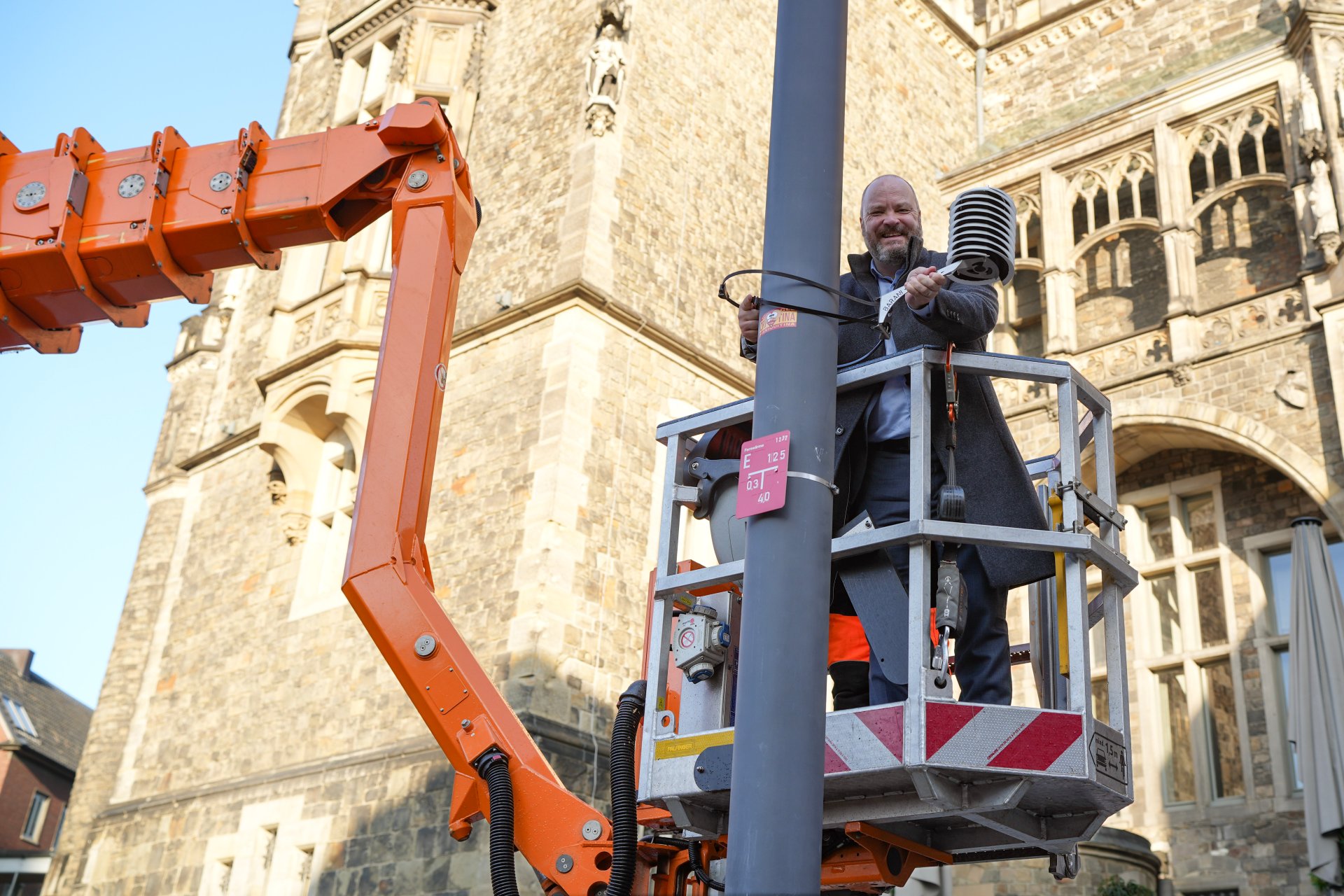
Rolling up his sleeves: Mayor Dr. Michael Ziemons installs the 99th monitoring station at Aachen's Katschhof.
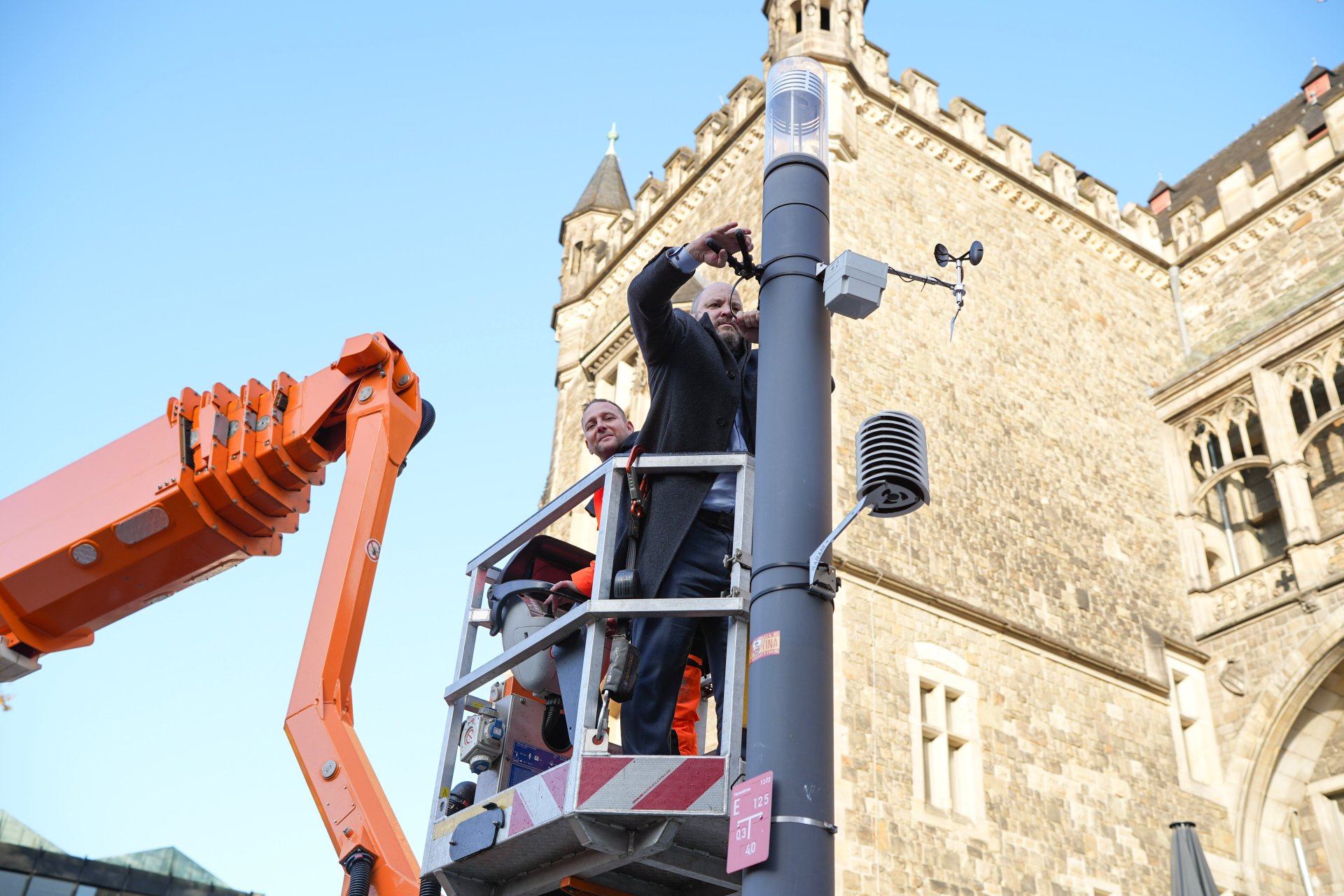
Rolling up his sleeves: Mayor Dr. Michael Ziemons installs the 99th monitoring station at Aachen's Katschhof.
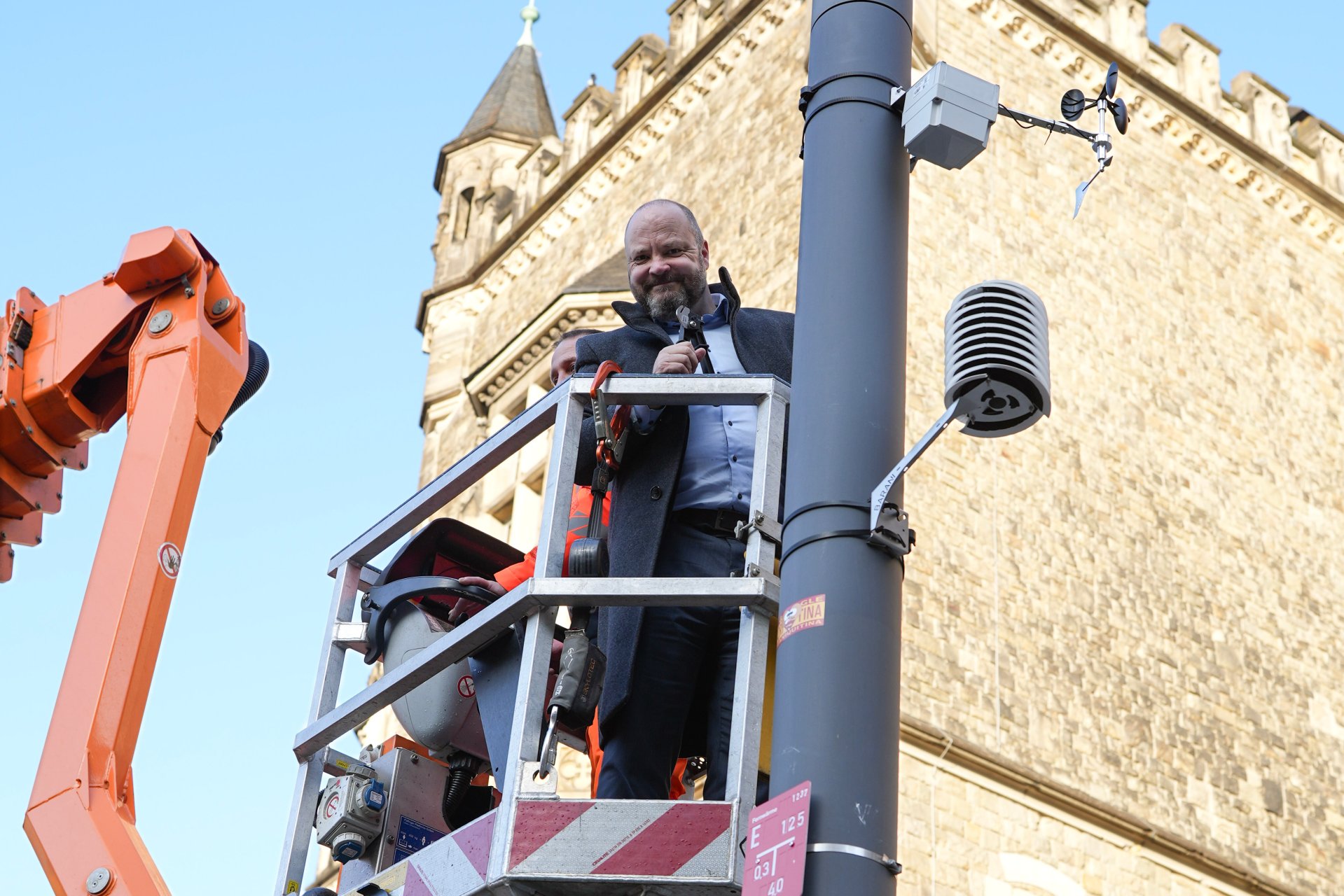
Everything is securely fastened: Mayor Dr. Michael Ziemons has installed the two-part measuring unit, consisting of the anemometer at the top and the climate data sensor.
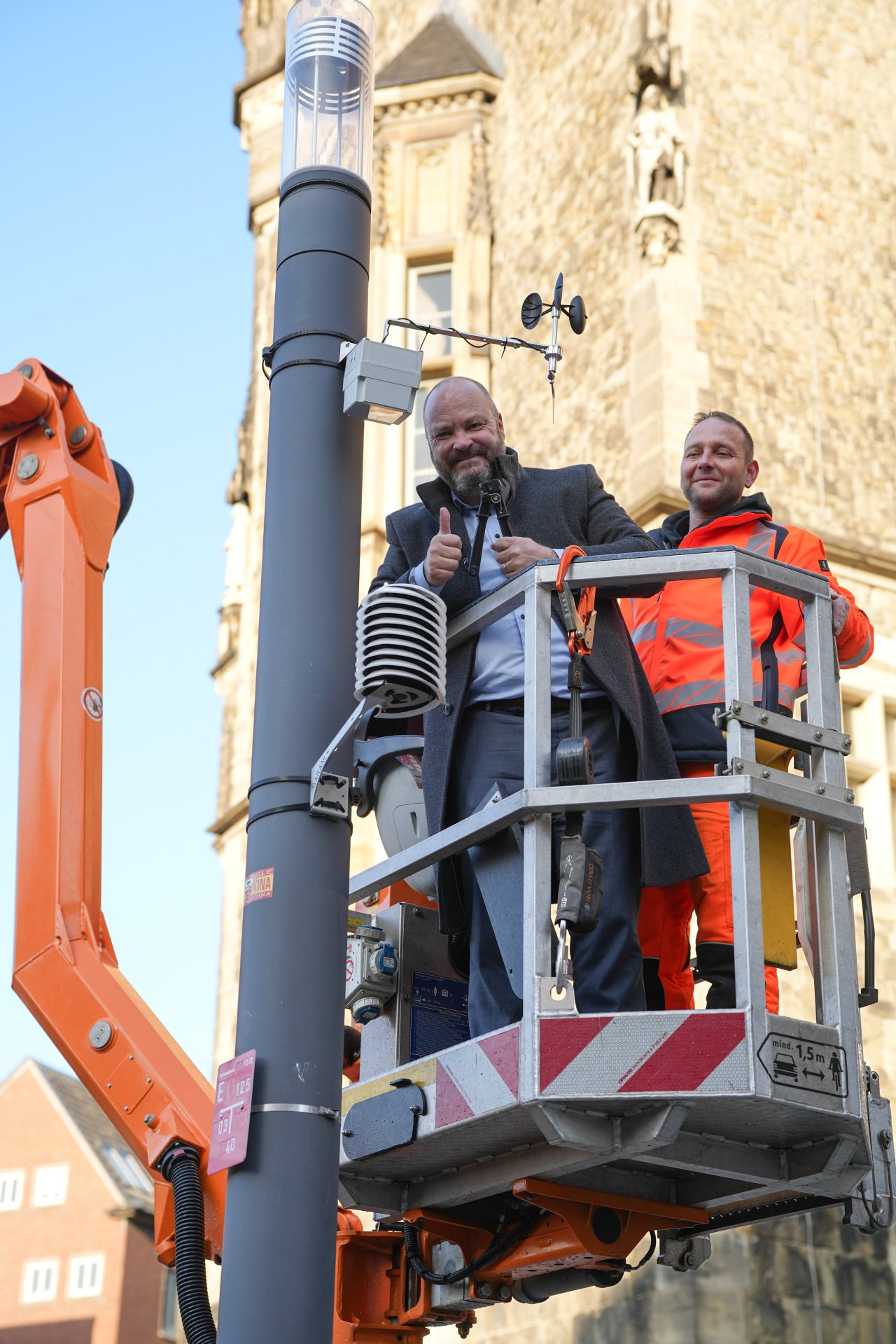
Everything is securely fastened: Mayor Dr. Michael Ziemons has installed the two-part measuring unit, consisting of the anemometer at the top and the climate data sensor.
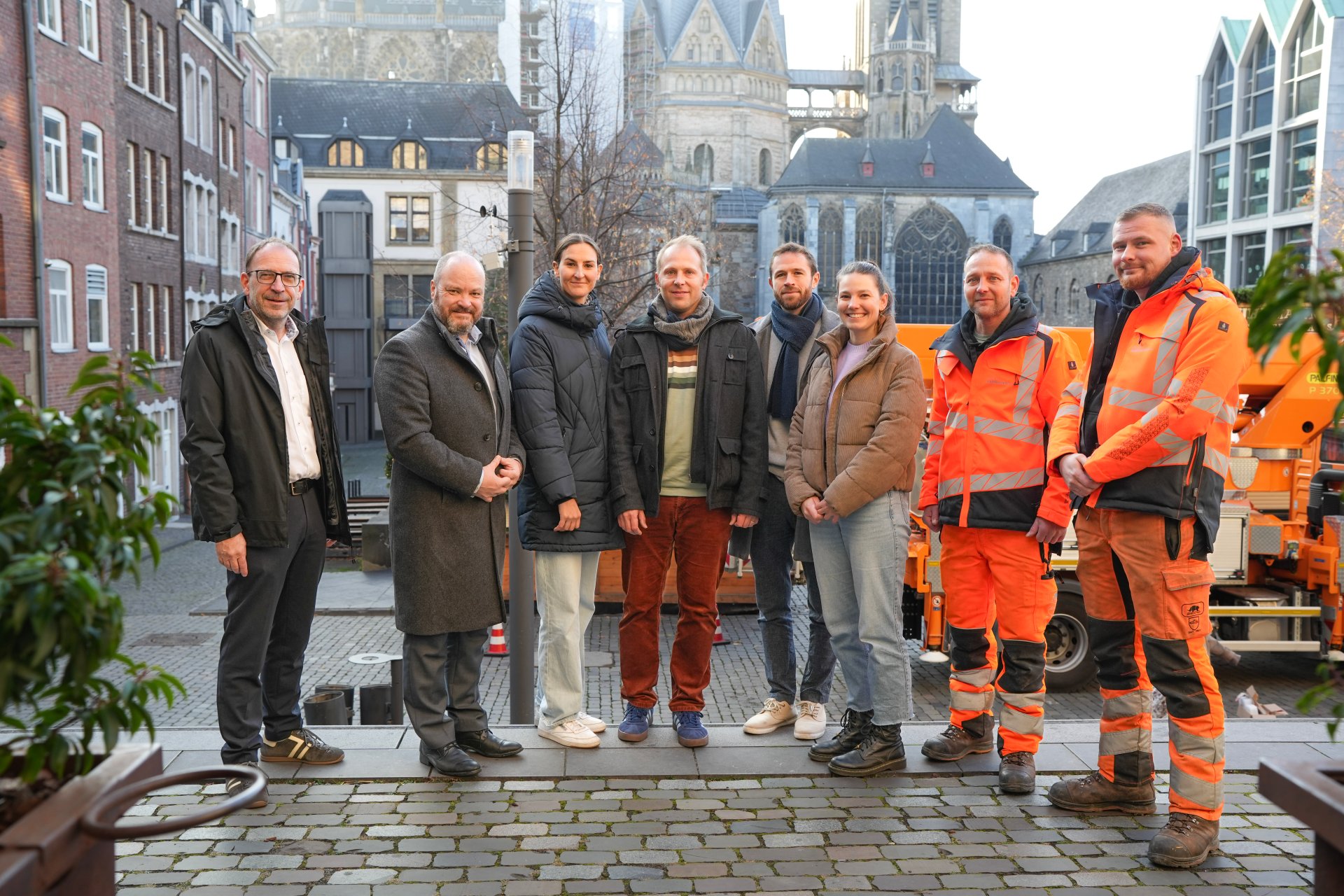
Teamwork: Heiko Thomas, Head of the Environment Department; Mayor Dr. Michael Ziemons; Sandra Verhoeven (Geoinformation and Land Use Planning Division); Dr. Daniel Kelterbaum (Climate and Environment Division); Vincent Dyckmans (Department of Geoinformation and Land Use Planning), Lisa Jager (Department of Climate and Environment), Nico Rother, and Alexander Hüls (both from Aachen City Services) are pleased with the progress.
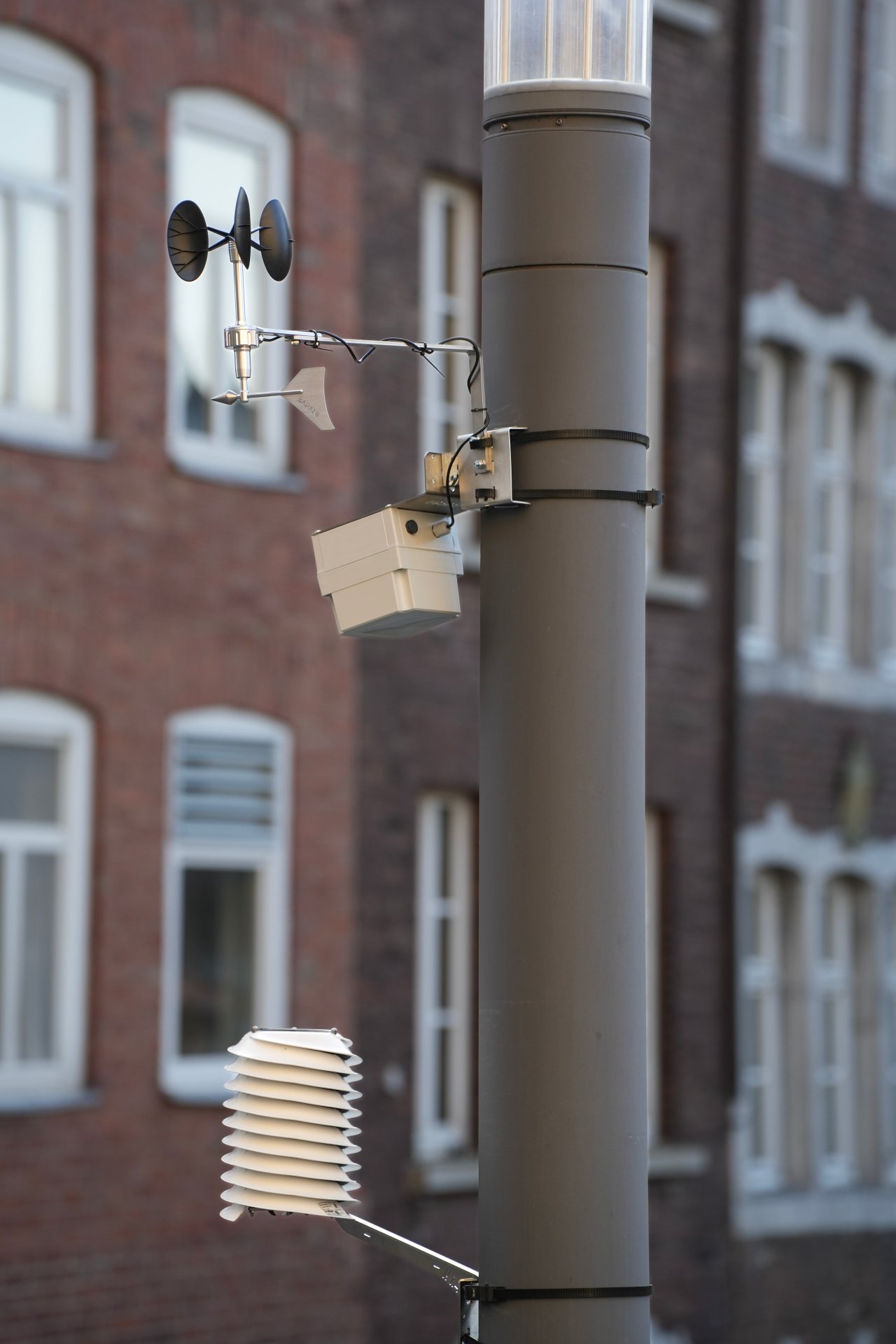
Two parts: The measuring stations—of which there will be 100 throughout the city—consist of an anemometer and a unit that measures, among other things, temperature and humidity.
You can subscribe to our RSS feed for our press releases here https://www.aachen.de/rss-feed-pressemitteilungen/rss.xml